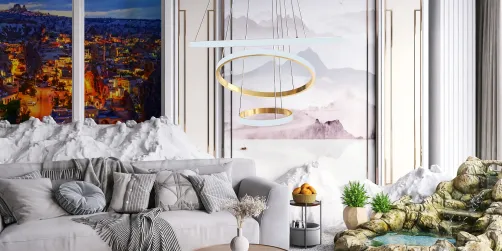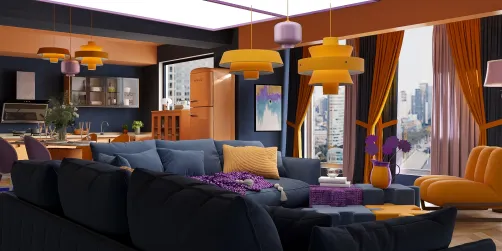
In the past decade as an interior designer, I’ve witnessed the evolution of burnt orange and grey from niche highlights to essential components in contemporary living spaces. This combination embodies both a grounded and dynamic aura, making it particularly suitable for smaller rooms where every design choice carries significant weight. Compact areas challenge us to think outside the box, and today, I am excited to present 10 engaging living room ideas that blend burnt orange and grey, leveraging my experiences alongside expert design advice.
Burnt Orange Accent Wall
My Experience: I once transformed a compact loft by featuring one burnt orange wall, which not only infused warmth into the room but also avoided a sense of saturation. The trick was to balance this with light grey walls on the remaining sides, creating a harmonious flow.
Advantages: It establishes a striking focal point, enhances natural light, and complements various furniture styles. As noted in the National Kitchen & Bath Association’s design trends report, accent walls are consistently among homeowners’ top preferences.
Disadvantages: Utilizing this colour on multiple walls can make a room feel smaller, and repainting can be challenging if your style evolves.
Advice: Combine with soft grey blankets and light flooring for a unified aesthetic. For instance, an industrial loft featuring a burnt orange accent wall can achieve both boldness and equilibrium.
Grey Modular Sofa with Burnt Orange Throws
My Experience: In a family city apartment, we opted for a light grey L-shaped sofa adorned with seasonal burnt orange cushions, providing a cozy yet adaptable ambiance.
Advantages: This arrangement is simple to refresh with seasonal changes, budget-friendly, and ideal for renters.
Disadvantages: Cushions may fade with direct sunlight exposure; regular cleaning is required to maintain their appearance.
Advice: Keep spare cushion covers handy for effortless updates.
Textured Grey Rug with Orange Pattern
My Experience: Utilizing rugs is a favorite technique of mine for harmonizing two colors. A textured grey rug featuring hints of burnt orange anchored the open living space in a recent minimalist apartment design.
Advantages: It visually connects the room and adds comfort underfoot. This style works beautifully with both wooden and tiled floors.
Disadvantages: Be cautious with pattern scale; overly busy designs can conflict with other decor elements.
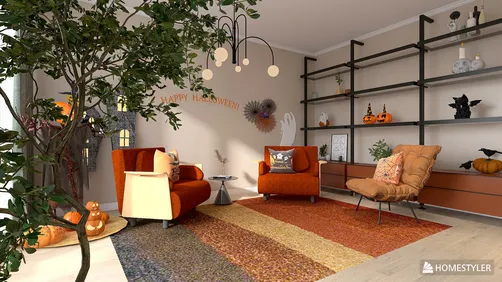
Burnt Orange Armchair as a Statement Piece
My Experience: In a Scandinavian-style living room, a single burnt orange armchair became the talk of the space, contrasting elegantly with soft grey walls and natural wood furnishings.
Advantages: It instantly enhances a straightforward area; relocating it is easy if needed.
Disadvantages: It may restrict future decisions on color schemes.
Cost Insight: Investing in a quality armchair ensures its durability over the years, adapting with your style changes.
Layered Grey Curtains with Orange Tiebacks
My Experience: Layering curtains in a small living room creates softness, and burnt orange tiebacks add a subtle warmth. This approach worked brilliantly in an urban flat I redesigned last year.
Advantages: They provide adjustable light control and emphasize vertical lines, giving the room a more spacious feel.
Disadvantages: Achieving the desired effect may require bespoke sewing.
Advice: Select your fabric wisely; the blend of textures enhances depth.
Open Shelving with Burnt Orange and Grey Decor
My Experience: Styling open shelves with alternating grey ceramics and burnt orange glassware transformed one client’s living room into a curated display rather than a cluttered one.
Advantages: This method is economical and easily changeable, allowing for personal expression.
Disadvantages: Open shelves necessitate frequent dusting; they can look chaotic if overcrowded.
Discover how open shelving in contrasting tones can uplift small living rooms with character and style.
Burnt Orange and Grey Geometric Art
My Experience: Incorporating oversized canvas art is one of my favorite strategies to expand visual space; burnt orange and grey geometric designs pair particularly well with contemporary aesthetics.
Advantages: They inject personality and create an illusion of extended walls.
Disadvantages: If not balanced with neutral furnishings, such art pieces can dominate the room.
Mixed Metal Fixtures with Warm and Cool Tones
My Experience: In color-blended schemes, metals serve as the connecting elements; consider brushed steel lamps combined with copper or bronze accents to reflect both the grey and orange hues.
Advantages: This technique allows for versatile and sophisticated layering, showcasing a timeless quality according to trend lists from design experts like Elle Decor.
Disadvantages: It requires meticulous coordination to avoid conflicting finishes.
Grey Feature Wall with Floating Burnt Orange Shelves
My Experience: This innovative approach reverses traditional accent design — I executed it for a creative studio client, merging matte grey walls with glossy orange shelving.
Advantages: It highlights decorative pieces while maximizing storage without adding bulk.
Disadvantages: Bold shelves require thoughtful arrangement to avoid overpowering the space.
Wood Accents with Burnt Orange Soft Furnishings
My Experience: One of my preferred combinations is warm wooden furniture paired with grey upholstery and burnt orange cushions. This combination is both classic and rich in texture.
Advantages: It fosters a homey and welcoming atmosphere; it can also adapt beautifully with seasonal updates.
Disadvantages: Maintenance of wooden furnishings can require a commitment.
When executed thoughtfully, wood accents provide warmth without overwhelming your softer tones.
Summary
Small living rooms should not be seen as constraints but as incentives for smart design. The fusion of burnt orange and grey presents limitless possibilities for infusing warmth, depth, and character into a space. According to the American Society of Interior Designers, contrast-heavy palettes are trending for 2024. Which of these 10 innovative ideas will you implement first?
FAQ
1. Why do burnt orange and grey blend so harmoniously?
They strike a balance between warmth and coolness, creating a visually appealing contrast that feels both inviting and contemporary.
2. Is burnt orange too daring for a small living room?
Not at all; when used judiciously — as an accent wall or through soft furnishings — it can enrich the space without overwhelming it.
3. Which neutral shades complement burnt orange and grey effectively?
Colors like white, beige, and soft taupe can soften the overall aesthetic while maintaining a balanced palette.
4. Can burnt orange fit into a minimalist living area?
Definitely — maintain clean lines and use burnt orange in moderation to add a warm accent to your decor.
5. What flooring is ideal for this color combination?
Light wood or neutral carpets effectively complement these tones without visually competing with them.
6. Are there specific interior design styles that suit this palette?
Yes, it thrives in mid-century modern, bohemian, and eclectic design themes.
7. How can I achieve a brighter feel with these colors?
Incorporate mirrors and ample lighting, while balancing darker shades with plenty of light grey or white surfaces.
8. Where can I discover more small living room layout inspirations?
Explore this collection of compact living room designs for further ideas.
Homestyler is your go-to platform for transforming your home design dreams into reality. With its user-friendly online design tool, stunning 3D renderings, and a wealth of design projects and video tutorials, you'll find everything you need to create your perfect space effortlessly. Dive in and get inspired!