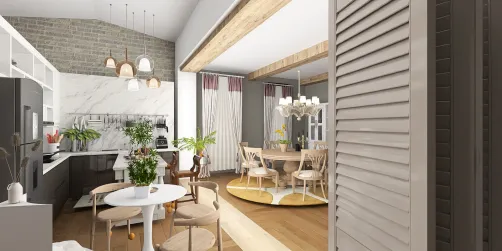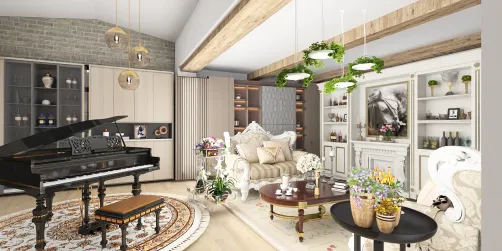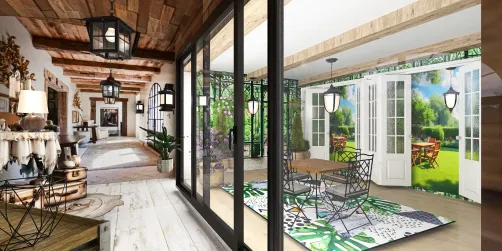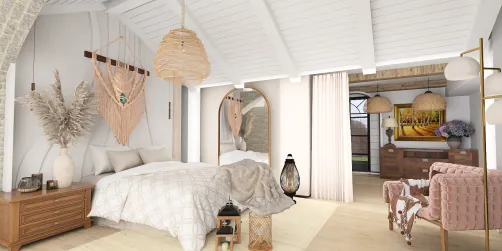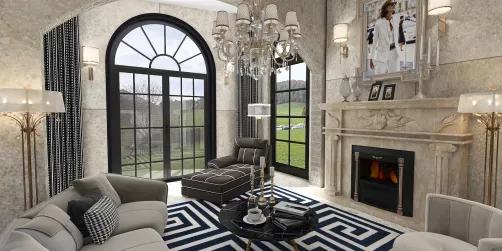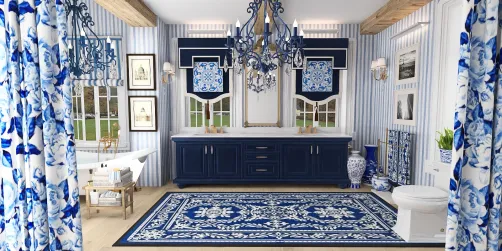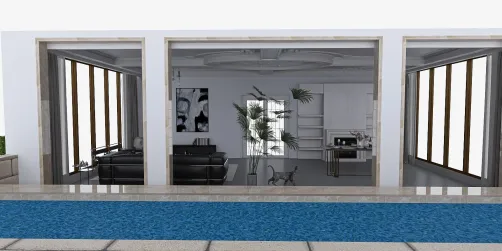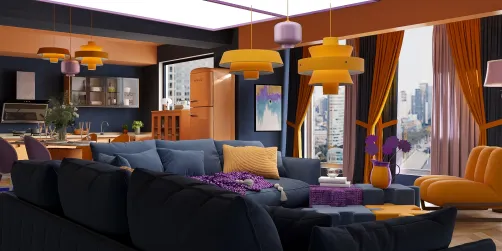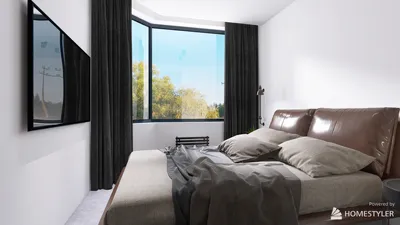
As we move towards the future, we see an increased focus on multigenerational living, heavy package deliveries, and the essential requirement for aging-in-place features from the very beginning. Reports from NAHB indicate that most homebuyers now emphasize the importance of a main-level bedroom to ensure long-term adaptability—something I witness regularly with my clients. In this evolving context, a two-bedroom ground floor layout emerges as a blueprint for resilience, respect, and versatility. Let’s explore how this concept can be utilized using our spatial reasoning toolkit alongside the innovative capabilities of Homestyler.
Front-to-Back Split with Courtyard Spine
Design Logic: The primary suite is positioned at the front, while the secondary suite is located in the rear, connected by a narrow courtyard that serves as a source of natural light. This design supports the future trend of working from home and ensures accessibility for an aging population with no-step entries and short travel paths.
Flow: The sequence from entry to drop zone, then to the kitchen hub, followed by the courtyard slider, leads to the rear hall and secondary bedroom; the primary suite branches off early, maintaining tranquility while daily activities occur nearby.
Sightlines: The kitchen opens up to the garden through a doorway, creating a layered user interface—allowing quick glances to check who’s at home, what’s being prepared, and the outdoor conditions, all without compromising the privacy of sleeping areas.
Storage: An L-shaped perimeter pantry serves as a convenient storage option, with hall closets providing quick access, and bed alcoves equipped with deep drawers for easy mornings.
Furniture Fit: Accommodating a queen-sized bed with 24" clearances, 36" wide halls, and 60" turns in the bathroom; the dining area centers on a 72" table to adapt seamlessly for seasonal gatherings.
Verdict: This design is capable of easing family transitions like an adaptable protocol; even five years down the line, it effectively manages sound, natural light, and caregiving tasks with minimal delays.
Save pinOpen in 3D Planner Processing...
Side-Loaded Entry with Central Service Core
Design Logic: The side entry lends itself to efficiency, leading directly into a central service area that includes laundry, mechanical systems, and a pocket office, all surrounded by living spaces and two bedrooms. This arrangement allows for future appliance updates and retrofits without the need for major plumbing adjustments.
Flow: The passage from carport to side mud area and into the service core flows seamlessly into the living space and both bedrooms—akin to a streamlined API call with minimal delays.
Sightlines: Angled views from the sofa to the garden and entrance avoid direct lines into bedrooms—this privacy aspect acts as intuitive permissions.
Storage: A ceiling-height utility wall acts as a vertical storage system, with seasonal items stored out of reach and daily necessities easily accessible, plus hidden mid-level charging stations.
Furniture Fit: A 96" sofa is complemented by 30" pathways, featuring a 9' galley kitchen with 42" clearances; bedrooms accommodate a king bed in one room, and a twin plus desk in the other, catering to various needs.
Verdict: This service core allows for simplified upgrades; in five years, new technology can integrate seamlessly while daily life operates on steady rhythms.
Save pinOpen in 3D Planner Processing...
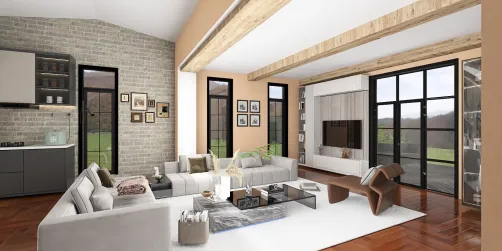
Dual-Aspect Living with Pocketed Flex Room
Design Logic: The living area draws in natural light from two points, while a flexible pocket room next to it can transform into a nursery, guest room, or media space, keeping the second bedroom independent. This forward-thinking layout allows for easy reconfiguration without the need for major renovations.
Flow: The pathway from threshold to cross-ventilated living area leads to the pocket room, kitchen peninsula, and a private hallway to the primary suite; each step is clear with possible diversions.
Sightlines: The dual-window orientation establishes a hierarchy for visually engaging views: the horizon first, then activities, and finally doors; the pocket room is discreetly situated beyond a gentle boundary.
Storage: Features including built-in banquette drawers, a 24" deep linen closet, and an adjustable primary closet provide a versatile storage solution that adapts alongside life changes.
Furniture Fit: The kitchen peninsula stands at a 36" height with a 15" overhang for stool seating; the pocket room is spacious enough for either a 70" sofa bed or a 60" desk arrangement with organized cable management.
Verdict: As needs evolve—whether due to a rise in remote work or welcoming a new baby—this layout can be reshaped efficiently, much like upgrading firmware rather than undertaking a complete redesign.
Save pinOpen in 3D Planner Processing...
Final Takeaway
A two-bedroom ground floor design transcends mere square footage; it’s a dynamic living space thoughtfully engineered for accessibility, care, and calmness. From versatile living areas to service cores and daylight corridors, these configurations treat movement as code and storage as a resource hub. Homes at ground level tend to thrive when they are purposefully designed, rather than simply larger; I continue to observe how subtle spatial choices are quietly transforming the way individuals live, often with the help of innovative tools like Homestyler.

Discover the ease of home design with Homestyler! This online platform offers a user-friendly design tool, stunning 3D renderings, and a wealth of DIY video tutorials. Whether you're planning a major renovation or a small update, Homestyler makes it effortless to visualize and create your dream space.