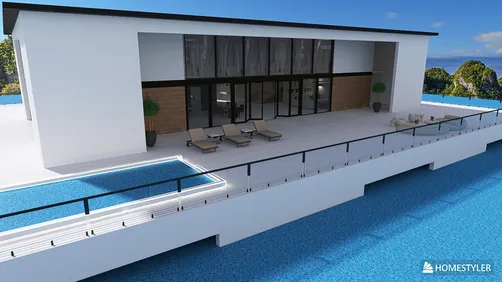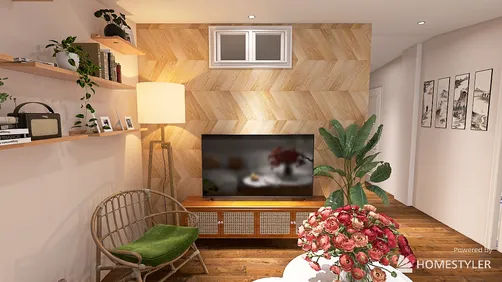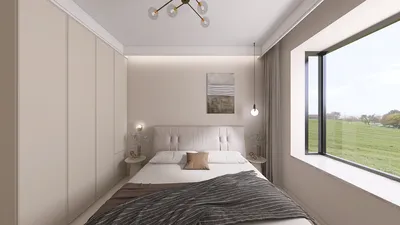
As we look toward the future, it becomes evident that living spaces, particularly those around 400 square feet, need to function like software—compact, purposeful, and adaptable. My consideration of spatial reasoning highlights ongoing challenges such as clutter, inefficient flow, and lack of privacy, especially as we adapt to new lifestyles. Organizations like AIA and NAHB are observing a rise in smaller home designs due to financial pressures, while searches for micro-units on platforms like Zillow continue to surge. Therefore, 400 square foot condo layouts aren’t mere accommodations; they represent a foundation for the upcoming decade of living. Using tools like Homestyler can help visualize and design these innovative spaces.
Partitioned Studio Spine
Design Logic: A centralized storage spine effectively separates sleeping and living areas without the need for complete walls, catering to flexible, single-person households and hybrid work arrangements.
Flow: The sequence moves from entry to utility niche, then on to the kitchen, living bay, and finally the sleeping alcove—creating a straightforward path reminiscent of a streamlined instruction set with no redundancies.
Sightlines: Low dividers create layered views, enhancing the perception of depth while maintaining a private space at the bed.
Storage: With 18 to 24-inch deep modules acting as a cache, features such as vertical pantries, coat pull-outs, and bed-base drawers ensure minimal latency for essential items.
Furniture Fit: A sofa measuring between 72 and 76 inches, a 24-inch café table, and a queen bed in a 60-inch bay are designed to fit seamlessly, avoiding any overflow.
Verdict: This layout maintains a balance across various activities—work, relaxation, and hosting—prepared to adapt to changes over the next five years without needing to reconfigure the entire space.
save pin
Diagonal Daylight Loop
Design Logic: A diagonal path from the entrance to the window disrupts conventional box-like layouts, enhancing light flow and circulation within a compact envelope.
Flow: The door leads to a 45° console, progresses to a kitchen island, and culminates at a window bench, forming a loop that alleviates congestion during peak times.
Sightlines: Diagonal elements create tiered perspectives, allowing the space to appear significantly larger by offering near tasks, social areas, and distant views.
Storage: Utilizing corner towers and under-bench storage effectively transforms awkward areas into accessible memory spaces.
Furniture Fit: A 30-inch deep island, 18-inch stools, and a 40-inch bench all accommodate human movement while respecting clearance for comfort.
Verdict: The diagonal configuration resembles a future-focused design, emphasizing light and reducing friction, perfectly suited for micro-living yet feeling expansive.
save pin
Sliding Flex Grid
Design Logic: Ceiling tracks are employed to support sliding panels that can transform configurations: a studio during the day and a one-bedroom at night—privacy on demand.
Flow: Mornings open the entire grid; evenings reconfigure into a sleeping module, while guests can access a semi-public path, much like choosing modes in an application.
Sightlines: Translucent panels aid in blurring while maintaining continuity of light, creating a space where privacy complements illumination.
Storage: Overhead storage above the tracks combined with a 12-inch deep wall system provides long-term storage solutions, while mobile carts serve as quick-access units.
Furniture Fit: A Murphy bed at 60" x 80", an expandable drop-leaf table at 30" x 60", and stackable chairs all comfortably fit within a 24-inch framework.
Verdict: This adaptable grid evolves as lifestyles shift—embracing remote work, short stays, and well-being—optimized for the future without increasing floor space.
save pin
Final Takeaway
Condo floor plans of 400 square feet must function as precise interfaces rather than scaled-down versions of larger residences. The design concepts of micro-apartment layouts, combined with sliding partition systems and diagonal daylight techniques, enable these small spaces to support substantial lifestyles and adaptive routines. In my professional observations, the most intelligent homes of the future won't simply be larger; they will be more thoughtfully designed. Tools like Homestyler are essential for capturing these intentional spatial decisions that profoundly influence how individuals live.


Homestyler is the ultimate online home design platform for anyone looking to transform their space. With its user-friendly design tool, stunning 3D renderings, diverse design projects, and helpful DIY video tutorials, creating your dream home has never been easier or more inspiring!
















![[For dear Adelina madee 🤎]](https://hs-designs.homestyler.com/production/design/images/8a07e535-9cbc-4132-a42a-5932dac3a112/1706972286037.jpg?x-oss-process=image/resize,w_502,m_mfit/format,webp)