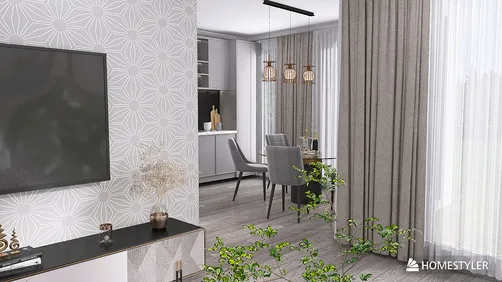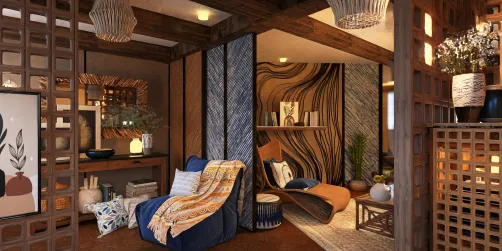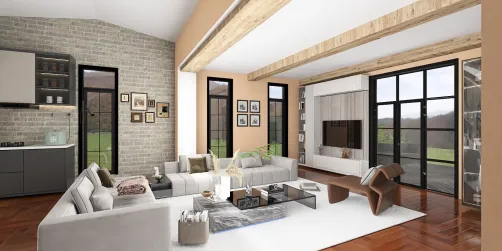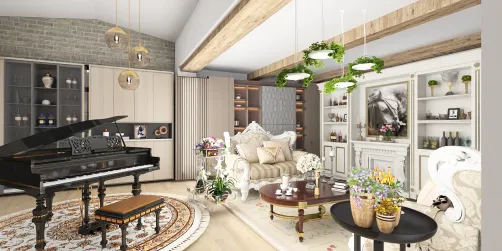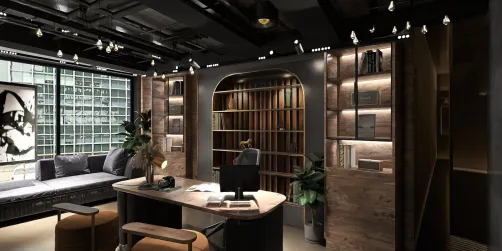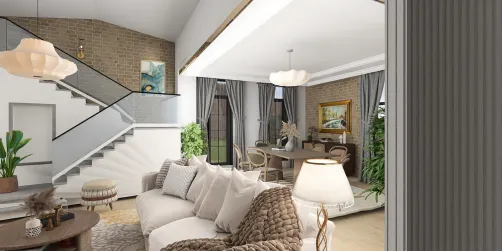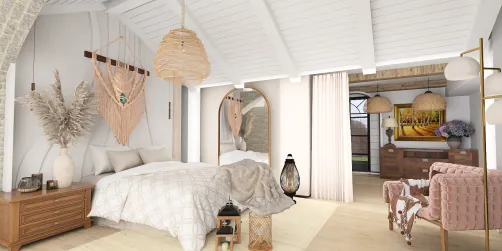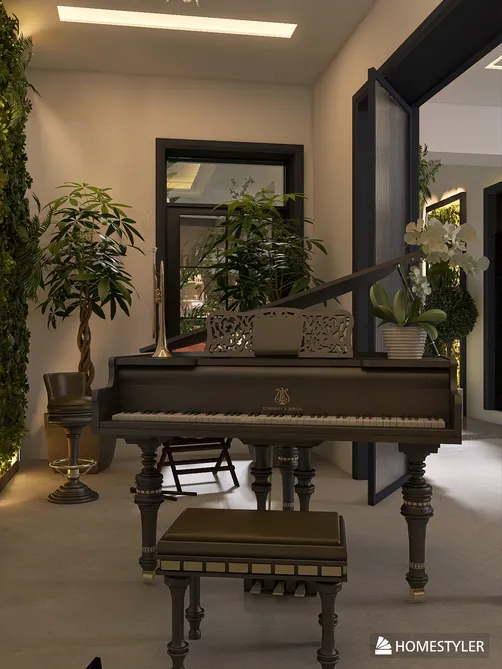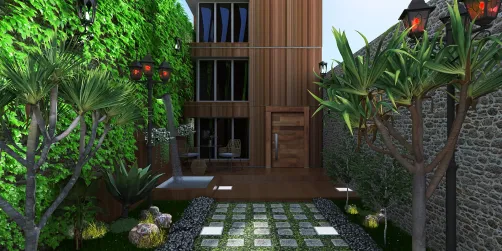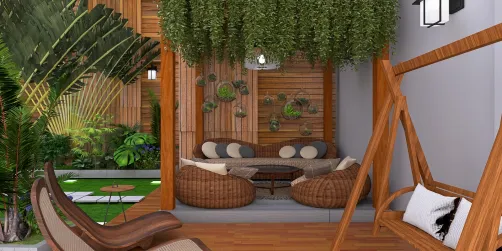
As we move into the future, the traditional single-story homes in Kerala must evolve to better respond to modern challenges such as excessive heat, limited storage, and the need for cohesive family dynamics. Research from the NAHB indicates a growing preference among homeowners for compact living spaces that offer adaptable areas. This aligns well with my clients’ vision of a floor plan that embodies a Kerala-style and is open and free-flowing. To address this, I conceptualize living spaces as interactive systems, taking into account daily routines and utilizing tools like Homestyler for spatial reasoning to predict future needs.
Courtyard Spine with Breezeways
Design Logic: An open central courtyard acts as a thermal regulator, providing a refuge from heat while serving as a focal point for social gatherings and nature-inspired recovery.
Flow: Transitioning from the entryway to the verandah, continuing through the living area, courtyard, dining/kitchen spaces, and bedrooms creates a circular route, minimizing dead ends and supporting aging in place.
Sightlines: The design allows for layered views starting from the foyer to the courtyard, ultimately leading to the kitchen. These privacy zones function like a user interface hierarchy, comprising public, semi-public, and private spaces.
Storage: Deep wall alcoves, bench-style drawers, and a utility area all work together to serve as a buffer against daily clutter, enhancing organization.
Furniture Fit: Utilizing sleek teak sofas (30–34" depth), a versatile pooja ledge (36"), and a dining table measuring 72" x 36" respects the widths of verandahs, akin to API restrictions.
Verdict: In five years, this strategically designed courtyard will function seamlessly as a living system, facilitating cooling, social interactions, and daily routines, all without requiring additional space.
save pinOpen in 3D Planner Processing...
Verandah-First Linear Plan
Design Logic: A lengthy shaded verandah serves as the main artery, distributing light, airflow, and social connection throughout the rooms, reflecting the resilience of coastal designs.
Flow: The path moves from the street, past the verandah, into the living area, followed by the kitchen and bedrooms; the service yard extends off to the side, akin to a background process.
Sightlines: Regulated views ensure that the verandah visually frames the living area while louvered screens offer privacy for the bedrooms; these sightlines can be visualized like icons on a toolbar.
Storage: Featuring overhead lofts, pantry columns, and dedicated spaces for shoes and umbrellas at the entrance—these tiered storage solutions cater to frequently used items.
Furniture Fit: Low daybeds (16" seat height) promote cooling, while foldable desks (24" depth) provide functionality in bedrooms, all defined by 9' ceiling fans that establish movement zones.
Verdict: The verandah operates as a social software layer—ideal for peaceful mornings, enjoying monsoon rains, and facilitating multi-generational conversations—designed to be future-ready and deeply rooted in tradition.
save pinOpen in 3D Planner Processing...
Dual-Aspect Sun-Wind Grid
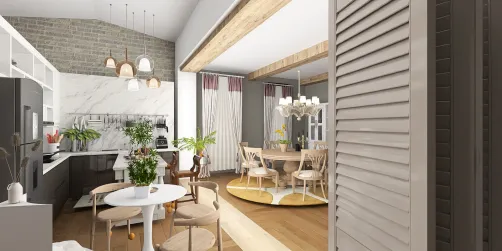
Design Logic: Rooms organized along a 10'–12' grid featuring dual aspect openings; this strategic orientation serves as an algorithm to minimize cooling expenses and future energy costs.
Flow: From the threshold to a central living hub, moving along squared corridors to the kitchen/dining and bedrooms; the bath and service areas align parallel to this setup.
Sightlines: Perforated jaali panels filter light similarly to user interface modals—soft at first glance, sharper upon deeper examination—while preserving levels of privacy.
Storage: Beds come equipped with 15" deep drawers, with attic access for off-season items, and a tiled bench in the yard for organized wet-storage.
Furniture Fit: A round dining table (48") optimizes circulation, while wardrobes feature 24" depths and sliding doors to maintain corridor accessibility.
Verdict: This layout resembles well-structured code: resilient against heat waves, adaptable to shifting family needs, and easy to keep tidy daily.
save pinOpen in 3D Planner Processing...
Final Takeaway
A thoughtfully designed single-story Kerala-style home embraces the future by orchestrating elements like airflow, shade, and storage, much like a meticulously coded interface. Variations of single-floor plans, featuring courtyards and verandahs, transform the sun and rain into beneficial energy dynamics. The essence lies in small details—like the density of jaali, corridor widths, and grid organization—leading to functionality without excess space. In my observation, the smartest homes of tomorrow will focus on intentional designs rather than mere size.

Homestyler is your go-to online home design platform, perfect for all skill levels! With its user-friendly design tool, stunning 3D renderings, and a wealth of inspiring design projects and DIY video tutorials, transforming your living space has never been easier. Unleash your creativity today!