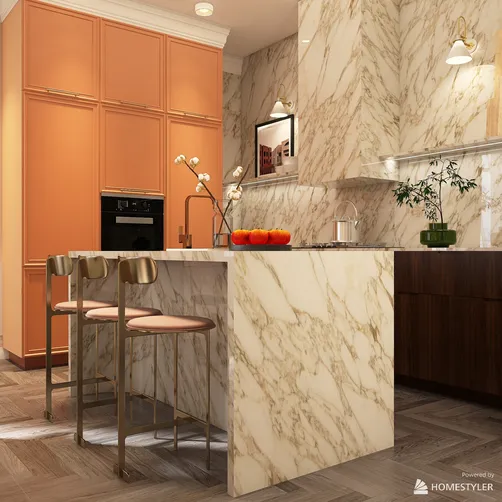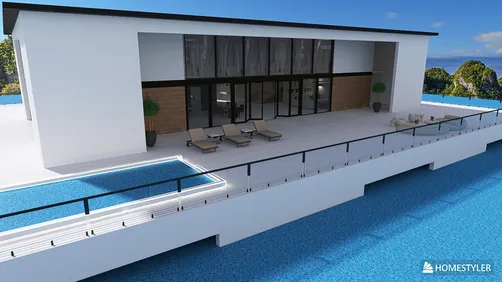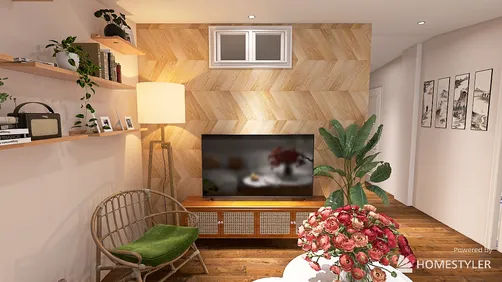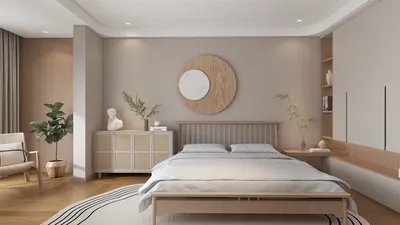
Envisioning future living means tackling the challenges of today's demanding environment—extreme heat, social isolation, and chaotic routines. I conceptualize spaces as a bridge between climate solutions and digital design. Notably, Zillow reports that spacious multi-bedroom homes are increasingly valued as families look for adaptable areas for both work and caregiving; thus, the toolbox for spatial design transforms into essential survival resources. In this 5 bhk desert home layout crafted using Homestyler, I consider walls as algorithms and courtyards as systems for passive cooling, meeting tomorrow's residential needs with architectural precision.
Courtyard Spine with Thermal Buffer
Design Principles: A centrally located courtyard serves as a passive thermal node, evenly distributing shade and cool night air, while five bedrooms extend like individual modules to ensure privacy and support varied daily routines.
Flow: The pathway runs from the entry through the mudroom to the gallery corridor, leading into the courtyard, the kitchen/living area, and finally the bedroom wings. This organized loop reduces sun exposure and minimizes decision fatigue.
Sightlines: Long-axis views provide glimpses of shaded arcades; strategically placed windows capture horizon views while cross-ventilation pockets reveal shifting light as indicators of activity.
Storage: Deep wall niches paired with bench-height plinths provide stable storage solutions; seasonal gear is neatly organized behind insulated sliding doors for easy access.
Furniture Arrangement: Low, wide seating acts as a desert-friendly design choice—utilizing breathable materials, maintaining clearances between 900-1000 mm, positioning bedheads against thermal walls, with dining areas accommodating 6-8 without overflow.
Conclusion: This central spine harmonizes climate and cultural dynamics; five years into its life, it continues to function seamlessly even as temperatures rise and daily routines evolve.
save pin
Dual-Aspect Family Core with Quiet Pods
Design Principles: A dual-aspect great room manages glare effectively with layered screens; of the five bedrooms, two are designed as acoustic pods for remote working and elder relaxation, allowing flexibility for future needs.
Flow: The route transitions from the service yard into the kitchen, leading to the great room and pods, then into the children's cluster and the primary suite; this layout defines high-activity versus low-latency spaces.
Sightlines: Carefully filtered eastern light fills the morning, while controlled views to the west showcase sunset; structured frames maintain a tidy interface—views align without clashing.
Storage: Strategically placed ‘hot/cold’ storage solutions include a ventilated pantry, cooled stone drawers, and outdoor gear lockers, ensuring order is maintained even under thermal stress.
Furniture Arrangement: Modular tables connect seamlessly to window alcoves; spacious sofas float to allow airflow; desks integrate into pod alcoves—thoughtful design eliminates daily task delays.
Conclusion: The family core serves as a balanced negotiation space between brightness and concentration; as users adapt, the layout remains intuitive without requiring a learning curve.
save pin
Perimeter Suites with Shaded Service Ring
Design Principles: The five suites encircle the perimeter to ensure privacy while capturing night breezes; a shaded service ring efficiently manages laundry, storage, and mechanical needs—functioning like a background process in a sophisticated system.
Flow: The journey from carport to shaded entry, through the ring corridor, leads to suites, a shared lounge, and the courtyard; each step follows a clear, predictable sequence.
Sightlines: Low-level lateral views highlight desert vegetation; vertical clerestories diffuse glare, providing clarity and flow—not disruption.
Storage: Built-in headwall vaults, under-bench storage, and roof-space inventory feature radiant barriers—organization stems from how regularly items are accessed.
Furniture Arrangement: Platform beds align efficiently with cross-ventilation slots; narrow console desks complement thermal-mass walls; outdoor dining areas remain anchored beneath pergola grids that respond adeptly to sun angles.
Conclusion: This circular arrangement conceals maintenance requirements; even under drought conditions, the layout remains comprehensible and durable.
save pin
Final Thoughts
A 5 bhk desert home floor plan prioritizes orchestration over sheer size—incorporating heat management, shade, and human routines in a coded sequence. The design illustrates a living interface whereby passive cooling, organized storage, and precisely selected furniture APIs ensure scalable comfort. From my perspective, the most advanced homes of the future won’t necessarily increase in size but will become more intentional; my projects consistently show that subtle spatial choices profoundly influence how people experience living.

If you're looking to transform your space, try Homestyler! This amazing online design platform offers an intuitive design tool, stunning 3D renderings, inspiring design projects, and helpful DIY video tutorials. It's the perfect way to visualize and execute your home design ideas effortlessly!













![[For dear Adelina madee 🤎]](https://hs-designs.homestyler.com/production/design/images/8a07e535-9cbc-4132-a42a-5932dac3a112/1706972286037.jpg?x-oss-process=image/resize,w_502,m_mfit/format,webp)