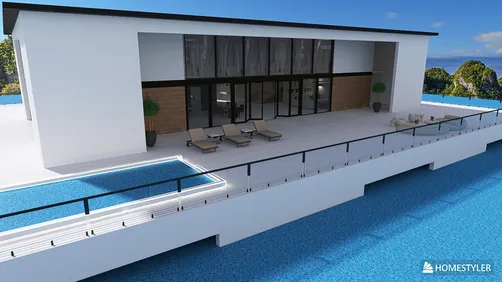
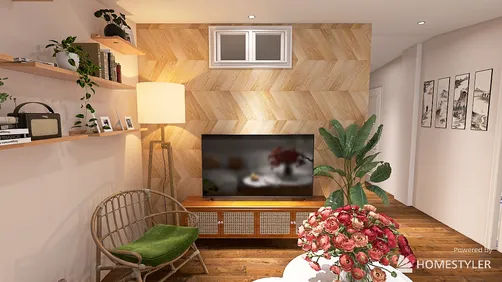
As our future lifestyles converge work, care, and relaxation into a streamlined living experience, many homes today are hindered by disjointed room designs and outdated layouts. Insights from the NAHB reveal that the demand for flexible multi-bedroom configurations is on the rise, yet many 5-bedroom layouts continue to function as rigid frameworks. I consider these 5-bedroom floor plans as foundational elements for modern domestic structures—rooms as interconnected nodes and routines as dynamic data—with a focus on scalable design through tools like Homestyler.
Axial Spine with Modular Wings
Design Logic: A central corridor serves as the primary hub, branching out into two quiet wings and one social area that mimic modular processes for the evolving needs of hybrid living scenarios.
Flow: Entry → drop zone → kitchen hub → living core → study suite → sleeping wing. This streamlined pathway ensures minimal disruptions and efficient traffic movement.
Sightlines: Long, axial views help maintain visibility of social areas, while staggered doors create varying levels of privacy, reminiscent of UI design layers.
Storage: Wall-depth built-ins along the central corridor act as communal storage solutions, while the closets in each wing provide practical capacity.
Furniture Fit: Sofas, tables, and beds are organized to allow clearances of 900–1200 mm—safe for navigation by strollers, carts, and potential future accessibility devices.
Verdict: This layout design effectively prepares homes for multi-generational living arrangements while facilitating gradual updates rather than disruptive changes.
save pin
Dual Core Living + Quiet Perimeter
Design Logic: This layout includes two primary areas—a family lounge and a dining-kitchen space—functioning like mirrored systems, with bedrooms strategically placed on the perimeter to enhance acoustic comfort.
Flow: Service entry → utility → kitchen → dining → lounge → terrace. This setup allows guests to circulate without intruding on more private spaces.
Sightlines: Framed views from the core to the terrace serve as visual indicators of social interaction; bedrooms are designed to minimize distractions.
Storage: Wardrobes along the perimeter and a central pantry provide ample storage with quick access.
Furniture Fit: Island configurations, dining clearances, and lounge arrangements are designed to accommodate movement, with corner desks serving as efficient workspaces.
Verdict: This balanced design maintains a high level of hospitality while ensuring restful sleep and study environments for the next few years.
save pin
Adaptive Suite + Interlock Pocket Rooms
Design Logic: One bedroom is transformed into an adaptive suite—serving as a nursery now and a care unit in the future—while pocket rooms connect as functional task nodes.
Flow: Threshold → pocket mudroom → flexible suite → main hall → bedrooms → balcony. Changes to this layout feel like software updates.
Sightlines: Sliding panels allow control over exposure, similar to adjustable UI settings; short, targeted views help maintain concentration.
Storage: Built-in drawers under stairs and headboard alcoves act as quick-access storage; a shared archive room is available for seldom-used items.
Furniture Fit: Modular beds, stackable seating, and 600 mm deep work surfaces adhere to spatial constraints, enabling quick and easy reconfiguration.
Verdict: This layout is designed to accommodate various life stages, ensuring dignity, accessibility, and maintenance are seamlessly integrated.
save pin
Final Takeaway
5-bedroom floor plans have evolved beyond mere room counts; they now represent vibrant living systems where daily routines can adjust dynamically. With five bedrooms, the most intelligent designs prioritize flow, sound management, and efficient storage solutions, allowing families to expand without disarray. Long-term needs—ranging from multi-generational care to remote work environments—fit neatly into adaptable spaces. My experience shows that the most durable homes treat their design with the same care as code: intentional, modifiable, and prepared for future advancements, exemplified by tools like Homestyler.

Homestyler is your go-to online platform for home design! With a user-friendly design tool, stunning 3D renderings, and a wealth of inspiring design projects and DIY video tutorials, you can effortlessly transform your space into a personal masterpiece. Start your design journey today!














![[For dear Adelina madee 🤎]](https://hs-designs.homestyler.com/production/design/images/8a07e535-9cbc-4132-a42a-5932dac3a112/1706972286037.jpg?x-oss-process=image/resize,w_502,m_mfit/format,webp)