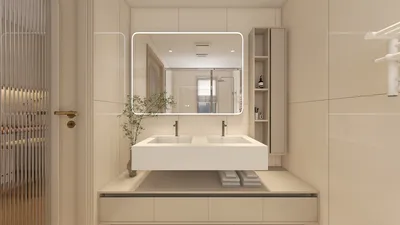


There was a time when I worked with a client who envisioned her living room covered in a paint that resembled a giant mirror. While she intended for mirror paint, I ended up using high-gloss metallic, leading to a week of laughter as the space felt like it was overtaken by a disco ball. This amusing incident quickly taught me that mirror paint can be enchanting when applied correctly but can become chaotic when not understood. To truly grasp how it transforms light and depth, it's crucial to visualize the area before mixing your paint selections, and tools like Homestyler can assist in that planning.
1. Full-wall mirrored finish for a compact living space
For rooms measuring under 200 square feet, applying a full-wall mirror paint can create the illusion of greater volume. I once utilized a silver-based reflective coating in a studio, and the outcome was as if a portion of the wall had vanished — the light bounced off beautifully, reducing the need for additional lamps.
Benefits include dramatic depth, enhanced perceived space, and fewer lighting requirements. However, challenges arise as achieving a perfect surface preparation is essential; any imperfections or roller marks will be evident. Additionally, costs can escalate if multiple applications or professional spray services are needed.
2. Geometric mirrored panels to emphasize architectural features
I enjoy creating precise, geometric reflective sections around fireplaces or behind shelving units. Small mirrored panels can diffuse glare and produce controlled reflections that harmonize with daylight. For instance, in a project last year, we introduced hexagonal mirror accents that imparted a modern and playful touch.
This method is cost-effective since it requires less specialized paint, but it demands careful masking. I suggest testing various color swatches and angles throughout the day to prevent awkward reflections.
save pin
3. Mirrored lower wall (dado) for enhanced brightness and durability
Applying a mirror-effect finish to the lower third of a wall subtly elevates the room without being overpowering — it also helps conceal scuffs in busy areas. I used this technique in a narrow hallway, reflecting a runner rug to create a sense of spaciousness.
Advantages include being more affordable than full-wall applications, practical for families, and simpler to touch up. However, you will still need a clear protective topcoat to endure wear, leading to slightly more maintenance compared to standard paints.
save pin
4. Kitchen reflections: backsplashes and accent pieces
Using mirror paint behind open shelving or on a backsplash can significantly enhance the visual space in a cramped galley kitchen while amplifying the lighting under cabinets. In one renovation, the reflective paint transformed a tiny prep area into a more airy space, beautifully highlighting brass fixtures; however, I always caution clients about potential splatters near stovetops.
Practical considerations include cleaning and heat resistance; sometimes mirrored glass tiles or stainless-steel options provide greater durability, so it's important to balance cost against longevity and always test a small sample first. When planning layouts and sightlines with reflective materials, consider utilizing tools like Homestyler to strategize your counters and sightlines effectively.
save pin
5. Faux-mirror tiling with stencils and metallic glazes
If you are seeking the mirror aesthetic while avoiding full reflections, using masking stencils along with metallic glazes or chrome-effect paints can create a tiled illusion that is more manageable. I applied a stencil in a rental condo, and tenants loved the glamorous effect — it peeled away smoothly when they vacated the space.
This is a creative, lower-risk alternative: you achieve sparkle and depth without the full mirror-like reflectivity. The downside is less accuracy in mirroring and more visible brushwork, so take your time and work with high-quality glazes.
save pin
FAQ
Q: What is mirror paint?
A: Mirror paint is a specialized finish that incorporates metallic pigments and reflective binders to produce a high-sheen, almost mirror-like surface. It typically requires a smooth foundation and a clear protective coat for durability.
Q: Can mirror paint be applied over regular wall paint?
A: Generally, you must sand, prime with a gloss-sealing primer, and follow the manufacturer’s instructions for applying mirror coatings. Proper surface preparation is key to achieving the desired effect.
Q: Is mirror paint safe to use indoors?
A: Most modern mirror-effect paints are designed for indoor application, though they can emit VOCs during the application process. It's important to follow guidance on ventilation and drying; for details on VOC safety, refer to the EPA’s indoor air quality recommendations.
Q: How do I maintain a wall painted with mirror paint?
A: Employ a soft, non-abrasive cloth and a mild cleaner; avoid harsh scrubbing that might damage the sheen. A protective clear coat can help diminish cleaning wear and fingerprints.
Q: Can mirror paint replace actual mirrors?
A: While it can visually mimic mirrors, it doesn't provide perfectly accurate reflections for grooming purposes. For practical mirror requirements, consider pairing mirror paint with actual mirrored surfaces in essential locations.
Q: How does the cost compare to mirrored glass?
A: Typically, mirror paint is less costly than full mirrored glass installations, but pricing can vary based on labor, preparation, and the number of applications needed. Don’t forget to consider potential rework if the surface prep isn’t up to par.
Q: Which rooms benefit most from mirror paint?
A: Areas like small living rooms, entrances, narrow hallways, and petite kitchens experience the most advantage from added depth and reflected lighting. Bedrooms and bathrooms can also work if humidity and maintenance are addressed.
Q: Any quick suggestions before I begin?
A: Conduct a sample test at eye level, observe the paint at different times of day, and be conservative — you can always enhance the reflective area later. For effective spatial planning, consider using Homestyler to visualize how reflections will interact with furniture and lighting.
save pin
Experience the joy of home design with Homestyler! This user-friendly online platform offers an intuitive design tool, stunning 3D renderings, and a wealth of design projects and DIY video tutorials. Perfect for anyone looking to create their dream space effortlessly!
Diseño ahora GRATIS
































