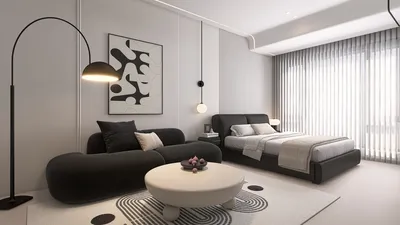


A client once approached me with a unique request for an accent chair that could serve multiple purposes: a reading throne, a workspace for a laptop, and a discreet dog bed, all while maintaining a tidy appearance in their room. I chuckled at the challenge, then quickly designed three miniature options. This experience reinforced the idea that a well-designed chair is not just about seating but can also act as a key element in the decor. To maximize the effectiveness of your space, visualizing the layout before making a purchase is invaluable—it saves both time and potential returns.
1. Sleek mid-century accent chair
Mid-century profile chairs are fantastic for smaller living areas due to their slender legs and tapered frames that create an illusion of more space. While they appear lightweight and stylish, the downside is that such chairs often have firmer seats. To enhance comfort, I recommend pairing them with a soft lumbar pillow, which adds both style and function.
save pin
2. Armless swivel accent chair
The armless swivel chair is a true versatility champion—it fits snugly in corners, allows for easy conversation swivel, and occupies minimal visual space. This makes it an excellent choice for entertaining in compact settings. Just ensure that the swivel base doesn’t harm your delicate floors; using felt pads can provide an effective and inexpensive solution.
save pin
3. Narrow bench-chair hybrid with storage
In situations where every inch counts, I often recommend a narrow bench that can function as an accent chair but also provides valuable storage beneath for blankets or magazines. You might consider creating quick sketches on the floor to visualize circulation, as this bench works beautifully near a window or across from a small sofa. Just be mindful of the seat depth to avoid it feeling like a dining bench.
save pin
4. Combined chair and side table on a small rug
Rather than relying on a single oversized chair, a mini vignette can be more effective: a petite accent chair paired with a slender side table on a compact rug. This arrangement helps to define the area and creates a cozy coffee spot without the need for a full coffee table. However, it is crucial to keep proportions in mind to prevent overpowering adjacent pathways with the furniture scale.
save pin
5. Bold accent chair as a centerpiece
In a small living room, introducing a single striking accent chair can inject personality into the space—consider unique shapes or rich upholstery colors. While higher-end designer pieces can be expensive, mixing a secondhand chair with new cushions can be an economical alternative, allowing you to still utilize tools like Homestyler for realistic 3D renderings before finalizing your decision.
save pin
FAQ
Q1: What is the ideal size for an accent chair in a small living room?
To optimize space, measure the chair's width and depth in context with your available area, ensuring there's at least 30–35 cm (12–14 in) for movement. Chairs with compact widths under 30 inches are usually ideal for tighter layouts.
Q2: Are armless chairs comfortable for extended use?
Armless chairs can be quite comfortable if their seat depth and padding support your posture appropriately; I frequently suggest adding a side lumbar cushion for longer periods of sitting.
Q3: How do I choose an appropriate fabric for an accent chair in a small home?
Opt for mid-tone colors or subtle patterns that can effectively conceal wear over time; fabrics like velvet or performance textiles offer a luxurious appearance, but be sure to check cleaning guidelines if you have pets.
Q4: Can chairs serve as additional storage solutions?
Absolutely—hybrid benches and storage ottomans can efficiently fulfill this need. Just remember to ensure lids have proper clearance and are lined with breathable materials if you plan to store textiles inside.
Q5: Should my accent chairs match my sofa?
I prefer achieving contrast: matching tones could be considered safe, but a complementary or contrasting accent chair can enliven the room without causing disharmony.
Q6: What budget should I set aside for a quality accent chair?
Stylish and durable chairs can be sourced from both budget-friendly and high-end retailers; while investing in solid construction and premium upholstery typically costs more, good secondhand options often provide excellent value.
Q7: Are there any placement guidelines for chairs near doors or pathways?
Maintain at least 30–35 cm clear for comfortable transit and avoid positioning chairs directly in swing paths; an angled placement can preserve flow while ensuring the chair remains inviting.
Q8: Where can I access design standards or guidelines for seating?
For understanding seating ergonomics and professional standards, organizations like the American Society of Interior Designers (ASID) have invaluable resources and research—visit ASID for more information: https://www.asid.org.
save pin
Discover the joy of home design with Homestyler! This user-friendly online platform offers an intuitive design tool, stunning 3D renderings, and a wealth of DIY video tutorials. Whether you're a novice or a seasoned designer, Homestyler empowers you to bring your creative visions to life effortlessly.
Diseño ahora GRATIS
































