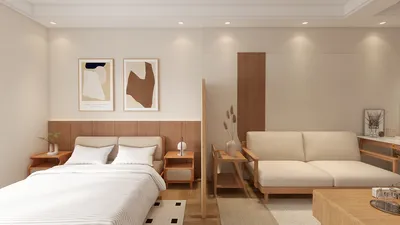


I once had the opportunity to design a compact studio where a foldable bed was installed—it was a proud moment until a client opened it next to a bookshelf I had overlooked. That late-night scramble taught me two important lessons: always measure twice, and design for real-life functionality instead of just for Instagram aesthetics. To truly visualize your space before making a purchase, leveraging tools like Homestyler can save you from a lot of future frustration.
1. Classic Murphy Bed with Integrated Storage
Murphy beds hold a special place in my heart because they virtually disappear, freeing up valuable floor space. The most appealing aspect is their ability to incorporate cabinets and shelving, offering both a sleeping area and a wall of storage. However, keep in mind that the installation process may be costly and requires precise wall framing; once completed, though, they are incredibly low-maintenance and highly utilitarian.
save pin
2. Convertible Sofa Bed for Living-Sleep Versatility
For those who live in studio apartments, investing in a quality sofa bed is my top recommendation. It provides a functional living area during the day and effortlessly converts into a bed for guests at night. The only downside is often related to mattress thickness—I'm a strong advocate for selecting models with pocket springs or memory foam to avoid discomfort, and be aware that storage space under sofa beds can be limited.
save pin
3. Lofted Foldable Bed Above a Workspace
In situations where floor space is at a premium, I sometimes elevate the sleeping area to create room for a workspace underneath—ideal for remote workers or students. Designing the bed to fold or retract vertically maintains an open ceiling feel while protecting the desk below from dust. This approach is more complex structurally and may slightly increase costs, but the reward is a thoughtfully designed multi-functional living area.
To ensure clear circulation and adequate headroom, drawing a quick floor plan is beneficial so that you don't find yourself with a desk lamp at head height.
save pin
4. Wall-Niche Foldaway: Tailored for Unique Spaces
One of my standout projects involved a sloped-ceiling bedroom where I designed a custom niche that allowed the bed to fold down from a built-in cabinet. This solution felt both personalized and upscale while making excellent use of awkward angles. The only drawback is that custom carpentry can strain budgets, but this method turns architectural challenges into stylish and practical storage solutions.
save pin
5. Modular Folding Bed with Versatile Panels
I often recommend modular panels that can switch from table to bed to storage for renters seeking adaptability. I advise clients to prioritize durable hardware and, if possible, test the mechanism in-store—cheaper options tend to falter. If you're looking to visualize this concept in three dimensions, consider exploring platforms like Homestyler for clearances and sightlines.
save pin
FAQ
Q1: What is the ideal mattress thickness for a foldable bed?
A general recommendation is 4–6 inches for most folding systems, although certain sofa beds can accommodate thicker mattresses. Always verify the manufacturer's guidelines to ensure the mechanism can support the weight.
Q2: Are foldable beds reliable for long-term use?
Absolutely, many foldable beds can be durable if quality hardware is used and weight limits are adhered to. Metal mechanisms and strong wooden frames tend to outlast cheaper particleboard designs.
Q3: What are the costs associated with installing a Murphy bed?
Prices can vary considerably, from budget-friendly kits you can assemble yourself to custom installations complete with cabinetry; costs typically range from several hundred to a few thousand dollars. Don’t forget to include framing, hardware, and professional installation if needed.
Q4: Is it feasible to install a foldable bed in a rental?
Yes, it is possible; however, landlords may stipulate non-permanent solutions or could require an agreement to return the space to its original condition. Freestanding or modular units are particularly renter-friendly as they minimize wall alterations.
Q5: How can I ensure the bed doesn’t obstruct light or airflow?
When planning the bed's placement, aim for it to fold against a wall rather than across windows or vents. Incorporate open shelving or perforated panels to maintain both airflow and light even when the bed is closed.
Q6: Are there fire safety or building code considerations?
Local regulations may affect egress and ventilation requirements; for bedrooms used nightly, confirm there’s a safe exit option and that materials comply with flame-retardant standards. When in doubt, it's wise to consult your local building authorities.
Q7: What size foldable bed is optimal for small rooms?
Measure your space carefully and aim for the smallest full-size mattress that meets your comfort needs, often a twin XL or full size strikes a balance between sleep comfort and spatial efficiency. Before choosing a bed frame, check mattress dimensions provided by manufacturers.
Q8: What should I consider when selecting a mattress for a foldable bed?
Choose a mattress specifically designed for flexible frames—memory foam or latex are excellent choices due to their adaptability and weight. According to the National Sleep Foundation, foam mattresses tend to perform better in convertible bed scenarios as they flex without damage.
save pin
Homestyler is your go-to online home design platform! With its user-friendly design tool, stunning 3D renderings, and a wealth of DIY video tutorials, you can effortlessly create and visualize your dream spaces. Unleash your creativity and transform your home today!
Diseño ahora GRATIS
































