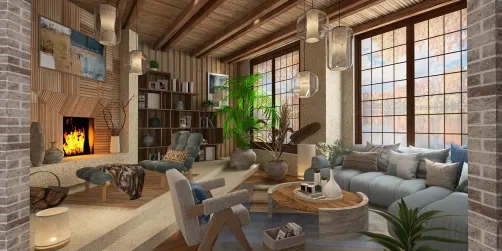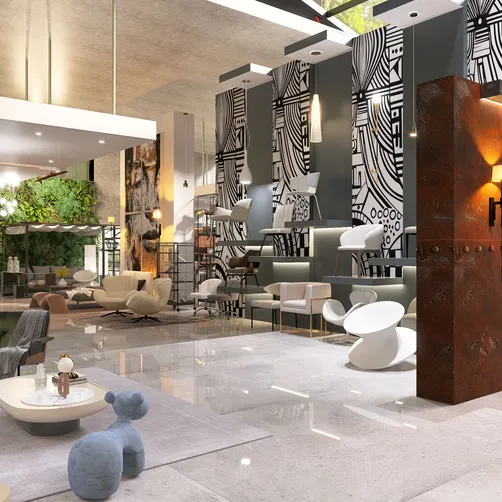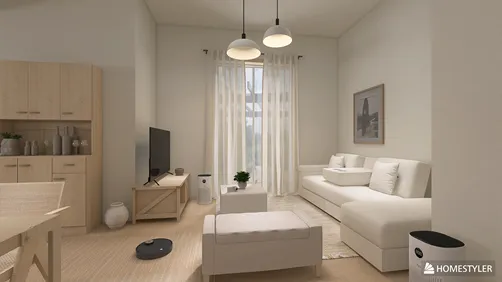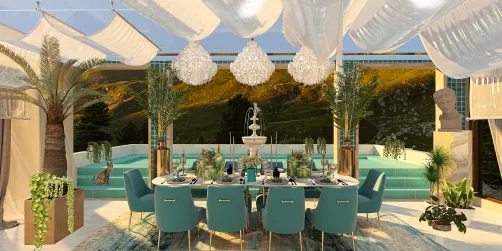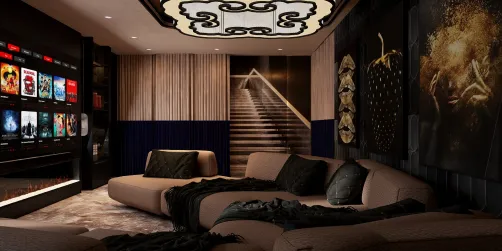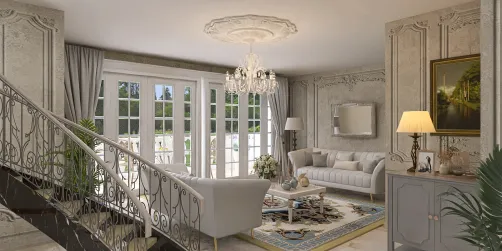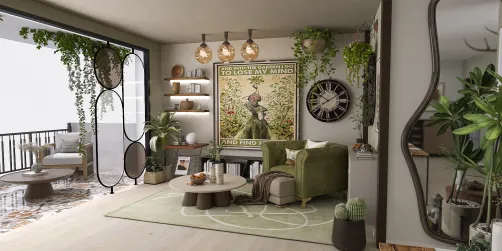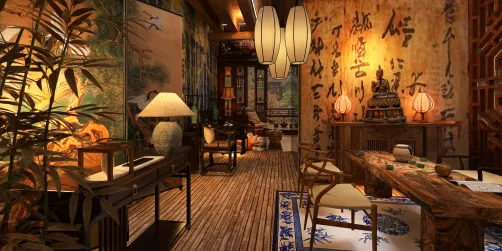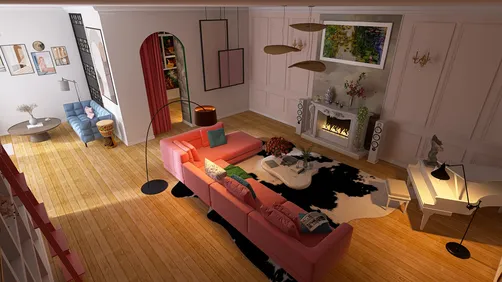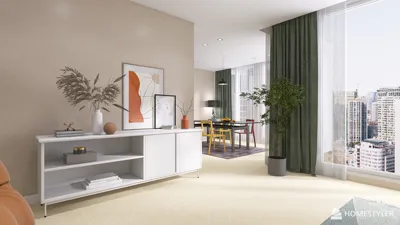
The future continues to knock on our doors while many existing homes struggle with issues like noise, privacy, and the need for multitasking spaces. Data from AIA and NAHB reveals an increasing demand for versatile rooms, even in smaller layouts, reflecting the requests I receive from clients consistently. In this context, a one-bedroom duplex floor plan transforms into a compact operating system—two levels designed to distinguish between distractions and rejuvenation—almost like I’m deciphering the early programming for the upcoming decade. Indeed, the challenges we face today are exactly where innovation begins with a spatial reasoning toolkit.
Split-Level Quiet Core
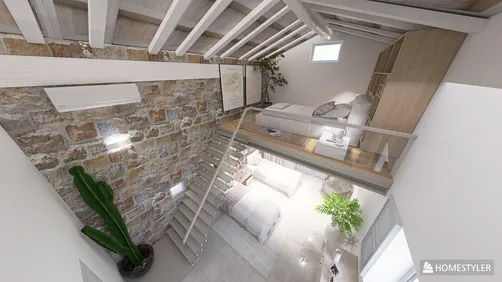
Design Logic: The lower level serves as a sociable area featuring the living room and kitchen, functioning as a public API, while the upper level provides a sanctuary for sleep and focused work. As remote work becomes the norm, the vertical layout safeguards against noise pollution and aligns with our natural circadian rhythms.
Flow: Entry → drop zone → kitchen edge → living area → staircase → landing pocket → bedroom → bathroom; this streamlined sequence minimizes interaction between different areas.
Sightlines: There is a diagonal view from the entry to a glass balcony, utilizing the staircase as a subtle barrier that keeps private areas from the immediate sight of visitors.
Storage: There’s a cache beneath the stairs, a linen stack in the landing, and a bedroom wall storage unit at a depth of 24" for easy access.
Furniture Fit: A sofa measuring 82–90" fits comfortably within a 10'6" bay, paired with a 30" café table and a queen bed with 24" of side space; these measurements cater to daily living needs.
Verdict: This duplex design integrates tranquility upstairs with communal space downstairs, making it well-suited for five years of blended living schedules.
save pin
Gallery Spine With Pocket Office
Design Logic: A linear gallery that runs along the staircase combines display space with functionality; a compact office is nestled mid-landing, allowing work to have a dedicated space without encroaching on the bedroom.
Flow: Entry → gallery rail → pocket office → living area → terrace; upstairs, the route completes with bedroom → bathroom → closet.
Sightlines: A long axial view spans along the rail, with the workspace angled 15° off-axis to reduce visual distractions.
Storage: Full-height gallery panels conceal storage, providing 12" of depth for books and equipment; overhead bins in the niche serve as quick-access storage.
Furniture Fit: A desk fitting within the niche at 46–54", an armless task chair, and a modular media console placed beneath the stairs; these items act like interchangeable modules.
Verdict: This layout effectively turns movement into value by creating a flow where productivity takes center stage.
save pin
Kitchen as Command Node
Design Logic: An open L-shaped kitchen with an island facilitates cooking, charging devices, and hosting—it becomes the main hub for daily activities like meals and small gatherings.
Flow: From the pantry to preparation, then cooking, passing through the island to dining, and into the living area, while the upper levels foster recovery.
Sightlines: Views extend from the cooking area to the entryway and glass features, ensuring awareness of surroundings without disturbing the privacy of the bedroom.
Storage: Toe-kick drawers, a 30" pantry unit, and deep island drawers keep essentials close at hand for efficient execution.
Furniture Fit: An island measuring 30" x 72" with two stools, a 66" media unit, and a narrow 28" dining table; these configurations maintain low latency in functionality.
Verdict: By centralizing operations within the kitchen, the overall home experience is enhanced, leading to intentional living environments with fewer disruptions.
save pin
Final Takeaway
A one-bedroom duplex floor plan represents more than just two levels; it functions as a dynamic interface that effectively manages both public and private aspects of life. Different interpretations—like lofted one-bedroom, compact duplex apartment, or split-level unit—indicate a shared vision for the future: prioritizing flow over square footage and functionality over mere appearances. In my professional observation, the most intelligent small homes will yield an experience that feels quieter, faster, and more organized—not larger. What continuously stands out in my projects is how properly calibrated spaces can subtly enhance daily life—thanks to platforms like Homestyler that facilitate these designs.


Discover the creativity of Homestyler, the ultimate online home design platform! With its user-friendly design tools, stunning 3D renderings, and a wealth of DIY video tutorials, you can easily transform your living space and bring your design visions to life—all from the comfort of your home.