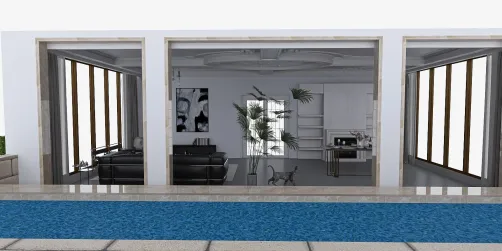
When utilizing 3D models, you might frequently encounter various drawn lines—these elements are fundamental to 3D design, as they help shape, edge, and surface definitions. Essentially, these lines fulfill several functions, such as outlining structures, enhancing visualization, and guiding the modeling process effectively, especially when using tools like Homestyler.
These drawn lines represent edges where two surfaces converge, assisting designers in perceiving the geometric relationships within the model. They offer a framework crucial for accurately applying materials and textures. The absence of these lines may cause the 3D object to appear flat or less dynamic, diminishing the effectiveness of the overall design.
Why Are Drawn Lines Essential?
Drawn lines play a vital role in preserving the integrity of a model, particularly for achieving accurate scaling and dimensions. For instance, in the realm of interior design, distinct lines illustrate the intersections of walls and ceilings, or show how furniture fits within a space. They enable designers to visualize the final outcome before any physical construction takes place, which is particularly beneficial when using platforms like Homestyler.
Different Types of Drawn Lines in 3D Modeling
1. Wireframe: This representation serves as the most elementary form of a 3D object, showcasing only edges and vertices, much like how anatomical structures are depicted. It is especially advantageous for highlighting the framework without introducing surface details.
2. Contour Lines: These lines denote surfaces in a 3D environment, assisting in marking areas that share the same elevation or depth, thereby adding dimensionality to the designs created with Homestyler.
Effectively Utilizing Drawn Lines
In practice, drawn lines can significantly facilitate the modeling process. By clearly delineating each aspect of your design, it becomes simpler to manipulate and adapt different facets of the model. Have you ever considered how varying line weights can express depth and importance within a model? The nuances of line variation are instrumental in conveying the narrative of your design.
Best Practices for 3D Design Incorporating Drawn Lines
To maximize the impact of drawn lines in your 3D models, keep these best practices in mind:
1. Ensure Consistency: Employ uniform line weights and styles throughout your model to foster a cohesive appearance that enhances clarity.
2. Utilize Color Coding: Implement different colors for various line types, such as construction and detail lines, to facilitate easier differentiation of features for viewers.
3. Manage Layers: Organize your lines into distinct layers, which allows you to isolate specific components without compromising the overall integrity of your model.
In Summary
Incorporating drawn lines into your 3D modeling workflow not only clarifies elements but also enriches the interaction with your design. Mastering line utilization is essential for any designer aiming to convey depth and precision effectively, and platforms like Homestyler can significantly aid this process.
Frequently Asked Questions
Q: What is the role of drawn lines in a 3D model? A: Drawn lines delineate shapes, edges, and surfaces, providing a clearer understanding of the model's structure.
Q: How do these lines affect the final design? A: They enhance visualization and guide the modeling process, ensuring accurate dimensions and scaling.
Q: What types of drawn lines are prevalent in 3D modeling? A: Common variations include wireframe lines that outline edges and contour lines that signify surface elevations.
Q: How can I enhance the effectiveness of drawn lines in my designs? A: Utilizing consistent line weights, implementing color coding, and managing layers can significantly improve clarity and coherence in your models.

Looking to transform your home? Homestyler is your go-to online design platform! With a user-friendly design tool, stunning 3D renderings, and a wealth of design projects and video tutorials, it's easy to unleash your creativity and visualize your dream space—no experience needed!