Recently, open-concept living has surged in popularity within home design, and I've discovered that smaller spaces often present significant opportunities for innovative solutions. Throughout the past decade, I've revamped numerous cozy dining and living areas, and today, I'm excited to share ten decor ideas that harmoniously marry style with functional design. Drawn from my experiences and evidence-based design insights, these suggestions are ideal for transforming a shared space into a cohesive environment, making the best use of tools like Homestyler.
1. Sleek Dining Furniture
My Insight: In a 25 m² apartment I designed, the dining table also served as a workspace. Opting for minimalist chairs without armrests helped maintain an airy atmosphere in the room.
Advantages: Choosing sleek dining furniture reduces visual clutter, enhancing the overall space in open-plan dining and living areas, especially when paired with neutral colors.
Disadvantages: The absence of cushioning may render long meals uncomfortable, which is why I often recommend thin seat pads.
Tip: Utilizing compact round tables can also facilitate smoother movement through confined spaces.
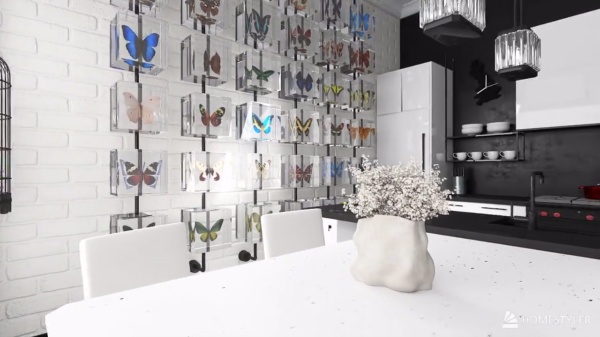
2. Glass Room Dividers to Enhance Light
My Insight: In a previous project, swapping a solid partition for a glass one significantly brightened both the dining and living spaces, allowing natural light to flow freely.
Advantages: Glass dividers preserve visual openness while subtly defining distinct areas. Frosted or ribbed glass options enhance privacy. According to a 2023 Houzz survey on small spaces, glass partitions rank among the top five desired features for urban apartments.
Disadvantages: These require regular maintenance to keep smudge-free, especially in homes with children where safety glass is advisable.
Explore how a glass divider can connect your dining and living areas through similar designs.
3. Eye-Catching Lighting Above the Dining Table
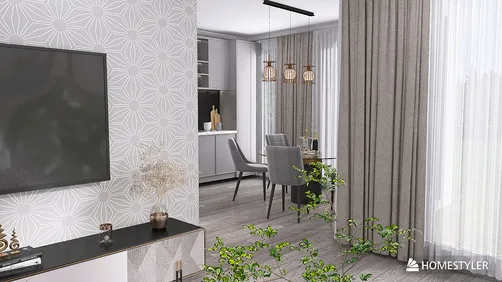
My Insight: A striking pendant light instantly creates a focal point, effectively defining a dining area within a small room without the need for walls.
Advantages: This lighting option combines functionality with visual appeal. Adjustable brightness settings allow for a transition from bright dining to cozy evenings.
Disadvantages: If placed incorrectly, low-hanging lights can obstruct sightlines.
Recommendation: For optimal effect, hang pendants 70–80 cm above the dining table.
4. Built-in Banquette Seating
My Insight: A built-in bench designed along the wall saved over half a meter of walking space in a compact apartment I completed last year.
Advantages: This approach maximizes seating in a limited footprint and often incorporates hidden storage, which is vital in small dining environments.
Disadvantages: Fixed seating lacks flexibility for those who enjoy rearranging furniture regularly.
5. Harmonized Color Scheme
My Insight: When the dining and living areas share a consistent color palette, the overall space appears more expansive and cohesive. I typically choose a neutral base with two complementing accent colors.
Advantages: This strategy fosters visual unity and flow—ideal for open-concept designs. Insights from Architectural Digest highlight color consistency as a fundamental principle in small home aesthetics.
Disadvantages: Excessive uniformity can lead to a flat appearance; varying textures can provide necessary depth.
6. L-shaped Sofa for Zone Definition
My Insight: In a loft setting, an L-shaped sofa naturally divided the living and dining areas without needing a physical wall.
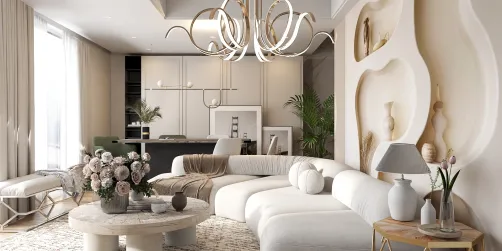
Advantages: This layout utilizes space efficiently, provides ample seating, and effectively delineates areas in open formats.
Disadvantages: Such sofas can be cumbersome to move, making them best suited for a well-considered permanent layout.
Discover how an L-shaped setup can optimize table space in multifunctional rooms.
7. Texture Mixing
My Insight: One of my most inviting projects featured a sleek marble dining table paired with a linen sofa and a wool rug, creating an elegant yet cozy atmosphere.
Advantages: Mixing textures enhances depth and warmth. This technique is particularly effective within neutral color schemes.
Disadvantages: If overused, it can create visual chaos. Achieving a balance by matching bold textures with subtler surfaces is essential.
8. Artwork that Unifies Both Areas
My Insight: Displaying a large landscape artwork visible from both dining and living spaces beautifully tied the zones together.
Advantages: Artwork can serve as a shared focal point reflecting personal style while adding character.
Disadvantages: Large art needs appropriate lighting and proportional scale—too small can disappear, while too large can overpower.
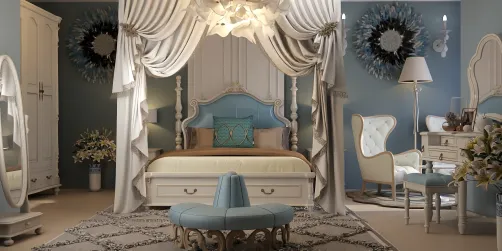
9. Floor-to-Ceiling Curtains
My Insight: Full-length curtains, even in a small flat, can create an illusion of grand windows while softening both the dining and living areas.
Advantages: They enhance perceived height and elegance while also functioning as a flexible space divider when desired.
Disadvantages: Requires additional fabric and budget—heavy fabrics can overwhelm small windows.
Inspiration can be drawn from designs where full-height drapery delivers warmth and continuity across spaces.
10. Multifunctional Furniture
My Insight: In family homes, pieces like coffee tables with hidden storage or extendable dining tables can be transformative.
Advantages: They conserve space and adapt to varying needs, making them perfect for small dining and living combinations.
Disadvantages: Certain multifunctional designs may compromise on aesthetics or comfort.
Tip: Prioritize investment in durable mechanisms, as low-quality extensions or hinges can wear out rapidly.
Conclusion
A compact combined dining and living room is not merely a constraint but an invitation to design smartly. From cohesive color schemes to multifunctional furniture, these concepts are centered on creating flow, maximizing utility, and mirroring your lifestyle needs. As noted by Elle Decor, exceptional designs prioritize intention over size. Which of these ten decorating concepts resonates with you?
FAQ
1. What color scheme works best for a small dining and living area?
A neutral base complemented by two accent colors fosters flow and makes the space feel larger.
2. How can I ensure cohesion between my dining and living room?
Employ a consistent color palette, utilize recurring textures, and maintain shared decor elements throughout both zones.
3. Is it acceptable to use different styles for the dining and living spaces?
Absolutely, but include at least one unifying aspect, like matching wood tones or synchronized lighting fixtures.
4. What type of lighting is ideal for an integrated space?
A combination of ambient, task, and accent lighting works well. Consider a standout pendant above the dining table combined with floor lamps in the living area.
5. How can I separate my dining and living spaces without constructing a wall?
Implement furniture positioning, area rugs, or a glass partition. Options like safety glass help maintain an open ambiance.
6. What are effective solutions for maximizing small spaces?
Incorporate built-in seating, folding tables, and multifunctional furniture to optimize your area.
7. Where's the best spot to hang artwork in a shared space?
Select walls visible from both areas to create visual connectivity between the zones.
8. Are open-plan dining and living areas suitable for family homes?
Definitely—open designs encourage social interactions; however, consider acoustic solutions to manage noise levels, as advised by the American Society of Interior Designers.
Homestyler is your go-to online platform for home design! With its user-friendly design tool, stunning 3D renderings, and a wealth of DIY video tutorials, transforming your space has never been easier. Explore creative design projects and visualize your ideas effortlessly!