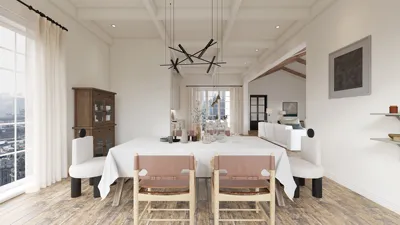


I once arrived at a job believing I had selected a subtle glaze sample — only for the client to exclaim in surprise, dubbing it 'midnight fog.' We shared a laugh, and that experience taught me to always test on full-size boards. That minor misstep inspired me to explore various colors and techniques that I still implement today. If you're looking to visualize your space beforehand, this early lesson has indeed saved me on numerous occasions.
1. Soft Vintage Wash
Imagine a delicate glaze applied with broad horizontal strokes over an eggshell base — the finished effect conveys a sense of gentle aging and warmth without too much hassle. This method is forgiving for imperfect walls and works beautifully in bedrooms, though be mindful that it may accentuate textures, so consider light sanding or a skim coat for a smoother appearance.
save pin
2. Bold Ombre Accent
For compact rooms, an ombre glaze on one wall can create an illusion of depth or elongation, depending on how you apply it. It's striking yet economical since you're only glazing one surface; however, the key is achieving smooth gradation, which requires practice on a board and quick application while the glaze remains wet.
save pin
3. Trompe-l'œil Paneling
Employing glaze to create subtle paneling or faux wainscoting can introduce architectural interest without the need for carpentry. I've done this in rental properties to provide a ‘built-in’ appearance — it’s an impressive trick, but it necessitates precision in lines and proportions, so preparatory mockups are essential.
save pin
4. Strié Linen Effect
The strié technique, which involves dragging a dry brush or comb through wet glaze, mimics the look of linen and introduces a soft vertical texture that works wonders in narrow hallways. It effectively conceals fingerprints and blemishes, but it can be labor-intensive; I typically reserve it for feature passages or stair walls where it truly stands out.
save pin
5. High-Gloss Glazed Feature Wall
Applying a tinted glaze followed by a satin or semi-gloss topcoat yields a radiant, durable finish that is perfect for areas like kitchens and bathrooms. Although it requires a small investment, the long-term benefits are well worth it. Ensure proper ventilation and opt for low-VOC products — it's always wise to test adhesion and durability on a sample board to avoid peeling later on. If you're looking to visualize the glaze effect in three dimensions before applying it, consider using a tool like Homestyler to do a quick render.
save pin
Quick Practical Tips
Always create sample boards and observe them at various times throughout the day; the change in light can dramatically affect the appearance of the glaze. Utilize slow-drying glazing mediums to extend your working time, and keep a kitchen or restroom towel nearby — while glaze is forgiving, it isn't without its limits.
save pin
Where I Would Start on a Tight Budget
Begin with just one wall or a single method like a vintage wash or strié technique. This approach offers a significant visual transformation for a minimal cost. When the space is challenging, I often pantomime a full-size mockup and place it against the wall for a week to see how I like it.
save pin
FAQ
Q: What is glaze painting?
A: Glaze painting involves applying a translucent mixture over a base layer to create depth and texture. It can be done using brushes, rags, or combs to achieve diverse effects such as washes, strié, or faux paneling.
Q: Do I need special tools?
A: Basic brushes, rags, a glazing medium, and sample boards are all you need to get started. Some effects may call for combs or specific brushes, but household items can also be creatively repurposed for unique textures.
Q: Is glaze durable in kitchens and bathrooms?
A: Certainly, when finished with an appropriate topcoat like satin or semi-gloss. I always advise testing adhesion and cleaning resistance on a sample before fully committing to an entire room.
Q: How do I select glaze color?
A: Combine a small quantity of tinted paint with a clear glazing medium and test it against your base coat. Remember that lighting and surrounding materials can alter how colors appear, so it’s wise to test at various times during the day to ensure your choice is sound.
Q: Can I do glaze painting in a rental?
A: Most often, yes—opt for reversible techniques and utilize temporary mockups if your lease stipulates original finishes. Glazing for faux paneling can give the impression of permanence while being removable.
Q: Are there health or VOC concerns?
A: Yes. According to the U.S. Environmental Protection Agency (EPA), paints and associated products can release volatile organic compounds (VOCs) that might impact indoor air quality. It’s best to select low-VOC or water-based glazing mediums and ensure ventilation during application.
Q: How long does a glazed wall take to dry?
A: Drying time varies depending on the product and environment; glazing mediums can extend drying periods, which supports blending but may add 24–48 hours before you can apply topcoats. Plan ahead to avoid feeling rushed.
Q: Can I recreate expensive materials using glaze?
A: Absolutely — techniques such as layered glazes and strié allow you to mimic materials like plaster, suede, or linen without the hefty price tag. Practicing on sample boards helps in perfecting the look before proceeding with the wall application.
save pin
Built on technology originally developed at Autodesk, Homestyler empowers anyone to design beautiful, realistic spaces in minutes. Join over 18 million users who have already discovered a smarter way to plan, visualize, and bring their dream homes to life — all from the comfort of a browser.
Looking to transform your space? Homestyler is your go-to online home design platform! With its user-friendly design tool, stunning 3D renderings, diverse design projects, and helpful video tutorials, you can effortlessly create your dream home. Let your creativity shine with Homestyler!
Diseño ahora GRATIS
































