The evolving lifestyle increasingly consolidates work, caregiving, and leisure within a single residence; meanwhile, conventional homes struggle with noise, storage, and complex scheduling among multiple users. Recent statistics from the NAHB highlight a significant increase in multi-generational living, indicating a trend towards denser households that necessitate more intelligent layouts. My focus is on a six-bedroom flat floor plan, envisioned as an integrated blueprint for the domestic networks of tomorrow, and aspects of that future are already visible today. Consider utilizing tools like Homestyler for effective spatial reasoning.
Clustered Suite + Shared Core
Design Logic: Bedrooms are organized in pairs around a central living/dining area, which functions as a hub to optimize family interactions amid changing demographics.
Flow: Entryway → drop-off area → open kitchen → central living space → left and right bedroom zones; service areas extend like supporting functions for laundry and pantry needs.
Sightlines: From the kitchen island, diagonal perspectives connect the dining area and lounge, with corridors angled to shield private spaces from direct visibility.
Storage: Perimeter cabinetry serves as long-term storage; dual pantries and hallway closets create stratified organizational systems ranging from daily necessities to archival items.
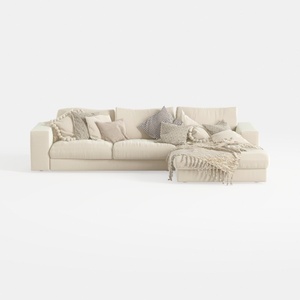
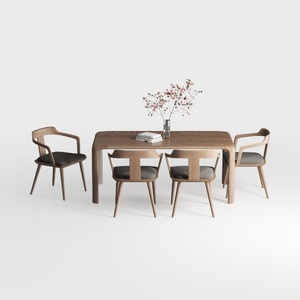
Furniture Fit: Appropriately sized sofas and tables for 8–10 people correspond with aisle widths of 1200–1400 mm; bedrooms and workspaces are designed to maximize efficiency in 10–12 m² rooms.
Verdict: This structural design accounts for the next five years of lifestyle changes—shared central areas reduce noise levels, grouped bedrooms accommodate growth, and overall functionality remains clear despite increased demand.
save pin
Split Generational Wings
Design Logic: The separation of bedroom wings for elders and teenagers, with bathrooms and a quiet den in between, enables parallel caregiving and independence.
Flow: Wing A: entry → accessible suite → den; Wing B: study → teenage bedrooms → play area; the central living space manages movement like a smart schedule.
Sightlines: Gentle cross-views through pocket doors; glass features allow nature to interact as visual feedback while staggered private doors prevent direct line-of-sight collisions.
Storage: Each wing is equipped with specific wardrobes, linen towers, and under-bed storage, minimizing cross-wing clutter and enhancing organization.
Furniture Fit: Tables with adjustable heights, compact lounge chairs, and 900 mm clear spaces support mobility devices and easy access for backpacks.
Verdict: These wings enable different paces of life—caregiving, studying, and relaxing can operate harmoniously without competing for the same space.
save pin
Work-Ready Spine with Quiet Rooms
Design Logic: A continuous hallway acts as a communication pathway; three bedrooms are adaptable to serve as hybrid workspaces as remote work becomes increasingly commonplace.
Flow: Entry vestibule → soundproofing area → main corridor → nodes (workspaces/bedrooms) → outdoor terrace; noise barriers function similarly to digital firewalls at entry points.
Sightlines: Extended linear views provide spatial orientation; side clerestory windows deliver illumination without exposing screens, maintaining a tidy information structure.
Storage: Built-in credenzas and document walls differentiate between high-frequency (daily use) and archival (long-term) storage, alongside equipment lockers.
Furniture Fit: Desks with depths of 700–800 mm, dual monitor setups, and convertible sofas in office spaces preserve mixed-use integrity.
Verdict: This layout prepares the six-bedroom design for the future—work areas can easily transition back to sleeping quarters without overhauling the entire plan, leveraging tools like Homestyler for optimal design efficiency.
save pin
Final Takeaway
A six-bedroom flat floor plan serves as a sophisticated home operating system where flows, storage solutions, and interactive areas enhance usability beyond mere square footage. Large families, multi-generational clusters, and flexible work environments call for design philosophies that prioritize systemic thinking over simply allocating space. The forthcoming decade looks promising for designs featuring adaptable wings, shared areas, and work-enhancing corridors; in my observation, the smartest homes of the future will be defined by their intentionality rather than their size, with Homestyler playing a vital role in achieving this vision.

Homestyler is your go-to online platform for home design! This user-friendly tool offers stunning 3D renderings and a wealth of inspiring design projects. Plus, with practical DIY video tutorials at your fingertips, transforming your space has never been easier. Start designing today!















![[For dear Adelina madee 🤎]](https://hs-designs.homestyler.com/production/design/images/8a07e535-9cbc-4132-a42a-5932dac3a112/1706972286037.jpg?x-oss-process=image/resize,w_502,m_mfit/format,webp)