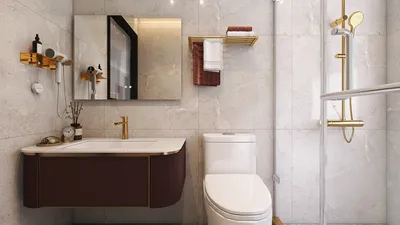


Once, a client challenged me to fit a washer, dryer, toilet, and a folding counter into a space that resembled a closet — I was amused until I realized their seriousness. With the help of room layout ideas, I quickly sketched a design that transformed that seemingly ‘impossible’ closet into a versatile multitasking space. Small areas can indeed ignite innovative concepts. In this article, I will share five effective laundry room and half bath solutions that I've utilized in real projects, aided by the amazing design capabilities of Homestyler.
Idea 1: Stack the machines, tuck the toilet
I frequently position a stacked washer and dryer on one side with the toilet neatly placed in an alcove on the other side. The clear benefit here is the additional floor space that opens up for a folding station or slim storage options. However, be mindful of requirements for ventilation and plumbing; a proper dryer vent and accessible maintenance panels are essential. In a recent project, I installed a shallow recessed cabinet above the stacked machines for laundry supplies, which felt like a clever way to maximize space.
save pin
Idea 2: Shared plumbing wall to save money
When feasible, I align the laundry hookups with the half bath along a common plumbing wall. This approach simplifies rough-in requirements and lowers costs. The trade-off might be a bit of limitation in layout choices, but with the addition of a pocket door and smart fittings, the room can remain spacious and functional. In one instance, I cleverly reduced the required depth by adjusting the toilet’s position slightly and incorporating a compact tankless water heater nearby.
save pin
Idea 3: Folding station that doubles as vanity
A slim countertop over the washer and dryer can serve as both a folding area and a bathroom vanity. Opt for a shallow trough sink or an off-center basin to maintain usable space for folding. To rapidly visualize concepts, I create space-saving floor plans — this strategy proves effective during the initial design phases to avoid unforeseen issues. One small consideration is preventing water splashes; utilizing a splash-resistant material with a slightly elevated lip can shield laundry from soap suds.
save pin
Idea 4: Go vertical with storage and lighting
Vertical storage is my go-to solution: open shelves that reach the ceiling, ladders, or pull-down rods, along with recessed medicine cabinets, help minimize the footprint. Proper lighting is more crucial than most realize — a narrow room can feel more expansive with layered illumination, including downlights, linear LED fixtures above the counter, and a sconce for the sink area. A drawback could be dust accumulation on high shelves, but using removable baskets provides a tidy look and easy visibility.
save pin
Idea 5: Small finish upgrades that add big comfort
Don’t overlook the significance of minor upgrades: a water-resistant wall finish, a heated towel bar that also serves as a drying rack, and slip-resistant vinyl or tile flooring. Harmonizing the finish palette with adjacent areas — often drawing tones from the kitchen — creates a cohesive look that feels intentional rather than cramped. If you're arranging appliance and fixture placements with a partner room like a kitchen, explore some kitchen layout ideas to enhance circulation and sightlines. From a budget perspective, you can achieve significant comfort with modest alterations; the key is to prioritize ventilation and ease of cleaning.
save pin
FAQ
Q1: What minimum size do I need for a laundry room with a half bath?
I suggest a minimum of 25–30 square feet for a stacked washer and compact half bath configuration; 30+ sqft offers more room for storage and counter space.
Q2: Can I put a washer and toilet on the same plumbing line?
Absolutely — aligning the washer, sink, and toilet along a shared plumbing wall is common and cost-effective; however, it is wise to have a licensed plumber confirm venting and trap placement.
Q3: Do I need to vent a dryer to the outside?
Yes. The U.S. EPA recommends that dryers be vented outdoors to mitigate moisture and lint accumulation indoors, which helps prevent mold and air quality issues.
Q4: Is a stackable washer-dryer noisier in a combined room?
Stacked units may transmit vibrations through walls; using anti-vibration pads and insulated cabinetry can help diminish noise. Proper installation is generally sufficient to maintain acceptable sound levels.
Q5: What flooring works best for a laundry half bath?
Water-resistant, slip-resistant tile or luxury vinyl plank is ideal — they deal well with moisture, are easy to upkeep, and can feel warm underfoot when combined with an inexpensive radiant mat.
Q6: How do I handle ventilation for the half bath portion?
Install an exhaust fan sized according to the room’s volume and vent it outdoors; a fan equipped with a timer can manage humidity after usage. Effective fan placement near the toilet/sink enhances performance.
Q7: Are permits required for combining laundry and bathroom plumbing?
Typically, yes — plumbing and electrical work generally require permits and inspections. Always check local building regulations and employ licensed professionals to ensure safety and compliance.
Q8: What’s a cost-effective first upgrade?
Begin with enhancing ventilation and installing a durable countertop above the machines; these two adjustments can significantly improve usability and durability without extensive renovations, and the benefits will be noticeable immediately.
save pin
Originally incubated at Autodesk, Homestyler has grown into one of the most widely adopted home design platforms in the world, now trusted by over 18 million users. Whether you're a homeowner exploring ideas or a professional designer delivering client-ready renders, Homestyler brings industry-leading 3D technology to your fingertips — no experience required.
Looking to transform your home? Homestyler is your go-to online design platform! With its user-friendly design tool, stunning 3D renderings, and a wealth of inspiring design projects and video tutorials, you can effortlessly create your dream space—no prior experience necessary!
Diseño ahora GRATIS
































