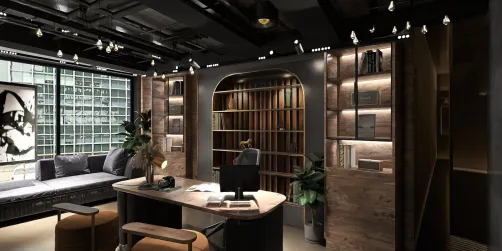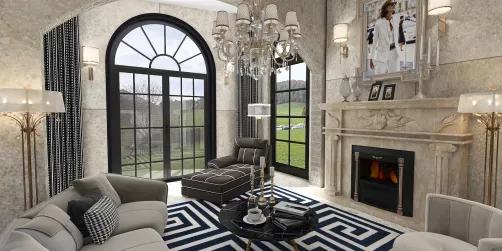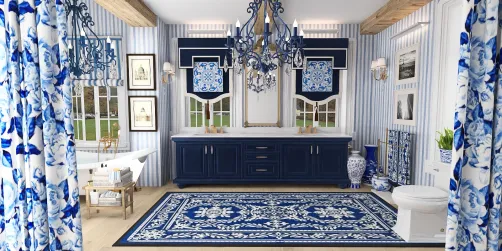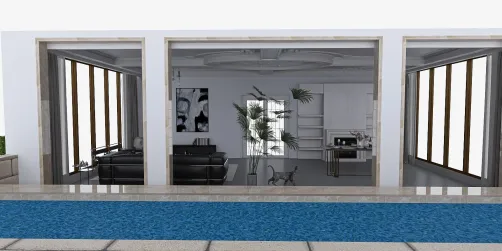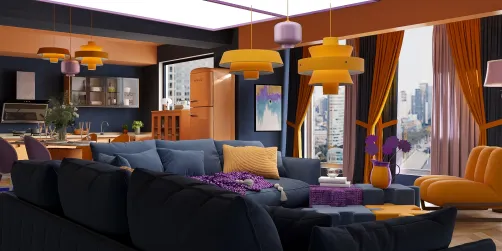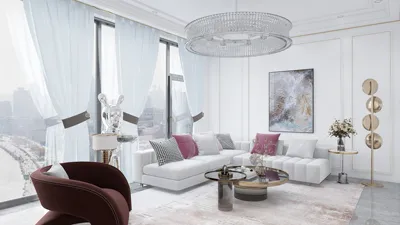
As the future looms closer with each passing quarter, I can sense it through the daily challenges faced by my clients—issues like noise accumulation, storage fatigue, and glare management are pressing for cleaner designs in a two-storey apartment layout. Industry trends support this; research from the AIA indicates that flexible layouts and acoustic zoning are becoming top priorities even within limited spaces. In this evolving environment, a spatial reasoning toolkit serves as the underlying system for cultivating improved living habits through tools like Homestyler.
My design philosophy anticipates the needs of tomorrow, with these vertical layouts interpreting life as a system of codes—flows, buffers, permissions—redefining the essence of home.
Split-Level Quiet/Active Stack
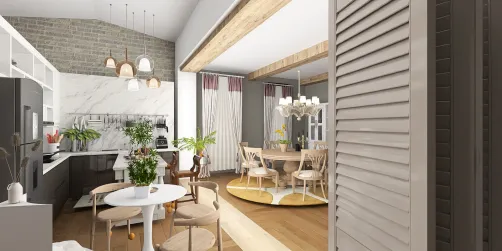
Design Logic: Active zones are situated below, while restorative areas are elevated, accommodating the future hybrid work model that requires both focused time and uninterrupted bandwidth.
Flow: Movement from entry → drop zone → kitchen/living area → stair serving as a gate → landing → bedroom suite; interruptions are managed at the threshold, similar to how errors are mitigated in programming.
Sightlines: Low horizon views to windows on the lower level; upstairs, translucent layers maintain privacy while signaling the transition of day and night like user interface states.
Storage: Under-stair compartments, spacious pantry, linen towers; organized like folders for easy access near high-demand areas, while cooler items are stored at the periphery.
Furniture Fit: Sofa dimensions of 36–38 inches deep, dining table of 72×36 inches, and queen bed space of 36 inches clearance on all sides; spatial restrictions safeguard circulation flow with a minimum of 36 inches.
Verdict: This layout effectively processes noise, allowing work and rest to concurrently operate without interference—in the next five years, we can expect fewer distractions and a calmer atmosphere.
save pinOpen in 3D Planner Processing...
Gallery Spine with Micro Rooms
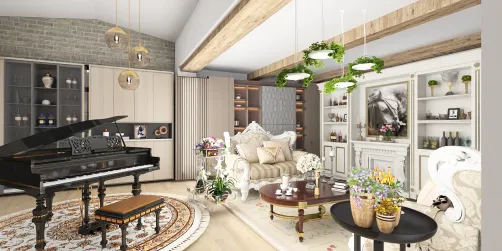
Design Logic: A central spine functions like a data bus, distributing light and movement, while micro rooms cater to specialized tasks such as exercise, focus, and crafts.
Flow: Entrance → gallery spine → branching into a pocket office and powder room → kitchen node → stairway → flexible loft → primary suite; pathways are logically routed.
Sightlines: Controlled visual reveals: extending views to greenery and shorter cross-sightlines to task spaces; the information hierarchy prioritizes essential views first.
Storage: Shallow built-ins along the gallery wall for quick access, with deeper loft closets serving as archives; labeled modules streamline retrieval.
Furniture Fit: Bench depth of 15 inches, pocket desk measuring 24"×48", and modular shelves of 12 inches; these constraints maintain the efficiency of the spine without delay.
Verdict: The gallery acts as a serene conductor; over the next five years, its modular nature will adapt to new routines seamlessly, much like firmware updates in software.
save pinOpen in 3D Planner Processing...
Dual-Aspect Light Ladder
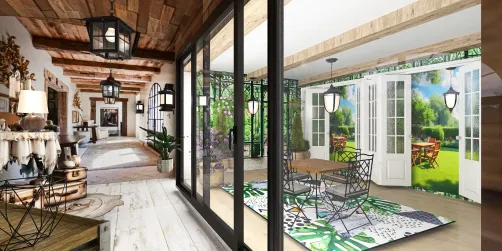
Design Logic: Dual façades draw in daylight akin to a ladder, enhancing circadian health while reducing energy consumption as building codes become stricter and lifestyles evolve.
Flow: East entrance → morning kitchen → central stair → west lounge; daily schedules sync with the sun, aligning activities with optimal lighting conditions.
Sightlines: Diagonal corridors interconnect levels; window glazing acts as interface panels—primary information (sky/greenery) is prominently featured, while secondary elements (storage/doors) are more subdued.
Storage: Drawers under the window seat, landing towers, and stair tread compartments; storage points are strategically placed to minimize movement between tasks.
Furniture Fit: Lounge chairs requiring a 30" footprint, round dining table at 48", and stair width of 40" clear; precise dimensional planning ensures safety within sunlight pathways.
Verdict: Light serves as the main orchestrator; in five years, residents can expect a more harmonious rhythm, reduced visual clutter, and smoother daily transitions.
save pinOpen in 3D Planner Processing...
Final Takeaway
A two-storey apartment isn't merely about the square footage—it's an interface that balances noise, light, and temporal elements. Through vertical zoning, micro rooms, and dual-aspect light ladders, the design operates like cutting-edge code, adaptable to evolving routines and standards. I have observed that the most intelligent homes of the future will not necessarily be larger; they will be crafted with intention. What I continually notice in my projects is that subtle spatial choices are redefining the way people live, particularly with resources like Homestyler that aid in visualization and planning.

Discover the ease of home design with Homestyler! This intuitive online platform offers a fantastic design tool, stunning 3D renderings, and a wealth of inspiring projects and DIY video tutorials. Transform your space into a masterpiece, no experience needed!