

Today’s travel experience faces significant challenges due to time wasted in long queues, confusion between gates, and fragmented services that disrupt the flow of human activity. Industry research from AIA and NAHB reveals a growing demand for environments that enhance wayfinding and lessen cognitive strain. Analyzing the floor plan of Dubai International Airport Terminal 1 feels like deciphering a code designed for movement; the future is approaching rapidly, and I can already identify its structure with a powerful spatial reasoning toolkit.
Linear Structure with Modular Gates
Design Framework: A central concourse functions as the main artery, with modular gate areas integrating as scalable nodes—future expansions can be implemented seamlessly without disrupting the flow.
Pathway Efficiency: The route from entry to security, then through retail spaces, and finally to gate lounges follows a streamlined pathway, minimizing the chances of backtracking and delays.
Visibility: Extensive long views provide a sense of orientation; transparent dividers present information in layers similar to user interface designs—checkpoints, signage, and boarding status.
Luggage Management: Back-of-house spaces and under-seat compartments effectively handle luggage surges; retail storage zones are designed to facilitate high levels of throughput.
Seating Design: The layout of seating areas, charging stations, and compact kiosks adheres to specifications including aisle widths, ADA requirements, and capacity for strollers and trolleys.
Conclusion: The spine-and-bays model is anticipated to accommodate increased passenger volume, ensuring the interface remains clear as travel density grows over the next five years.
save pin
Decentralized Hubs Near Amenities
Design Framework: Grouping lounges, prayer rooms, and food and beverage options into micro-hubs creates localized gathering points, minimizing extensive walking and decision fatigue.
Pathway Efficiency: The flow from security leads into various node options—rest, refuel, work—before converging at the gates, implementing a fan-in/fan-out method to promote relaxed throughput.
Visibility: Short, framed sightlines unveil the next options; integrated digital displays convey layered information akin to tooltips on a digital map.
Luggage Management: Hub-level lockers and staff storage manage peak usage effectively; waste and supply routes operate as discreet background processes.
Seating Design: Modular configurations—booth seating, focus areas, family tables—are connected to frameworks of power and lighting with precise measurements.
Conclusion: A hub-based approach transforms waiting into meaningful periods, a trend likely to become the standard in terminals as dwell times are leveraged wisely.
save pin
Flexible Gate Lounges with Moveable Boundaries
Design Framework: Gates function like adaptable user interface components—movable walls can be adjusted for various aircraft sizes, events, or fluctuations throughout the day.
Pathway Efficiency: Pre-boarding zones help ease the queue; boarding is carried out in an organized manner that keeps pathways clear and directions straightforward.
Visibility: Clear lines of sight to counters, jet bridges, and live information displays help prioritize what to focus on: status, action, and confirmation.
Luggage Management: Under-bench storage and staff cabinets serve as micro-caches, effectively managing spikes in carry-on luggage without overflow issues.
Seating Design: High-density seating arrangements, stroller areas, and access points are dimensioned to align with the flow criteria—ensuring smooth transitions without bottlenecks.
Conclusion: Lounges with flexible partitions are designed to be adaptable to crowd fluctuations; in five years, terminals capable of rapid adjustments will seem commonplace, rather than a novelty.
save pin
Final Thoughts
The floor plan of Dubai International Airport Terminal 1 functions like an ever-evolving interface, synchronizing movement with purpose. As travel demand increases, this blueprint and its various interpretations—such as concourse architecture, amenity clusters, and flexible lounges—illustrate how infrastructure can dictate behavior. Long-term insights regarding passenger navigation and modular gate configurations will continue to shape the industry. From my perspective, the most advanced airports of the future won't necessarily be the largest but rather the most thoughtfully designed, and utilizing tools like Homestyler can enhance their purposeful layout.
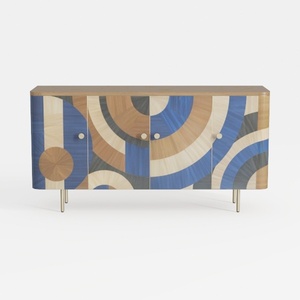
Tribesigns 63'' Farmhouse Sideboard Buffet Cabinet
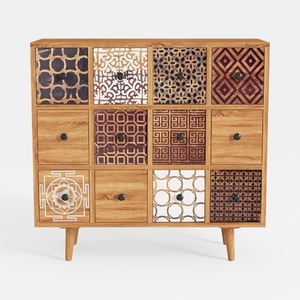
Best Choice Products 9-Cube Storage Organizer

2 Piece Velvet Upholstered Sofa Sets,Loveseat and
Looking to transform your space? Homestyler is your go-to online home design platform. It features an easy-to-use design tool, stunning 3D renderings, a vast array of design projects, and helpful DIY video tutorials. Unleash your creativity and design your dream home today!
Diseño ahora GRATIS
































