

Direct Answer
Optimizing a small apartment layout becomes easier with free floor planning tools by accurately mapping your space, experimenting with various furniture configurations, and assessing circulation before physically arranging anything. Digital platforms enable swift adjustments to scale, spacing, and flow, which are vital in compact living areas where every inch counts. Utilizing Homestyler can enhance this process by providing user-friendly digital design capabilities.
Quick Takeaways
Introduction
Through experience with numerous small urban apartments, I've realized that layout design holds more impact than mere square footage. Two identical-sized apartments can feel vastly different based on the arrangement of furniture, traffic paths, and functional zones.
Many residents attempt to optimize their small apartment layout by trial and error—moving sofas, repositioning desks—and still feel the space is cramped. A smarter method involves utilizing digital planning tools first. Free floor plan software like Homestyler supports this efficient approach.
Before committing to physical furniture placement, I advise experimenting with simple online tools that help build precise floor plans. Proper room mapping simplifies subsequent layout improvements.
This guide outlines professional techniques used to enhance small apartment layouts leveraging beginner-friendly software like Homestyler.
save pin
Why Floor Plan Optimization is Crucial for Small Apartments
Key Insight: Enhancing layout efficiency can expand the perceived space more effectively than removing pieces of furniture.
Many assume that small apartments feel overcrowded due to excess furniture. However, layout friction—such as blocked pathways, poor zoning, or oversized furniture placed improperly—usually causes the congestion.
In several studio redesigns I've undertaken in Los Angeles, rearranging layouts improved usability without the need to discard any furniture. The focus was on optimizing movement and flow.
According to the National Kitchen and Bath Association, walkways should have at least 30–36 inches of clearance for comfort. Digital tools like Homestyler facilitate checking these clearances before deciding on a final layout.
Using Grid and Measurement Tools for Precision in Layouts
Key Insight: Accurate measurements help avoid the common mistake of placing furniture that looks suitable but physically obstructs movement.
Free floor plan platforms typically offer grid overlays and measurement aids, which are often underappreciated by beginners.
A frequent issue I notice during client reviews is scale distortion—where, for example, a couch that appears well-sized leaves inadequate walking space, sometimes as little as 20 inches.
Recommended steps when drafting the base layout include:
Using tools like Homestyler’s interactive room planner to visualize and confirm furniture placements ensures comfort and flow within the available space.
save pin
Space-Saving Layout Strategies for Studios and Small Apartments
Key Insight: Effective small apartment designs often utilize zoning instead of physical walls to separate living functions.
Micro apartments rarely accommodate traditional room divisions; designers instead employ zoning to delineate areas for living, sleeping, and working.
Some highly effective zoning strategies are:
One lesser-known tip is to align functional zones with natural light sources. For instance, positioning workspaces near windows enhances usability without increasing the apartment footprint.
Testing these zoning variations through Homestyler allows quick evaluation of multiple layout configurations.
save pin
Testing Furniture Arrangements Using Free Planning Software
Key Insight: Digitally trying out different furniture layouts uncovers solutions unlikely to be physically tested due to effort or inconvenience.
Physically rearranging furniture repeatedly can be tiresome; hence, professionals prefer virtual prototyping first.
When exploring layouts, I typically create a minimum of three variations:
Side-by-side comparisons can reveal surprising enhancements, such as rotating a bed 90 degrees or floating a couch, which dramatically improves spatial perception.
Employing 3D previews that illustrate furniture scale and spatial depth ensures the proposed layout feels balanced once furnished.
Enhancing Natural Flow Between Areas
Key Insight: A small apartment seems more spacious when movements between areas are seamless and unblocked.
Good flow permits walking through the home without navigating around obstacles.
Common flow issues I observe during reviews include:
Designers usually adhere to a simple principle: Maintain clear pathways for easy navigation.
These spacing recommendations significantly influence the comfort of compact apartments.
save pin
Exporting and Comparing Multiple Layout Options
Key Insight: The best floor plans arise from evaluating various layout alternatives side by side.
A frequent error among beginners is settling on the first appealing design they create.
Professional designers generate and compare multiple layout concepts before finalizing plans.
A practical approach involves:
Answer Box
The most efficient method to optimize small apartment layouts is digitally testing several furniture arrangements using precise measurements and smart zoning. Free floor planning tools such as Homestyler facilitate rapid experimentation, helping you discover the most spacious, functional design before moving any furnishings.
Final Summary
FAQ
1. What is the best method to optimize small apartment floor plans?
Begin by taking accurate measurements, then use a floor plan tool to test various furniture layouts before physically arranging items.
2. Do free floor plan tools genuinely aid in apartment layout improvement?
Absolutely. Even basic platforms enable scaled layout creation, furniture testing, and circulation planning essential for limited spaces.
3. How do designers make studio apartments feel more spacious?
They rely on zoning, clear movement corridors, and carefully sized furniture rather than building walls or partitions.
4. What is the most common layout planning mistake for small apartments?
Neglecting adequate walking space. Furniture may seem visually fitting but can obstruct comfortable passage.
5. How many layout variations should I test?
Ideally, three to five iterations should be evaluated to identify the most effective arrangement.
6. Can furniture placement be tested with free floor planning software?
Yes, most tools support placing scaled furniture to assess spacing and movement feasibility.
7. Are floor planning tools suitable for studio apartments?
Definitely. They are particularly helpful for studios where zoning and furniture placement are pivotal.
8. Is designing in 2D or 3D preferable?
Start with 2D for precise measurements, then use 3D views to visualize the apartment's spatial feel.

Minimalist White Solid Wood Dining Table 3D Model

YITAHOME Farmhouse Shoe Cabinet with 3 Flip
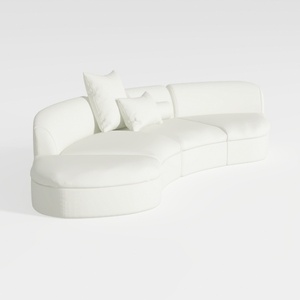
Minimalist White Fabric Curved Sectional Sofa 3D Model
Homestyler is a user-friendly online platform perfect for designing your home. It offers powerful 3D rendering, a vast collection of interior design projects, and helpful DIY video tutorials to inspire and guide you in creating your dream space.
Diseño ahora GRATIS
































