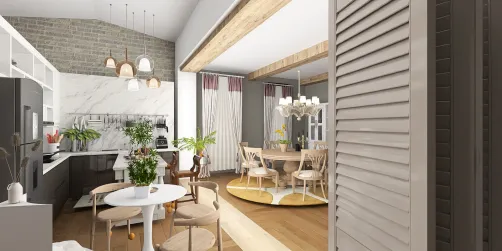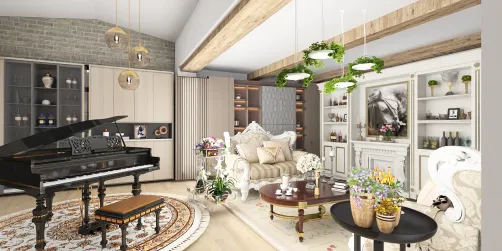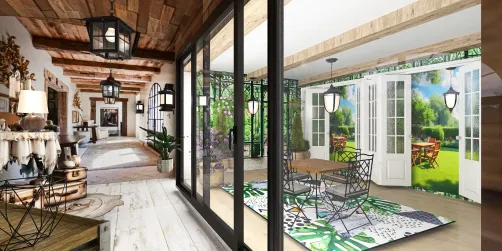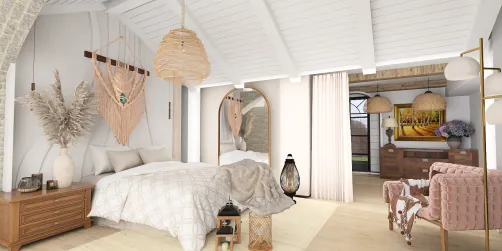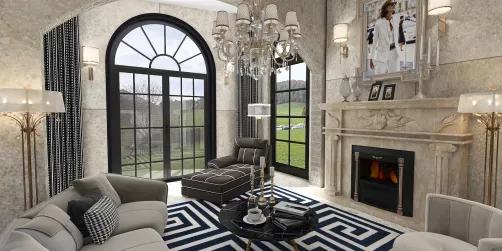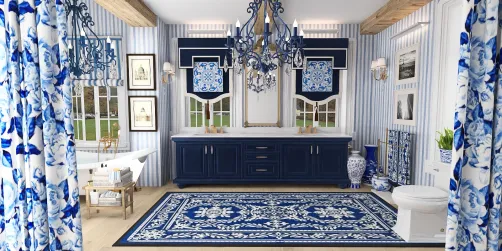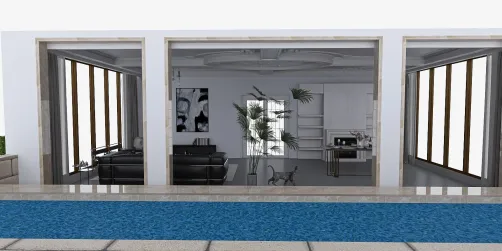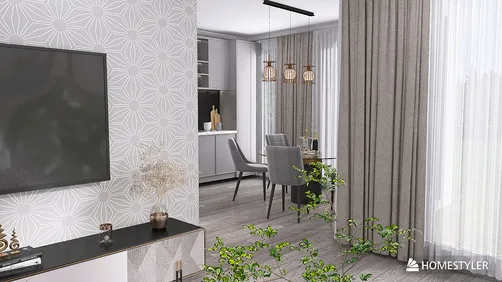
As we look toward the future, our current homes are still grappling with the challenges of cross-ventilation, accumulating storage, and fractured routines. I observe my clients dealing with issues related to density and multigenerational requirements, translating these challenges into a toolkit for spatial reasoning. The emergence of modern Indian floor plans is becoming a standard reference, with reports from organizations like AIA and NAHB indicating a significant shift: flexible spaces and dedicated work-from-home areas are now essential. Zillow's research highlights that buyers prioritize adaptable layouts above all else. The floor plan serves as the interface; the future represents a robust operating system, enhanced by innovative designs like those offered by Homestyler.
Courtyard Spine Featuring Hybrid Living
Design Logic: A central lightwell functions as both a thermal and social buffer, perfectly balancing climate control with community interaction. The contemporary Indian context demands privacy layers while still fostering collective engagement.
Flow: The pathway flows from the entrance to a mud/puja area, then transitions into a hybrid living and dining space, leading to a courtyard, kitchen, and finally to the bedroom pods. The design process parallels a precise function call with smooth transitions back to the central spine.
Sightlines: The long axis aligns with greenspace, while the short axis connects to the puja area and kitchen pass-through. The user interface layers offer a sense of tranquility first, followed by practical utility.
Storage: The design incorporates deep wall bays, under-stair storage solutions, and linen towers near bathrooms, maximizing capacity at the edges while keeping the core area lightweight.
Furniture Fit: Modular sofas with a seat depth of 900–950 mm, dining furniture at 1800×900 dimensions, and a compact mandir cabinet. The design maintains clear thresholds, accommodating monsoon traffic effectively.
Verdict: In five years, this spine will seamlessly integrate work, rituals, and leisure without any clashes, serving as an elegant scheduler for multigenerational interactions.
save pinOpen in 3D Planner Processing...
Flexible 3-Bedroom Layout with Work Nook and Utility Ring
Design Logic: As urban living spaces contract, families expand; this layout effectively combines quiet work environments, aging relatives, and rapid household operations into one adaptable schema.
Flow: Starting from the vestibule, moving into the utility ring (which includes laundry and maid’s quarters), then into the living area, the work nook slide, and radiating bedrooms. The processes diverge but converge again at service points.
Sightlines: The design features controlled diagonals from the sofa to the balcony, a softened view into the study, and a solid barrier to service areas; this hierarchy of information minimizes stress on the main pathways.
Storage: Wardrobes line the perimeter, pantry towers are available, and bed platforms feature lift-up storage, ensuring that items are conveniently placed near their point of use to minimize retrieval time.
Furniture Fit: The design includes a queen-size bed at 1600×2000 mm, a child's bed at 1200×2000 mm, and desks measuring 1200×600 mm; balcony seating is designed at a height of 450 mm to maintain unobstructed circulation above 900 mm.
Verdict: The utility ring operates like background services, ensuring that the home’s capability remains robust even when demands increase.
save pinOpen in 3D Planner Processing...
Dual-Kitchen Design (Wet/Dry) with a Convertible Media Bay
Design Logic: Modern Indian cooking involves two main functions—ritualistic heat and everyday meal preparation. By separating wet and dry kitchens, we can future-proof air quality and workflow efficiency.
Flow: The process begins at the foyer, leading to the dry kitchen island, then to the dining area, followed by the wet kitchen positioned behind, with a media bay that converts into a guest room. Tasks flow like parallel threads, diverging and converging seamlessly.
Sightlines: The island serves as a focal point for a clean user interface; the wet section remains visually subdued, while the dining area opens toward balcony greenery, ensuring clarity at the center and dramatic effects at the periphery.
Storage: The design integrates tall appliance towers, masala drawers, ventilated utensil storage, and concealed bedding trunks within the media bay; organized stacking reduces search times.
Furniture Fit: The kitchen island measures 2100×900 mm, the dining table is 2000×900 mm, and the sliding partition is 2400 mm wide, with a guest Murphy bed of 1500×2000 mm, all tailored to ensure smooth circulation during monsoon seasons.
Verdict: Over the next five years, conversions—from media to guest areas and from calm settings to festive gatherings—will transition smoothly, establishing a layout that accommodates cultural dynamics effectively.
save pinOpen in 3D Planner Processing...
## Final Thoughts
Modern Indian floor plans are not merely a passing trend; they represent an interface that integrates tradition, climate considerations, and flexible work needs into a unified experience. From hybrid courtyard designs to dual-kitchen configurations, these layouts view flow as a form of code and treat storage as essential cache, creating a low-latency lifestyle. Based on my observations, the most innovative homes will not necessarily be larger but will focus on intentionality—and through tools like Homestyler, I witness how small design choices can significantly transform everyday life.
Discover your dream space with Homestyler! This user-friendly online home design platform offers an intuitive design tool, stunning 3D renderings, and a rich library of design projects. Plus, with DIY video tutorials, transforming your home is easier than ever—perfect for beginners and seasoned designers alike!