Thai Style Interior Design Decoded
Thai interior design is a harmonious fusion of spiritual reverence, natural materials, and tropical elegance. Rooted in centuries-old Buddhist traditions and Southeast Asian craftsmanship, it balances solemnity with serenity—golden Buddha statues anchor sacred spaces, while handwoven textiles, teakwood furniture, and lush greenery evoke warmth and authenticity. Unlike minimalist or industrial styles, Thai design embraces layered textures, rich tonal depth, and intentional symbolism: lotus motifs signify purity; elephants represent wisdom and prosperity; and open-air layouts reflect harmony with nature. Modern Thai interiors reinterpret these elements for global homes—integrating rattan seating, carved wooden screens, and warm ambient lighting without cultural appropriation, always honoring context and craftsmanship.

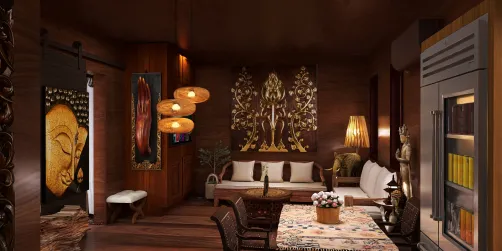
Featured work: D L’s 'Thai Style Living 🇹🇭' — a cozy apartment living room featuring warm-toned rattan sofa, ornamental wall art, potted tropical plants, and soft pendant lighting. The composition uses layered textures (woven jute rug, silk cushions, carved wood side table) and subtle gold accents to echo traditional Thai opulence without overwhelming the space. In Homestyler’s real-time 3D rendering tool, designers can instantly apply authentic Thai material presets—teak flooring, lacquered cabinet finishes, and hand-embroidered textile patterns—with one click, accelerating prototyping while preserving stylistic integrity.
Start Free Design🌿 Rich Earth & Sacred Gold Palette
Thai design relies on a deeply symbolic color language: warm earth tones (terracotta, sand, burnt sienna) ground the space, evoking temple walls and rural landscapes; deep forest greens and jade blues reference Thailand’s jungles and rivers; and radiant gold—used sparingly on Buddha statues, frames, or ceiling details—honors spiritual luminosity and royal heritage. This palette avoids cold neutrals or stark contrasts, instead favoring tonal layering and organic gradients that shift subtly with natural light.

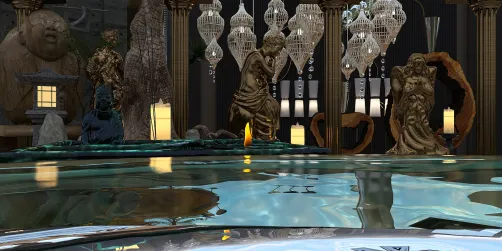
Shalima Mohammed Thomas’s 'The Enchantment of Thai Decor' exemplifies this palette masterfully: a sunlit villa living room bathed in honeyed light, where moss-green velvet armchairs complement golden Buddha figurines and a terracotta-toned woven rug. The gold isn’t gaudy—it’s quiet, ceremonial, applied only to sculptural objects and delicate trim. In Homestyler, users can select the 'Thai Warm Palette' preset from the Material Library, auto-applying coordinated hues across walls, upholstery, and decor—ensuring chromatic harmony in under 30 seconds.
Design Thai Warmth Now🪵 Natural Materials & Handcrafted Texture
Authentic Thai interiors celebrate material honesty: solid teak, mango wood, bamboo, rattan, and hand-thrown ceramics are not decorative afterthoughts—they’re structural and symbolic. Surfaces are intentionally imperfect: visible grain, hand-carved motifs, woven irregularities, and matte lacquer finishes all communicate craft, humility, and connection to land. Even modern interpretations retain tactile richness—think linen drapes with raw hems, unglazed clay planters, or reclaimed timber shelving.

Elena Turricchia’s '😼😼😼' demonstrates how natural textures drive ambiance: a rattan sectional anchors the space, paired with a live-edge coffee table and ceramic vases glazed in ash-gray and celadon. Note the absence of synthetic surfaces—no glossy laminates or plastic accents. In Homestyler, the 'Natural Craft' material pack includes photorealistic rattan weaves, hand-brushed wood grains, and matte ceramic shaders—all optimized for real-time rendering and compatible with AI-powered layout suggestions.
🛕 Spiritual Motifs & Thoughtful Layout
Layout in Thai design prioritizes flow, reverence, and tranquility—not symmetry for aesthetics’ sake, but spatial hierarchy rooted in Buddhist principles. Key zones are defined by intention: a dedicated meditation corner with low seating and incense, elevated Buddha altars placed on clean platforms facing east, and open sightlines connecting indoor and outdoor spaces (via large windows or sliding doors). Ornamental motifs—lotus blossoms, Naga serpents, or mythical Garuda birds—are integrated thoughtfully, often as carvings, textiles, or tile inlays—not as superficial decals.

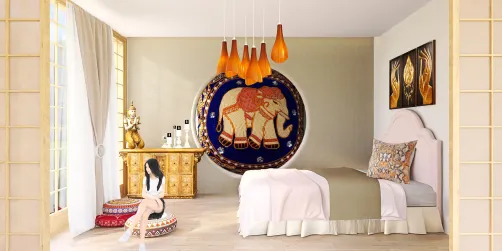
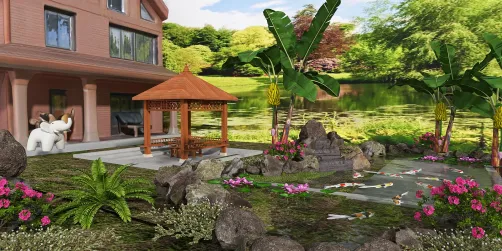
Nita Style’s 'บ้านทรงไทย ทางภาคตะวันออกเฉียงเหนือ' (Northeastern Thai House) embodies spiritual layout: an open-plan living-dining area flows seamlessly into a shaded courtyard through wide timber-framed doors, while a raised wooden platform holds a small altar adorned with lotus candles and brass bells. The home avoids clutter—every object has purpose and placement. In Homestyler, the 'Thai Spatial Logic' template library offers pre-configured room layouts with culturally accurate zoning, automatic alignment of sacred focal points, and smart window-to-garden transitions—enabling designers to honor tradition while designing efficiently.
FAQ
Q: What makes Thai style different from other Asian interior styles like Japanese or Chinese?
A: Thai design emphasizes warmth, ornamentation, and spiritual symbolism over Japanese minimalism or Chinese imperial formality. It favors rich colors (not monochrome), layered textures (not sleek surfaces), and open-air integration (not enclosed courtyards). Buddha iconography, tropical flora, and hand-carved wood dominate—whereas Japanese style highlights shoji screens and wabi-sabi restraint, and Chinese style leans into red/black palettes and dragon motifs.
Q: Can I use Thai design elements in a small apartment or rental space?
A: Absolutely. Focus on portable accents: rattan pendant lights, embroidered throw pillows, a single golden Buddha sculpture on a shelf, or a botanical mural inspired by Thai temple murals. Homestyler’s ‘Thai Accent Kit’ includes scalable, non-permanent assets—ideal for renters who want authenticity without renovation.
Q: Are there cultural sensitivities to consider when designing Thai-inspired spaces?
A: Yes. Avoid placing Buddha images on the floor, using them as mere decor (e.g., printed on rugs), or positioning them in bathrooms or bedrooms. Always place statues respectfully—on elevated surfaces, facing east, and unobstructed. Homestyler’s Design Ethics Guide (built-in) flags inappropriate placements during real-time preview and suggests respectful alternatives.

Rustic Solid Wood Log Coffee Table Natural Live Edge 3D Model

Minimalist Solid Wood TV Stand Cabinet with Slatted Doors 3D Model
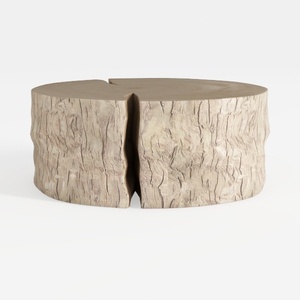
Rustic Solid Wood Split Log Coffee Table 3D Model
Homestyler offers an easy-to-use online home design tool with stunning 3D renderings, inspiring interior projects, and helpful DIY video tutorials. It's perfect for bringing your home design ideas to life, whether you're a beginner or a seasoned decorator.
Diseño ahora GRATIS