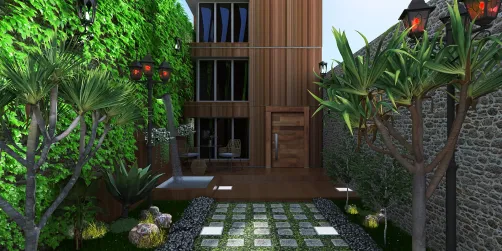
Incorporating landscaping elements into your Revit projects can elevate a simple design into a vibrant and welcoming environment. Whether you are dealing with a residential or commercial design, adding these features is essential for achieving a comprehensive and appealing outcome. This guide outlines the steps to effectively integrate landscaping in Revit. Begin by launching your Revit project and navigating to the desired view for your landscaping. Using a site plan or 3D perspective often provides the best visibility. Next, find the 'Massing & Site' tab within the ribbon menu. Revit offers a variety of tools for constructing topography and site elements. Utilize the 'Toposurface' tool to craft a detailed terrain that mirrors the natural landscape contours. Click on the 'Create' panel and choose 'Toposurface'. You can manually draw points or import data from a site survey. Once the topography is established, you can refine it by editing points to depict hills, valleys, or flat surfaces. After creating the terrain, it’s time to introduce plants and trees. Under the 'Architecture' tab, navigate to the 'Planting' panel and select 'Plant'. You may choose from Revit's built-in library or import new families from other sources. Position the plants on your topography in a way that complements your design, keeping scale and spacing in mind for realism. Additionally, you can enhance the design with pathways, patios, and other hardscape features using the 'Component' tool. Select the right family for sidewalks, driveways, or decks, and arrange them on your site to improve the landscape's functionality. To further enhance the realism, consider adding site furniture like benches, lighting, and fences accessible from the Revit family library. To effectively present your landscaping, make use of Revit's 'Render' feature. Adjust the lighting, materials, and time of day to showcase your design at its best. Rendering can help client visualization of the final outcome, appreciating the landscape you've crafted. Don’t forget to save your progress frequently and develop multiple views to showcase various aspects of your design. By engaging in these steps, you can seamlessly integrate landscaping into your Revit projects, enhancing their appeal and functionality. Happy designing with Homestyler!
Tips 1:
Think about using custom families for distinctive plants and trees.
FAQ
Q: Can I utilize third-party libraries for landscaping? A: Absolutely, you can load families from diverse sources to enrich your landscaping choices.
Q: How can I create a sloped topography? A: You can adjust the points on your toposurface to generate slopes as required.
welcome to Homestyler


Discover your inner designer with Homestyler! This intuitive online platform offers a fantastic design tool, stunning 3D renderings, and a wealth of design projects. Plus, with DIY video tutorials, transforming your space has never been easier or more enjoyable. Start designing your dream home today!