

I once took on the challenge of painting a small studio for a client who wanted to use two different colors, with a unique request that the dividing line follow the slope of his ceiling. This experience taught me that meticulous planning, precision, and a steady hand are far more effective than sheer confidence. As a result, I transformed the seam into a design feature, effectively utilizing the split wall technique that became both our savior and a topic of conversation.
The allure of small spaces captivates me, as the restrictions often ignite creativity. In this article, I will share five inspiring two-color painting ideas that I have implemented in various projects, explaining why they work and what pitfalls to be aware of.
1. Diagonal split — dynamic and modern
I am particularly fond of creating a diagonal division on a wall using two colors; it instantly injects energy and gives a custom touch to the space. This technique works excellently for emphasizing areas like a bed or a sofa, although it requires precise measurements and neat tape application. To ensure accuracy, I always start by marking the high and low points and connect them using a level.
Advantages: It enlivens a room while cleverly concealing imperfect corners. Disadvantages: It may be too bold for resale purposes; consider opting for a muted secondary hue to broaden its appeal.
save pin
2. Dark lower, light upper — grounded and forgiving
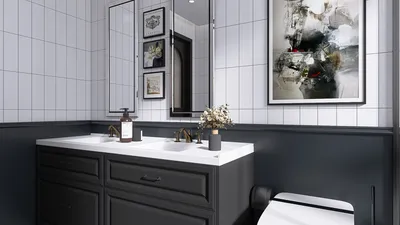
Painting the lower section of a wall in a darker tone and the upper section in a lighter shade creates a cozy, anchored atmosphere without making the room feel smaller. In one renovation, switching to a washable darker paint below effectively addressed scuff marks in a family room, simplifying upkeep.
This method strikes a balance between style and functionality; the main challenge lies in selecting finishes that complement one another, such as satin for the lower section and eggshell for the upper section.
save pin
3. Horizontal accent band — subtle drama
Adding a horizontal stripe or contrast band at chair-rail height can create the illusion of a wider room and delineate spaces within an open-plan layout. In one project, I installed a mid-height band to conceal a radiator, resulting in a design that felt more like intentional architecture rather than a mere workaround, which my clients appreciated.
This approach is budget-friendly and can be easily refreshed. However, aligning furniture and windows with the band does require some thoughtful planning. If you want to visualize layout and color placement before making a commitment, consider using Homestyler to draft your layout alongside your color scheme and test samples on larger boards.
In kitchens and narrow spaces, this kind of band is often more effective when it coordinates with cabinetry and countertops—think of it as an accent that harmonizes elements. If you're considering color zoning in the kitchen, a contrast band can help delineate areas for preparation versus dining, which is why many designers complement it with a dedicated cabinet color scheme.
save pin
4. Ombre or gradient — soft transitions, big impact
Creating ombre walls can be challenging but yields stunning results: smoothly blending two colors adds depth while eliminating harsh lines. I've implemented subtle gradients behind headboards to give the impression that the bed is nestled within a backdrop; clients often mistake it for wallpaper until they touch it.
Prepare to practice on large boards beforehand—achieving a seamless blend requires patience and several thin layers. While it's a slightly higher-cost technique, the end result is a one-of-a-kind, upscale appearance.
save pin
5. Half-and-half with trim or dado — classic with a twist
Dividing a wall exactly halfway and incorporating a thin trim or dado rail conveys a timeless quality. In a small apartment, this design made ceilings appear taller and introduced a clean symmetry that complemented mid-century furnishings.
This technique is forgiving and ideal for renters aiming to personalize without making significant alterations; the main consideration is the extra trim work required. If you want to visualize how the split will function with furniture placement and traffic flow, creating a quick 3D model using Homestyler can be helpful to verify proportions and ensure the split aligns well with door heights or window sills.
save pin
FAQ
Q1: What two colors should I choose for a small room?
A practical guideline is to select a light neutral as your primary color paired with a vibrant accent. The lighter color keeps the space feeling open, while the accent brings character. Experiment with large samples on different walls to assess how varying light affects the tones.
Q2: How can I achieve a clean dividing line between two colors?
Utilize high-quality painter's tape, pressing it down firmly and sealing the edge of the tape with the primary color before applying the secondary color. Using slow, gentle strokes while cutting in minimizes bleeding, resulting in a crisper line.
Q3: Is it permissible to use different paint finishes for the two colors?
Absolutely—combining a more durable finish at the bottom (like satin) with a softer finish above (like eggshell) is both sensible and chic. Just ensure that both finishes derive from the same paint base to avoid issues with adhesion or sheen differences.
Q4: Is painting with two colors costly?
Implementing two colors can increase labor time slightly, particularly due to additional taping or trim work, but the overall expense remains reasonable compared to structural alterations. If you're on a tight budget, limit the accent to one focal wall or utilize removable panels.
Q5: Any suggestions for renters aspiring to achieve a two-color effect?
Consider using peel-and-stick temporary wallpaper or large removable painted panels that lean against the wall to achieve the look without altering the property. Magnetic or tension-mounted trim can replicate a mid-wall rail without the use of screws.
Q6: How long should I wait between applying two different colors?
Adhere to the drying time recommended by the paint manufacturer, typically a few hours to overnight for latex paints. Rushing the application of the second coat could lift the first color, resulting in jagged edges.
Q7: What tools can make painting with two colors easier?
Investing in a good angled brush for clean edges, a quality roller, and a flexible plastic edger is advisable for attaining ultra-clean lines; a small leveling tool is also beneficial for ensuring horizontal bands remain perfectly straight.
Q8: Where can I find step-by-step guidance on painting techniques?
Detailed how-to guides from paint manufacturers are excellent resources; for instance, Sherwin-Williams provides comprehensive instructions on preparation, taping, and finishing that I regularly refer to: https://www.sherwin-williams.com/homeowners/how-to/painting-resources/how-to-paint-a-room.
save pin
Homestyler is your go-to online home design platform! With its user-friendly design tool, stunning 3D renderings, and a wealth of design projects and DIY video tutorials, you can effortlessly create and visualize your dream spaces. Transform your home design ideas into reality today!
Diseño ahora GRATIS
































