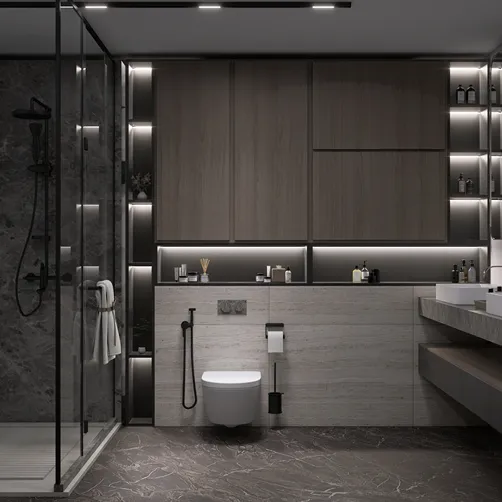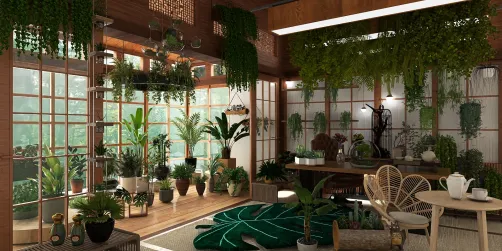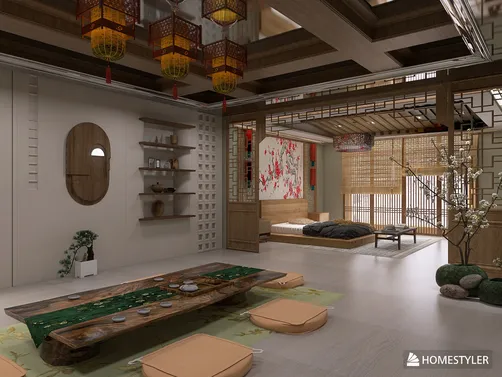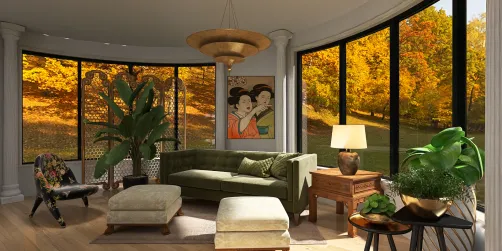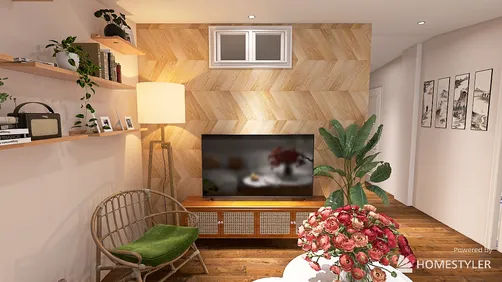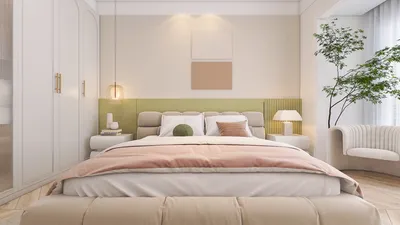
As the future evolves, we witness a trend toward more compact living and increasing reliance on digital habits. Present-day residents, however, still contend with issues such as clutter, privacy, and thermal comfort. According to NAHB, new home sizes are gradually decreasing as buyers shift their focus from excess to efficiency. This is where innovative designs like a 425 sq.ft row house floor plan come into play, serving as a prototype for future living styles. Here, I view this limited footprint as an operational system for daily life, ensuring that each room serves a purpose and that tranquility is included, not just a luxury. Indeed, this 425 sq.ft design reflects the foundational principles of a streamlined and more thoughtful way of living, exemplified by tools such as Homestyler.
Linear Spine Layout
Design Rationale:
The linear spine effectively organizes essential functions—entryway, kitchen, lounge, bedroom—much like stacked modules, minimizing interferences as urban living becomes more dense.
Movement:
Starting from the entry node moving through a galley kitchen, then to a flexible lounge, followed by a sleeping alcove, and concluding at the rear bath; this streamlined pathway alleviates decision-making fatigue.
Visual Connections:
The extended view from door to window enhances visual flow, transforming the 425 sq.ft area into an elongated corridor filled with natural light.
Storage Solutions:
Floor-to-ceiling cabinets line the spine, while toe-kick drawers and overhead shelves increase functional space without compromising tranquility.
Furniture Arrangement:
Incorporating a 72–78" sofa, a 24" deep table, and either a queen murphy bed or a 48" daybed; precise clearances ensure fluid movement within the space.
Conclusion:
The design presents a disciplined approach with minimal nodes and a clear sequence, making it ideal for individuals or couples who prioritize routine over chaos.
save pin
Split-Core with Pocket Flex
Design Rationale:
A central core for services (bathroom and storage) effectively divides social and sleep areas, responding to the rise of hybrid work and micro-hosting trends.
Movement:
Entry → work/living area → core (bathroom/laundry) → rear sleeping area; pocket doors function as toggles, facilitating adjustment to the space.
Visual Connections:
The diagonal sightline from the front window to the back clerestory creates a layered sense of space, maintaining privacy while promoting openness.
Storage Solutions:
The core serves as a storage hub, featuring a stacked washer, an 18" pantry, a 12" deep linen closet, and bed base drawers; organized layers eliminate clutter.
Furniture Arrangement:
A compact desk (36"), a lounge chair (30" footprint), and a platform bed with 12" of under-bed storage enhance functionality and avoid spatial issues.
Conclusion:
This layout effectively supports modern life—workspaces in the front, a sheltered sleeping area—perfectly aligning with remote work patterns and intimate gatherings.
save pin
Court-Light Micro Atrium
Design Rationale:
Incorporating a micro light well or courtyard offers a refreshing influx of daylight, essential in row house environments where walls are shared with neighbors.
Movement:
Entry → kitchen looping around the courtyard → living area pocket → raised sleeping nook; every movement orbits around this light source, mirroring a kernel's function.
Visual Connections:
Bright glimpses from the courtyard into each space establish an engaging visual narrative—avoiding disorientation and fostering intentional life experiences.
Storage Solutions:
Integrity through perimeter benches with lid storage, 16" deep wall units, and seasonal compartments above the corridor; smart storage areas are subtly integrated.
Furniture Arrangement:
A bench-sofa hybrid, a round drop-leaf table (34"), a compact wardrobe (20"), and modular stools are designed to resonate with the atrium's rhythm.
Conclusion:
Air, light, and daily rituals turn into the operating system; ideal for those who prefer sensory clarity over mere square footage.
save pin
Final Thoughts
A 425 sq.ft row house floor plan isn’t merely limiting; it’s a framework where flow, storage, and sightlines dictate the lifestyle you create. Options like compact row home designs and micro townhouse models demonstrate that thoughtful geometry trumps sheer area efficiency. These small-footprint residential designs lay the groundwork for a future where spaces function as innovative systems. It is my belief that the most intelligent homes tomorrow will focus less on size and more on intentional living, further supported by platforms such as Homestyler.

Discover Homestyler, the ultimate online home design platform that empowers you to unleash your creativity! Its user-friendly design tool, stunning 3D renderings, extensive design projects, and helpful DIY video tutorials make it easy for anyone to transform their space effortlessly.
















![[For dear Adelina madee 🤎]](https://hs-designs.homestyler.com/production/design/images/8a07e535-9cbc-4132-a42a-5932dac3a112/1706972286037.jpg?x-oss-process=image/resize,w_502,m_mfit/format,webp)