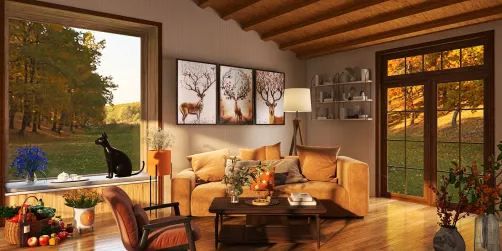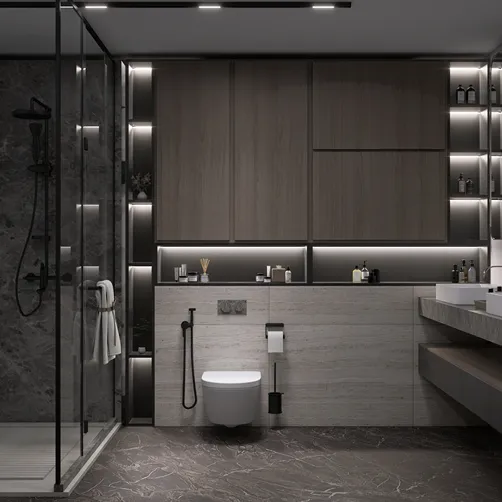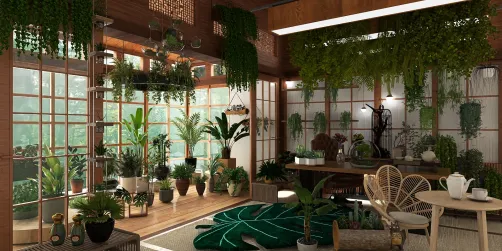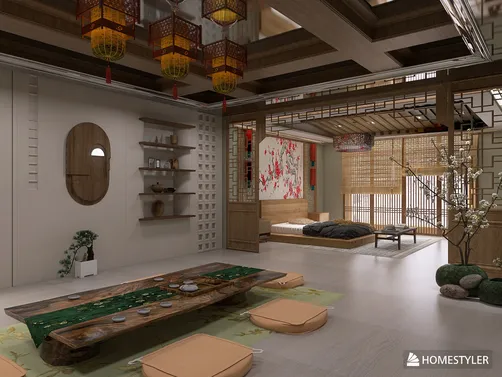
Envisioning future living means simplifying complexity into clear designs, while many current ground-floor residences grapple with issues related to circulation, privacy, and noise transfer. Utilizing a spatial reasoning toolkit keeps my perspective accurate: AIA reports consistently highlight that clients appreciate flexible layouts and optimal daylight. The design of this six-bedroom ground-floor house not only exemplifies that shift but also serves as a prototype for modern living. The future is approaching, and I am proactively charting its pathways.
Courtyard Spine with Split Clusters
Design Logic: Two clusters of three bedrooms are positioned opposite each other across a light-court, effectively distinguishing the rhythms of different generations while sharing a thermal core. Contemporary trends are moving towards modular designs that offer privacy without leading to isolation.
Flow: The sequence begins at the entry, leading through a gallery spine and courtyard, then to the left family cluster and right guest/office cluster; this orderly progression resembles a streamlined API call.
Sightlines: Observers entering the home will appreciate layered views that extend toward the courtyard and gradually narrow to the individual rooms, establishing a public-to-private visual order that decreases cognitive overload.
Storage: Built-in units along the wall depth of the spine serve as valuable cache space, supplemented by micro-closets in each room and a shared pantry conveniently located next to the kitchen node.
Furniture Fit: Each of the four rooms accommodates queen beds while the remaining two contain twin or convertible options; with 30–36" clearance and 42" corridor widths, this design aligns with future mobility needs.
Verdict: This layout fosters a serene signal path, allowing families and guests to coexist peacefully without overlaps in daily activities for years to come.
save pin
Radial Core with Ring Circulation
Design Logic: A central living-kitchen hub radiates light and warmth, with six bedrooms positioned around it for equal access while minimizing corridor noise.
Flow: The route begins at the entry, flows into the radial heart, and then circles through each bedroom; this design feels like a circular instruction set with predictable timing.
Sightlines: The hub creates long, controlled diagonals; doors are strategically offset to prevent direct lines of sight into bedrooms, thereby preserving privacy while simplifying navigation.
Storage: The perimeter ring features continuous 18"-deep cabinets, with linen stations at each quadrant and a gear bay near the entry for daily essentials.
Furniture Fit: Designed with built-in headwalls and integrated night niches, the spaces incorporate 24" task zones, while the dining area accommodates up to 10 seats without impeding flow.
Verdict: This ring configuration maintains a balance of energy and quiet, adapting seamlessly as household dynamics evolve.
save pin
Linear Bar with Dual Ends
Design Logic: This elongated bar layout situates three rooms at either end, with a vibrant social center in the middle; future homes will demand efficient passageways and effective sound management.
Flow: The pathway starts at the entry and moves through the central living area, leading to the left sleep wing and the right multi-use wing; this intuitive design is both frictionless and easily understandable.
Sightlines: From the entrance, occupants enjoy a controlled axial view that extends to the garden; staggered side rooms break up sightlines, ensuring a clear flow of information.
Storage: Spacious ceiling-high wardrobes are found within the wings; the center area boasts utility walls, drop zones, and concealed laundry, ensuring convenience.
Furniture Fit: The primary room accommodates a standard king-sized bed, while queens fit comfortably in the others, alongside modular desks in two rooms; the 8–9' living span allows for versatile seating arrangements.
Verdict: This linear configuration for a six-bedroom single-level home remains clear, adaptable, and considerate of daily life processing demands.
save pin
Final Takeaway
Creating a six-bedroom house plan on the ground level is a testament to managing bandwidth—privacy, natural light, and movement must balance dynamically. As single-level living transforms into a long-term necessity for multigenerational families and accessible designs, the most innovative plans make flow appear effortless. In my observation, the finest homes of the future resonate like well-written code—concise, easy to read, and quietly effective, highlighting tools like Homestyler for intuitive design processes.


Transform your home design dreams into reality with Homestyler! This user-friendly online platform offers an intuitive design tool, stunning 3D renderings, inspiring design projects, and informative DIY video tutorials—perfect for everyone, from beginners to seasoned decorators. Start creating your dream space today!















![[For dear Adelina madee 🤎]](https://hs-designs.homestyler.com/production/design/images/8a07e535-9cbc-4132-a42a-5932dac3a112/1706972286037.jpg?x-oss-process=image/resize,w_502,m_mfit/format,webp)