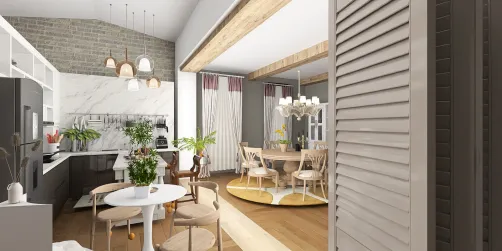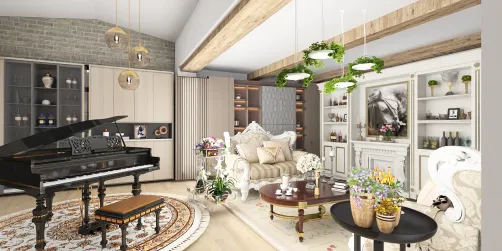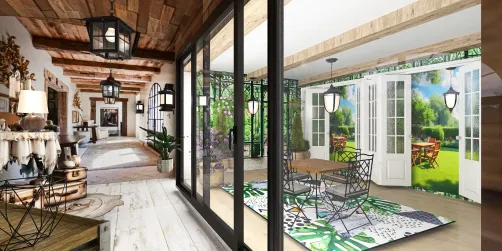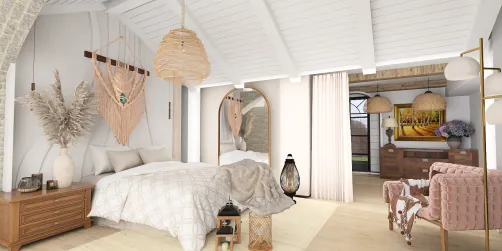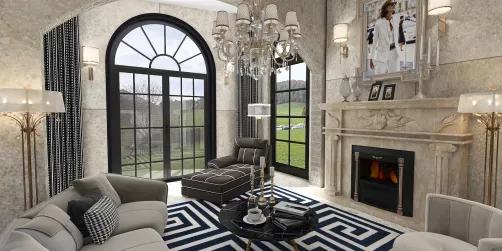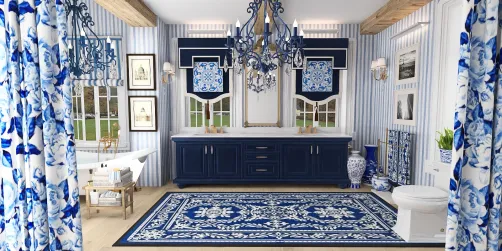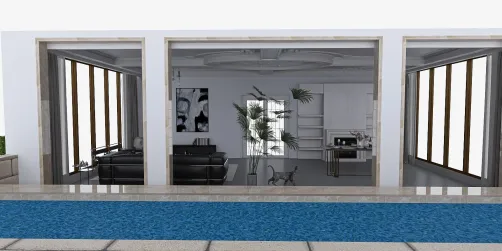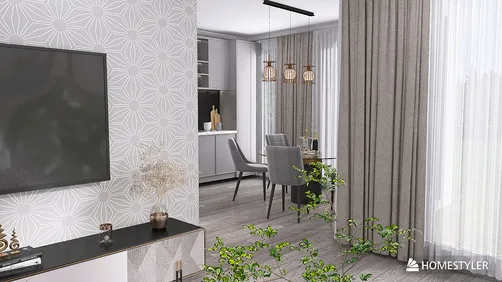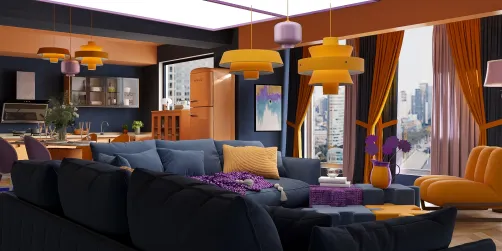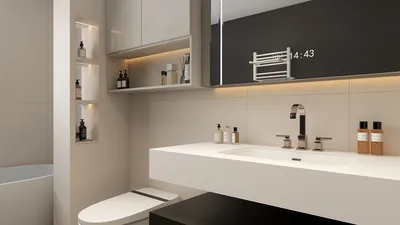
As we progress into the future, small homes are becoming an experimental ground for innovative living solutions. I observe my clients tackle modern challenges such as limited space, the hybrid work environment, and the quest for efficient storage—all underscored by industry trends. Data from the AIA indicates a growing need for adaptable interiors, even as living spaces get tighter. Thus, a two-bedroom apartment measuring 485 square feet transforms into a well-structured design that supports a quicker, more compact lifestyle. A spatial reasoning toolkit serves as the essential framework for these choices, transforming requirements into functional layouts.
Split-Core Spine Layout
Design Concept: This layout features two compact bedrooms located at opposite ends of a central service core that includes a bathroom, stacked laundry, and kitchenette—ensuring that privacy is optimized while shared areas are designed for maximum efficiency.
Flow: From entryway to pocket foyer, users navigate through the spine, branching out to sleeping areas; the living zone is positioned centrally, acting as a hub between rooms and the small balcony.
Sightlines: A diagonal line of sight extends from the entrance through the living area to the windows; door placements are staggered to minimize direct glare, similar to layered user interface (UI) components.
Storage: Features such as full-height closets, bed-drawer storage, and slim overhead shelves optimize space utilization, with clearly labeled zones to enhance organization.
Furniture Arrangement: The setup includes a 72–76" sofa, nesting tables, a 30" compact dining table, a queen-sized bed in the primary bedroom, and a full-sized bed in the secondary bedroom; these dimensions act as functional constraints, facilitating ease of movement.
Conclusion: This layout efficiently combines private areas with shared functions, adapting seamlessly to remote work trends without disrupting the overall living experience.
save pinOpen in Homestyler 3D Planner Processing...
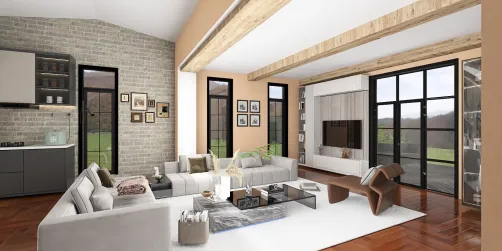
Diagonal Living Hub Layout
Design Concept: By positioning the living room along a diagonal axis, the design visually expands perceived space, while the bedrooms remain orthogonal; this geometric arrangement enhances usability for video calls or casual gatherings, creating a versatile environment.
Flow: Navigation follows a linear path from the entrance to the diagonal living arc, leading into the kitchen pocket and branching off to the bedrooms; this diagonal layout simplifies movement much like a main loop in programming.
Sightlines: An open corner provides views towards a window, while the design allows glimpses into the kitchen and workstation niches, ensuring clarity in visual hierarchy comparable to organized menus.
Storage: A corner pantry, an angled media wall with hidden storage, and elevated shelves manage space efficiently by placing storage at accessible points to reduce retrieval time.
Furniture Arrangement: Includes a corner sectional (maximum 85"), a swivel chair, a drop-leaf table, and a wall-mounted desk; every piece is aligned with the diagonal layout to maintain coherence.
Conclusion: This engaging hub design translates compact square footage into a dynamic arrangement; it remains adaptable as technology improves and lifestyle habits evolve.
save pinOpen in Homestyler 3D Planner Processing...
Pocketed Flex Suite Layout
Design Concept: The secondary bedroom functions as a versatile sliding-door studio; this pocket allows for multiple uses—featuring a Murphy bed and a foldable desk—while operating like software containing hidden modules.
Flow: The design progresses from the entry through a linear galley, leading to the living area, then into the flex pocket and primary bedroom; these transitions feel like smooth mode shifts, easily adaptable.
Sightlines: A clear pathway extends from the entry to the window; the flex pocket remains concealed until required, sustaining a calm and intentional atmosphere.
Storage: Features such as toe-kick drawers, ceiling-level cabinets, and tall units in the hallway categorize storage based on usage frequency to prevent clutter buildup.
Furniture Arrangement: Comprises a Murphy bed, a rail desk, a 60" media unit, and a 28" round dining table; all elements maintain slim profiles that align with movement routes, adhering to functional flow.
Conclusion: This layout transforms 485 square feet into a versatile environment, accommodating changing routines without the need for structural changes.
save pinOpen in Homestyler 3D Planner Processing...
Final Takeaway
The design of a two-bedroom apartment at 485 square feet is not merely a limitation but a sophisticated interface—compact, readable, and optimized for efficient living. Variations like two-room layouts and micro-apartment designs illustrate that intent triumphs over size constraints, while considerations such as small balcony integration and efficient kitchen designs become manageable challenges. The homes that endure will be akin to well-structured systems: displaying clear pathways, ample storage solutions, and precise functional limits; in my experience, the most intelligent living spaces prioritize clarity over bulk, demonstrating how subtle design choices continuously enhance my clients' lifestyles.

Homestyler is your go-to online platform for effortless home design. Featuring an intuitive design tool, stunning 3D renderings, and a wealth of DIY video tutorials, it simplifies creativity and helps you transform your décor ideas into reality. Start designing today!