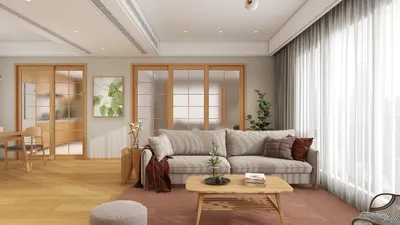


In my decade-long journey as an interior designer, I've come to a significant realization: modern living room blinds have evolved beyond mere sunlight blockers. Today's design trends emphasize versatility and character, showcasing that even the coziest spaces can ignite substantial creativity. This article will explore 10 innovative living room blind ideas that I've employed in actual projects, blending my personal experiences with expert advice. From sleek minimalism to bold textures, you're sure to discover options that flawlessly balance aesthetics, privacy, and light management—for an enhanced space using tools like Homestyler to visualize these ideas.
1. Streamlined Roller Blinds
In my perspective: In a snug urban residence, these roller blinds were essential for maintaining clean lines. When pulled up, they almost vanish, making the room feel spacious and organized.
Benefits: They save precious space, are user-friendly, and complement various interior styles. Roller blinds in the living room harmonize beautifully with contemporary designs, especially when visualized with Homestyler.
Drawbacks: They might appear overly simple if the overall decor lacks visual intrigue.
Advice: Opt for a textured fabric to add dimension and prevent a flat appearance.
2. Transparent Vertical Blinds
My insight: In a coastal property, sheer vertical blinds were perfect for maintaining the magnificent ocean view while softening the intense sunlight, creating a serene, seaside ambiance.
Advantages: They enable gentle light distribution, ensure privacy, and are perfect for expansive windows or sliding doors.
Disadvantages: These require more regular upkeep to keep the slats free of dust.
Tip: Combine with blackout drapes for adaptable light management.
3. Wooden Venetian Blinds
My perspective: Adding wooden Venetian blinds brought a touch of warmth to an otherwise monochromatic living area, connecting beautifully with the flooring.
Pros: They create a snug, inviting atmosphere and fit well with both rustic and modern themes.
Cons: Wood may warp in humid conditions, so consider faux wood alternatives if that’s a concern.
The wood elements introduce warmth and work exceptionally well with natural fabrics in living room setups.
4. Decorative Roman Shades
My experience: I transformed a bare rental living room with vibrant botanical-patterned Roman shades, adding life to the space without repainting.
Highlights: They provide visual flair, add soft texture, and can conceal unattractive window frames.
Downsides: They may not be suitable for high-humidity areas as their fabric can be trickier to clean.
Tip: Select machine-washable fabrics for hassle-free maintenance.
5. Adjustable Zebra Blinds
My perspective: A client favorite, these blinds allow customizable light penetration during the day while ensuring privacy at night.
Benefits: They offer flexible light filtering, chic design, and various opacity choices. According to the Window Covering Manufacturers Association, these layered designs often outperform traditional roller blinds in control.
Cons: Their layered design may be too modern for more traditional settings.
6. Ceiling-Length Drapery Panels
While not technically blinds, when combined with streamlined roller blinds, these draped panels provided a striking height illusion in a client’s apartment.
Benefits: They evoke luxury, enhance the perceived height of ceilings, and disguise less-than-perfect wall surfaces.
Drawbacks: The fabric costs can be higher, and professional installation often yields the best results.
Using full-length drapery with blinds can redefine spatial proportions, making them a worthy consideration for standout living rooms.
7. Bamboo Woven Shades
To achieve a bohemian-chic aesthetic, I selected bamboo shades that gently filtered in light while showcasing lovely golden tones.
Pros: Eco-friendly, they add texture and work beautifully with indoor plants.
Drawbacks: Limited blackout capabilities; they are better suited for areas where ambient light is acceptable.
Tip: Consider adding a liner for improved privacy or light control.
8. Automated Smart Blinds
For an older client, I implemented these automated blinds, providing effortless window operation through a remote or smartphone app.
Advantages: They offer convenience, particularly for hard-to-reach windows, and integrate seamlessly with smart home systems.
Drawbacks: Initial costs can be high, and they require a consistent power source.
9. Layered Textures with Sheers and Blinds
In a contemporary loft, I combined sheer curtains over blinds for a rich, layered designer aesthetic.
Benefits: This approach provides versatility, depth, and improved insulation, as outlined by Energy.gov.
Cons: More layers demand additional maintenance.
Using soft sheers over functional blinds effectively bridges style and utility, especially in open-plan homes.
10. Vibrant Aluminum Blinds
Lively colors on slim aluminum blinds transformed a youth apartment’s living area, injecting vibrancy without overwhelming the space.
Pros: They are lightweight, easy to maintain, and budget-friendly with an array of color options.
Cons: They may dent easily and might not fit well in exceptionally formal spaces.
Conclusion
Living room blinds have become an integral part of defining a space's atmosphere and functionality rather than merely being window coverings. In compact areas, we are prompted to be increasingly resourceful, turning challenges into chic solutions. The American Society of Interior Designers emphasizes that selecting the right window treatments can affect mood, energy efficiency, and the perceived size of a room. Which of these innovative ideas will you explore in your own living room makeover, potentially using Homestyler to visualize your choices?
Frequently Asked Questions
1. What styles of blinds are favored for living rooms?
Popular choices like minimalist roller blinds, wooden Venetian blinds, and dual-layer zebra blinds dominate modern living rooms for their blend of style and functionality.
2. Are blinds more suitable than curtains for smaller living rooms?
Blinds are particularly advantageous as they conserve space and create a sleek appearance, while curtains may introduce softness but occupy more visual and physical space.
3. Which blinds require the least maintenance?
Aluminum and faux-wood blinds are known for their ease of upkeep, needing just a quick wipe down.
4. How to select blinds for a sun-drenched living room?
Choose fabrics that protect against UV rays or opt for layered blinds to enable adjustable light filtering. This can also help mitigate heat gain, according to Energy.gov.
5. Can motorized blinds be fitted to any window?
Yes, although uniquely shaped or sized windows might require customized solutions, making professional measurement essential.
6. Are bamboo blinds reliable?
Yes, especially for interior use. For areas with higher moisture, ensure they have a treated finish for durability.
7. Do sheer blinds offer nighttime privacy?
No, sheer materials allow visibility from outside when interior lights are on. Pair them with blackout curtains for total privacy.
8. Is it possible to mix blinds and curtains in the same living space?
Definitely—layering adds dimension and versatility. Look back at my example of wood accents combining warmth with fabric for inspiration.
Looking to transform your space? Homestyler is your go-to online home design platform! With its intuitive design tool, stunning 3D renderings, and a wealth of DIY video tutorials, you'll have all the resources you need to create your dream home effortlessly. Dive in and start designing today!
Diseño ahora GRATIS
































