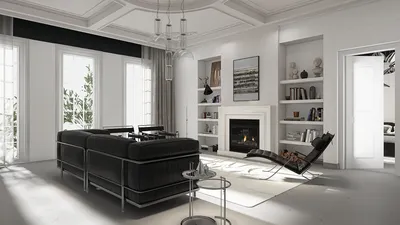


I once worked with a client hoping to transform their small living room into a Netflix nook, a yoga space, and a home office—all at once. When it comes to compact areas, often the most innovative concepts arise. The key is to craft a multifunctional space where each purpose feels deliberate, not haphazard.
Over more than ten years of renovating kitchens and apartments, I’ve learned that effective solutions blend psychology with smart furniture selections and optimal lighting. Below, I’m sharing five ideas for integrating a workspace into your living room—real strategies I’ve implemented in actual projects, complete with practical advice, budget considerations, and potential pitfalls to avoid.
1. Create distinct areas with rugs and furniture
I typically establish the work zone with a rug and a slim desk that is set at an angle to the sofa, making both zones feel affiliated yet distinct. The benefit: this zoning provides visual clarity without erecting walls; the downside: rugs in high-traffic areas can wear out quickly, so it’s wise to choose a robust low-pile option.
Tip: Install floating shelves behind the desk to serve as a partial room divider while maintaining open sightlines.
2. Collapsible desks and clever storage solutions
In micro-apartments, a wall-mounted fold-down desk or a cabinet desk can be invaluable—you can work and then easily tuck away the chaos in seconds. I installed one for a client who wished to eliminate all office vibes when guests came over; it appeared custom-built but was significantly more affordable than a full cabinet.
Challenge: the quality of hinge hardware is crucial—cheap fittings can lose stability, so investing a little extra for solid hardware and soft-close mechanisms is a smart move.
3. Vertical solutions: floating desks and stacked storage
I love utilizing vertical space: a floating desk paired with overhead shelves takes advantage of otherwise overlooked wall areas and keeps the floor clear. I regularly create mock-ups to evaluate sightlines and ergonomics—consider it spatial planning in 3D prior to making purchases.
Pros: clears the floor, enhances storage; cons: necessitates precise measurements and quality anchors—consider hiring a professional or using reliable anchors for heavy shelving.
4. Sofa-to-desk: adaptable furniture that maximizes usage
A convertible sofa with a lightweight, pull-out desk can revolutionize life for freelancers who switch between relaxation and focused tasks. I suggested a modular sofa with a sliding tablet arm to a writer who regularly hosts friends—it's flexible and surprisingly comfortable.
Note: while convertible items may have higher upfront costs, they frequently replace two or three separate pieces, which balances the budget over time.
5. Lighting, sound management, and versatile corners
Effective lighting and sound control can make the dual-purpose room feel intentional: employing layered lighting (task and ambient) along with a few acoustic panels can mitigate echo and enhance virtual meetings. If your kitchen is nearby and you often do video calls while cooking, consider a smart kitchen-workstation layout that keeps prep and productivity separate but functional.
Minor challenge: investing in acoustic panels and effective lighting can increase expenses, but even a strategically placed floor lamp and a dense rug can significantly enhance the atmosphere on a budget.
FAQ
Q1: What dimensions do I need for a working living room setup?
A compact, effective desk space can measure as little as 36" wide by 24" deep for a laptop arrangement, although comfort improves with a width of 48". Ensure you have at least 30" of knee clearance and sufficient room for chair movement.
Q2: Which desks work best in small living rooms?
Look for slender-profile desks, wall-mounted fold-down varieties, or floating surfaces. Desks equipped with built-in storage are vital for minimizing clutter, crucial in shared spaces.
Q3: How do I maintain an organized living room office?
Apply a one-in-one-out policy for items, utilize closed storage for documents, and implement a brief daily reset routine. Baskets and concealed bins are invaluable for swift cleanups before guests arrive.
Q4: Are ergonomic chairs essential for a living room office?
Yes—even part-time work benefits significantly from ergonomic support. A chair with lumbar support and adjustable height can prevent discomfort during extended use.
Q5: How can I lessen background noise during calls?
Soft furnishings, rugs, curtains, and acoustic panels all help absorb sound; plants also work to diffuse noise. Position your desk so the camera faces a tidy backdrop rather than reflective surfaces that create echoes.
Q6: Can lighting enhance productivity in a shared living environment?
Definitely—task lighting at your desk alleviates eye strain, and layered ambient lighting creates a pleasant atmosphere. Use a cool white task lamp for concentrated work and warmer lights for relaxation afterward.
Q7: What ergonomic height should my desk be?
Ergonomic desk heights vary by individual, but general guidelines suggest that the desk should allow forearms to be parallel to the floor or slightly below when typing. According to OSHA's Computer Workstations eTool, monitor tops should ideally be at or slightly beneath eye level to minimize neck strain.
Q8: How can I plan my layout before purchasing furniture?
Measure and sketch the layout of your room, taking note of door swings and traffic paths, then experiment with potential furniture dimensions using cutouts or digital mockups. I frequently advise a simple 2D or 3D layout evaluation to avoid costly missteps.
Homestyler is your go-to online home design platform, perfect for anyone looking to create stunning spaces. With its easy-to-use design tool, impressive 3D renderings, diverse design projects, and helpful video tutorials, transforming your home has never been easier or more enjoyable!
Diseño ahora GRATIS
































