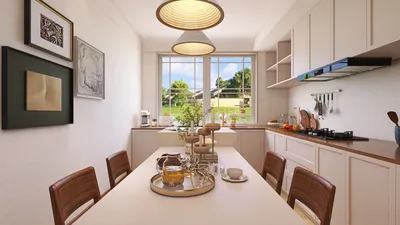


Choosing the perfect dining room rug size greatly depends on the shape of your dining table. Typically, the rug should stretch approximately 24 to 30 inches beyond each edge of the table to ensure chairs remain fully on the rug when pulled out. Rectangular tables usually pair well with rectangular rugs, round tables with circular rugs, and square tables with either square rugs or slightly larger rectangles. Using platforms like Homestyler can help visualize these proportions before purchasing.
Determining the Right Rug Size for Your Dining Table Shape
One frequently asked question among homeowners is how to select the appropriate dining room rug size based on the table's shape. From my experience designing numerous dining areas, many people mistakenly choose rugs purely based on room dimensions without considering the table geometry, which often leads to issues.
Problems such as chairs catching the rug edges, cramped dining zones, or rugs that look disproportionately small arise not from poor design taste but from a lack of understanding of how table shapes influence rug sizing. Tools like Homestyler’s layout planner can greatly assist in mapping your furniture arrangement and visualizing chair movement space, simplifying this decision.
In this comprehensive overview, we’ll explore how rug size requirements vary with rectangular, round, and square tables, revealing layout pitfalls that many design articles overlook.
Why the Shape of Your Dining Table Influences Rug Dimensions
A crucial detail to remember is that rug size should accommodate the paths chairs take when pulled out, which vary depending on the table’s shape rather than just its size. Rectangular tables cause chairs to move primarily along straight lines on the long and short sides, while round tables involve radial chair movement in all directions. Square tables fall somewhere in between these patterns, affecting how far a rug must extend.
Homeowners often err by choosing rug sizes that simply match table dimensions, ignoring that chairs typically require 18 to 24 inches of movement space when someone sits or rises. Professional interior design guidelines, including those referenced by NKBA, suggest allowing sufficient clearance so chairs do not slip off the rug’s edges. Homestyler’s 3D visualization tools enable precise planning to ensure these clearances are met.
Using a 7x9 Rug with Rectangular Dining Tables
A 7x9 rug can function adequately under a rectangular dining table but generally only fits smaller tables seating up to four people comfortably. In compact dining spaces, this size is popular due to proportional aesthetics; however, ensuring chairs stay fully on the rug is crucial.
Experience from various projects shows that while a 7x9 rug works well for intimate four-person tables, it becomes insufficient for tables seating six or more. Designers often use digital room layout previews, such as those available in Homestyler, to verify if chairs remain on the rug during typical use, preventing common sizing errors.
Rug Size Considerations for Round Dining Tables
Round dining tables usually require larger rugs than one might expect because chairs move diagonally outwards in all directions, not merely straight back. Consequently, rug coverage must be evenly extended around the entire perimeter of the table to accommodate this movement and avoid chairs catching on the edge.
A frequent mistake is selecting a rug whose diameter closely matches that of the round table, leading to chairs frequently slipping off the rug. Furthermore, round tables tend to "float" visually more than rectangular ones, especially in open-plan homes, making the rug an essential spatial anchor. Platforms like Homestyler can help visualize these needs in an open space.
Guidance for Square Dining Tables and Rug Selection
Square dining tables, although less common, are gaining popularity in contemporary homes and breakfast areas. The best rug choice for square tables focuses on creating strong visual symmetry, balancing the negative space around the table for a harmonious look.
Two primary rug strategies exist: matching the rug's shape exactly to the table or choosing a slightly larger rectangular rug to enhance the spatial balance. Designers often aim for equal distances between the table edges and rug edges, a concept that can be explored interactively in Homestyler for visual accuracy.
Prioritizing Chair Movement Space Over Exact Rug Symmetry
While aesthetic harmony is valuable, functionality is paramount. The true measure of a suitable dining rug lies in accommodating chair clearance comfortably. Residential design guidelines suggest minimum clearances to prevent obstruction and ensure smooth transitions between flooring surfaces.
By planning with realistic furniture movement in mind and utilizing 3D tools like Homestyler, homeowners can avoid costly rug size mistakes and achieve a layout that feels both balanced and practical.
Achieving Balanced Dining Room Layouts with the Right Rug
Effective dining room designs use the rug as a spatial anchor that clearly defines the eating area, especially valuable in open-concept homes where boundaries between living, dining, and kitchen spaces blur. Successful layouts adhere to simple principles that consider rug size, table placement, and chair clearance equally.
Homestyler's virtual environment allows users to experiment with these principles, providing visual previews of balanced arrangements to ensure dining zones feel intentional and inviting.
Summary and Frequently Asked Questions
What rug size fits a rectangular dining table best? For tables seating six, an 8x10 rug generally allows adequate space for chair movement.
Is a 7x9 rug suitable under a dining table? It is appropriate primarily for four-seat tables; larger tables need bigger rugs to maintain proper chair clearance.
Which rug size complements round dining tables? An 8-foot diameter rug works well for most round tables between 48 and 54 inches in diameter.
Should the dining rug match the table shape? Matching shapes usually enhances visual balance and clearly defines the dining zone.
How much larger should the dining rug be compared to the table? The rug should extend at least 24 inches beyond every side of the table to accommodate chair movement.
Is a dining room rug necessary? While not mandatory, rugs serve to visually anchor the dining space and soften chair noise on hard flooring surfaces.
What is the ideal rug size for a square dining table? An 8x8 rug typically works well for square tables approximately 48 inches wide.
How to calculate the appropriate dining rug size? Add 48 to 60 inches to both the table’s length and width to determine the ideal rug dimensions.
Using design software such as Homestyler can facilitate precise planning, helping to visualize and adjust these measurements before purchasing.


Homestyler offers an easy-to-use online design tool with stunning 3D renderings, a vast collection of interior design projects, and helpful DIY video tutorials—perfect for bringing your home design ideas to life effortlessly.
Diseño ahora GRATIS
































