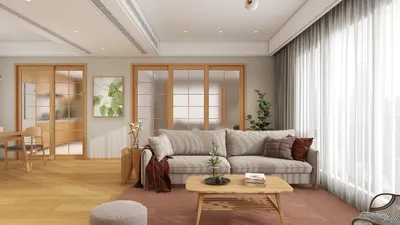


I once assisted a client who desired a massive painting capable of concealing their television; it almost led me to order something akin to a billboard before I realized how crucial scale and sightlines are compared to mere ambition. This little close-call taught me that sizable paintings in a living room should appear deliberate rather than haphazard; their placement and proportion can make a space either sing or shout. For one particular project, I referred to a room planning case study early on to establish sightlines and lay out the furniture effectively.
1. Opt for a single bold, oversized statement artwork
I have a fondness for a large, gallery-worthy painting on a high wall — it provides an immediate focal point and injects instant personality into a space. The benefit lies in its dramatic cohesion and clean visual anchor; however, achieving this requires careful consideration of hanging height, lighting, and potentially a larger budget, but the results are rarely disappointing when planned correctly.
2. Incorporate a triptych or expansive panoramic piece to fill long walls
In spacious living rooms that may feel void across their length, a three-panel or panoramic artwork can occupy the space effectively without overwhelming any single view. This works well with high ceilings, allowing you to create a rhythm, though it will require extra effort to align panels and plan the spacing so that it reads as one unified scene.
3. Construct a gallery arrangement centered around a large focal painting
A large central piece accompanied by smaller artworks brings richness and depth — I often combine framed pieces with canvases for added contrast. Planning this type of arrangement is akin to organizing a kitchen workflow: balance, scale, and clear zones are crucial, reminiscent of a kitchen layout where visual zones help dictate material selections, such as one I implemented that effectively guided choices.
4. Select textured or sculptural wall art for a tactile experience
Materials like textiles, metal reliefs, or layered wood panels add depth and shadow that flat paintings cannot achieve; they interact beautifully with varied daylight and specific spotlighting. The downside includes maintenance — some textures require careful upkeep — yet they are unmatched when you want tactile warmth and sculptural intrigue.
5. Hang art above low-profile furnishings or on unexpected walls
Positioning a large painting over a sleek console, sofa, or even above a fireplace mantel forms a curated vignette; leaving space around the artwork is advisable so both the furniture and art maintain their presence. Attention to lighting and spacing is essential — too close, and it feels cramped; too far, and it disconnects from the seating area; in instances where precision was key, I referred to my experience with an AI interior design tool, like Homestyler, to quickly test visual weights.
Tips 1:
When uncertain, take a photograph of the wall from various seating positions and create a scaled mock-up before purchasing. For those on a budget, commissioning emerging artists or acquiring high-quality prints can offer scale without the gallery cost. Additionally, using a dimmable track or picture light can elevate even modest pieces into spectacular displays.
FAQ
Q1: What size should a painting occupy in a large living room?
Typically, I suggest that artwork fills about 60–75% of the wall space above furniture; for isolated walls, choose a piece large enough to create a proportionate focal point from standard seating distances.
Q2: How high is ideal for hanging a large painting?
The common guideline is to position the center of the artwork around 57 inches (145 cm) above the ground, aligning with average eye level and typical gallery standards (Museum of Modern Art guidelines often reference this height).
Q3: Should a large painting match the room’s color scheme?
Not necessarily — a contrasting piece can invigorate a neutral palette, while repeating a key color from the artwork in accessories fosters cohesiveness. I focus on incorporating one unifying hue instead of striving for complete matching.
Q4: What are the best lighting options for a large living room painting?
Consider adjustable, dimmable fixtures such as track lights or picture lights to minimize glare; warm LEDs are great for paintings with warm undertones, whereas higher CRI bulbs ensure accurate color representation.
Q5: Is it safe to hang a heavy or oversized painting on drywall?
Larger artworks often require wall anchors that reach studs or an installed French cleat system; to ensure safety, consult a professional framer or installer to prevent mishaps.
Q6: Is it preferable to invest in one large piece or several smaller ones?
Both options are viable — a single large artwork simplifies the composition and makes a bold statement, whereas multiple smaller pieces provide flexibility and narrative depth. My decision is based on ceiling height, wall width, and how the art interacts with furniture and traffic flows.
Q7: How do I select an art style for modern versus traditional living rooms?
Align the artwork’s dimensions and framing to the room's architectural style: minimalist modern spaces typically favor large, bold abstracts with simplistic frames, while traditional spaces can accommodate detailed figurative works and ornate framing. Blending different styles can also produce a curated feel, provided you balance size and color.
Q8: Where can I find real-world examples and case studies for placing large-scale artworks?
There are various online galleries and resources showcasing real projects; professional design case studies and installation notes from museums are particularly useful for insights on scale and lighting considerations (for instance, several museums offer hanging standards and guidelines on their websites).
Homestyler is your go-to online home design platform, perfect for both novices and pros. With its user-friendly design tool, stunning 3D renderings, and a wealth of inspiring design projects and video tutorials, transforming your space has never been easier or more enjoyable!
Diseño ahora GRATIS
































