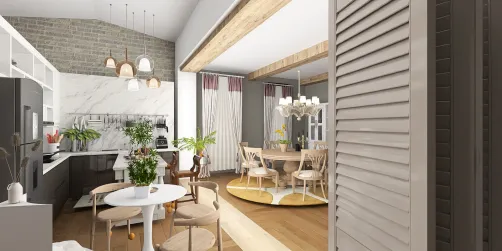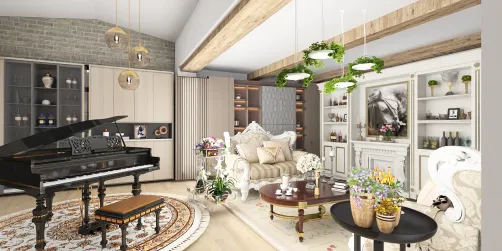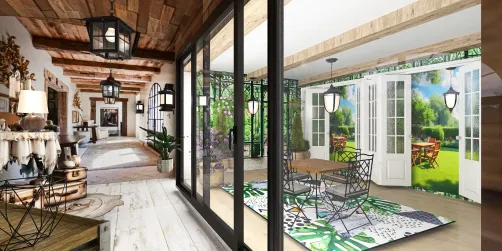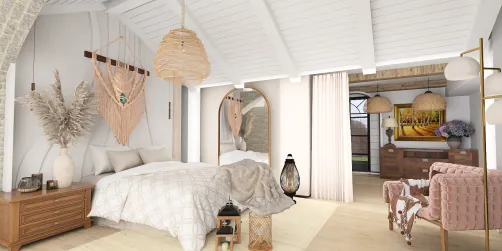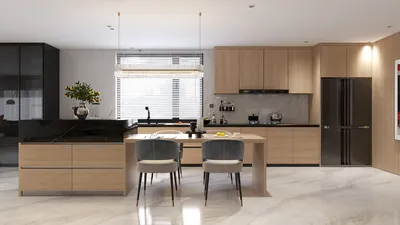
As we approach the future, our homes are adapting to meet the challenges of today—balancing privacy needs, storage limitations, and interrupted flow patterns. Behind every layout I create lies a spatial reasoning toolkit, with reports from the AIA indicating a consistent rise in demand for adaptable bedrooms and versatile spaces in American residences. In this two-bedroom house design, I consider each wall as a foundational piece that shapes tomorrow's day-to-day operations.
Paired Suites with a Shared Core
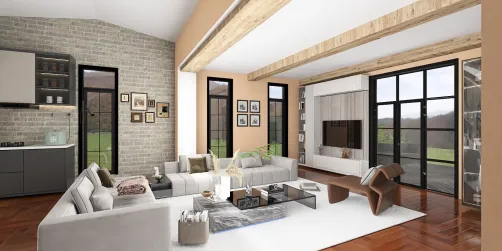
Design Logic: Two equally sized bedrooms flank a central living-kitchen area, ensuring readiness for a multi-generational setup or hybrid working environment where personal space is essential.
Flow: From the entry to the drop zone, moving through the kitchen spine and into the living area, the pathway to the bedrooms is a clear sequence that minimizes unnecessary traffic and delays.
Sightlines: From the entrance to the daylight-enhanced wall, leading to tranquil corners; the living space serves as the main user interface, while private areas recede into the backdrop.
Storage: A deep pantry paired with hallway closets functions as an efficient cache: items that are frequently used are easily accessible, while bulk storage is effectively pushed to the outer edges for seasonal needs.
Furniture Fit: Sofas should have a depth of 38–40 inches, tables sized at 72×36 inches, and queen beds with a clearance of 30 inches on each side—these parameters ensure that movement flows unhindered.
Verdict: This configuration represents a robust setup; in five years, it will still accommodate shifts in remote working and guest visits without causing disruptions to the home's functionality.
save pinOpen in 3D Planner Processing...
Offset Primary with Flex Second
Design Logic: The primary suite is strategically placed in a serene corner; the second bedroom transforms into a flexible space—functioning as an office during the day and a guest area at night—aligning with future living dynamics.
Flow: Entry → pocket foyer → open living area → flex room access on axis; the primary suite’s angle creates acoustic separation and a calming environment.
Sightlines: Diagonal views connecting the kitchen to the terrace enhance sensory engagement; the flex room is intermittently visible through a controlled opening, minimizing visual distraction.
Storage: The primary suite comes equipped with a walk-in closet suitable for long-term storage, while the flex space features built-in shelves, allowing for adaptability in organization.
Furniture Fit: The dimensions for a Murphy/sofa bed should be 60×80 inches, and the desk at 60×28 inches, ensuring each functional area adapts smoothly without congestion.
Verdict: This design forms a forward-thinking arrangement with one stable space and one versatile room; over the next five years, the flex area can seamlessly transition to accommodate different needs.
save pinOpen in 3D Planner Processing...
Split Bath, Centered Kitchen Spine
Design Logic: The kitchen occupies the middle ground as a central service hub; the bathrooms are divided—one within the suite and one accessible from the hallway—to optimize morning routines.
Flow: Entry → kitchen hub → living space → access to bedrooms → simultaneous bath access; this plan is designed to operate with minimal backtracking.
Sightlines: The cooktop is aligned with the window, ensuring that natural light is the primary view; bedrooms maintain a level of distraction-free visibility from the core zones.
Storage: Incorporating toe-kick drawers, a full-height utility cabinet, and a linen tower ensures quick access and a well-organized memory hierarchy for materials.
Furniture Fit: An island sized 84×36 inches with a 42-inch clearance, and a dining table measuring 66×36 inches; bed areas maintain 30–36 inch pathways for dependable flow.
Verdict: This plan revolves around efficient service; in five years, technology upgrades can seamlessly integrate without needing to overhaul the entire infrastructure.
save pinOpen in 3D Planner Processing...
Final Takeaway
A two-bedroom house design focuses less on sheer size and more on the orchestration of flow, communication, and storage for lives that are consistently multitasking. Variants such as paired suites, flexible second rooms, and central service spaces are indicative of the future of domestic design. My insights suggest that the most intelligent homes ahead won't necessarily be larger; instead, they will prioritize intentionality, akin to what I consistently observe in my projects—the significance of precise layouts and organized storage systematically enhancing everyday living. With tools like Homestyler, visualizing these concepts becomes easier, allowing homeowners to actively engage in this design evolution.

Discover the power of Homestyler, the ultimate online home design platform! With its user-friendly design tool, stunning 3D renderings, a plethora of design projects, and helpful DIY video tutorials, you can effortlessly create your dream space—perfect for both novices and seasoned decorators!