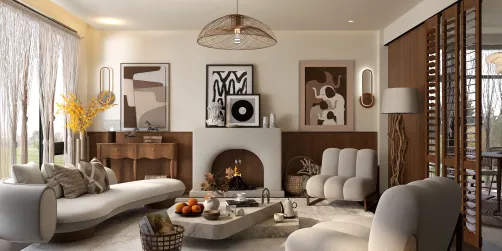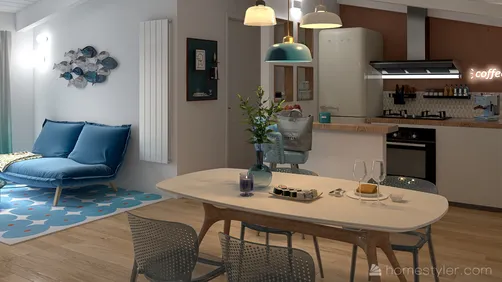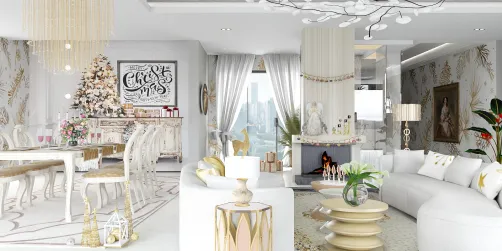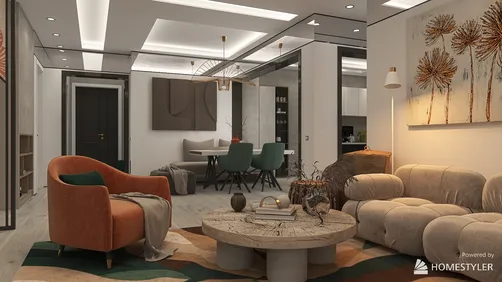
The lifestyle of the future is increasingly focused on nearby care, adaptable privacy, and energy efficiency, yet many modern ground floors face challenges such as noise disturbances, traffic flow issues, and storage delays. Recent surveys by the NAHB indicate a growing demand for secondary suites and multigenerational housing solutions. As I explore single-bedroom and double-bedroom layouts on the ground level, I see them as early indicators of domestic interoperability—where one level can accommodate both privacy and communal living. My spatial reasoning toolkit becomes activated each time I draft this interface with the innovative capabilities of Homestyler.
Split-Axis Layout: Front Single Suite with Rear Double Room
Design Rationale: The front single suite serves to buffer guests or offer elder care, while the rear double bedroom provides a dedicated space for family rest, effectively separating acoustic zones to ensure routines remain future-proof.
Flow: Entry → foyer node → single suite → main living area → back corridor → double room; this straightforward sequence minimizes potential collisions.
Sightlines: The foyer acts as a frame for the living area, which serves as the primary interface; private doors are set back, allowing for a diagonal view into the garden that eases mental tension.
Storage: Wall-deep wardrobes function as storage caches; front coat and linen closets are located near the entry, while spacious storage at the rear, close to the bathroom, minimizes retrieval times.
Furniture Arrangement: A queen bed fits in the single room (60×80), and the double room accommodates either two twin beds or a king; maintain 36" wide pathways, with 18" buffers beside nightstands, while planning for future devices at the headwalls.
Conclusion: The split-axis layout effectively supports multigenerational dynamics and anticipates up to five years of adaptive scheduling without conflict over shared spaces.
save pin
Courtyard Axis: Rooms Surround a Central Light Well
Design Rationale: A compact internal courtyard serves as a light and airflow conduit, with single and double rooms flanking it to promote communal wellness while maintaining privacy layers.
Flow: Entry → living area → courtyard hub → single room → bathroom → double room; this design creates loops allowing for varied routines, like night shifts or napping patterns.
Sightlines: Views extend seamlessly from the living area to the green void, diffusing through doors; the hierarchy of the user interface fosters a tranquil environment with subtle privacy indicators.
Storage: Entryway seating with shoe storage, a vertical pantry near the kitchen, and integrated drawers beneath beds help reduce visual clutter; seasonal items can be stored along the courtyard wall.
Furniture Arrangement: Low-profile sofas and round dining tables minimize pinch points; double rooms can accommodate bunk beds or split twin configurations, adhering to circulation guidelines of 30-36".
Conclusion: This spine layout transforms maintenance into a subtle routine, harmonizing nature-inspired inputs with versatile sleep scheduling.
save pin
Diagonal Gradient: Angled Hallway for Sound Dampening
Design Rationale: A gently sloping diagonal corridor mitigates sound transfer from communal areas to bedrooms, effectively managing privacy akin to adjusting a volume control—allowing future technologies and human behaviors to coexist seamlessly.
Flow: Entry → angled hallway → multifunctional study space → single bedroom → shared bathroom → double bedroom; each segment is arranged as a discrete task zone.
Sightlines: Angled views limit direct glare; the living area remains the central focus while bedroom doors are positioned to minimize distraction, enhancing mental tranquility.
Storage: Angled shelves accommodate laundry and linens; corridor built-ins act as high-speed storage, liberating rooms from bulky wardrobe requirements.
Furniture Arrangement: Wall-mounted workstations, shallow dressers with 24" depth, and 30" bed clearances facilitate movement; the double room can support a king bed with 18" space buffers to allow for future tech.
Conclusion: The diagonal gradient layout addresses the complexities of current mixed scheduling while preparing for tomorrow’s silent technology, enabling seamless routines.
save pin
Final Thoughts
Ground floor designs featuring single and double bedroom layouts represent a modern approach to multigenerational living, remote work, and wellness as foundational principles. With dual sleeping zones and an optimized circulation strategy, this configuration effectively manages noise, light, and storage to create a user-friendly experience. Based on my insights, the most intelligent ground-floor homes aren’t necessarily larger but are rather more deliberate regarding flow, storage solutions, and sightlines; I firmly believe this is where the everyday living experience quietly evolves, aided by tools like Homestyler.

Homestyler is your go-to online home design platform! With its user-friendly design tool, stunning 3D renderings, and a treasure trove of design projects and DIY video tutorials, transforming your space has never been easier or more enjoyable. Start designing today and unleash your creativity!