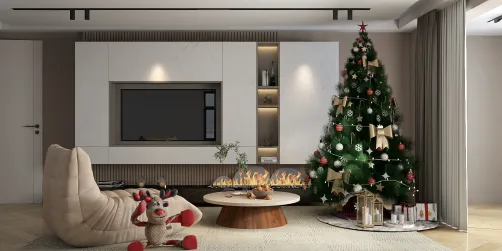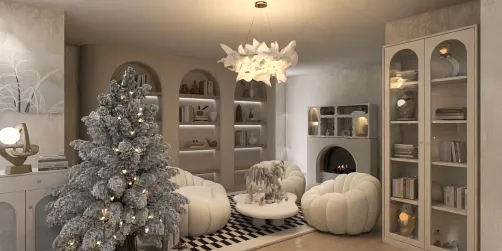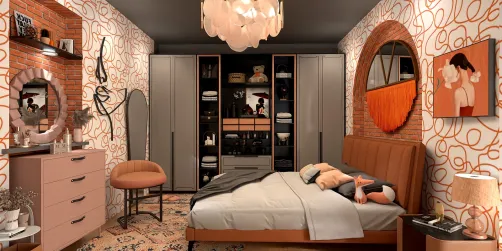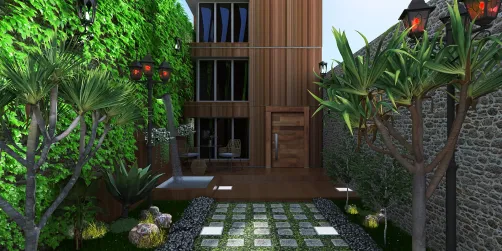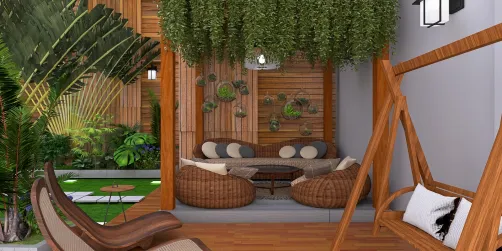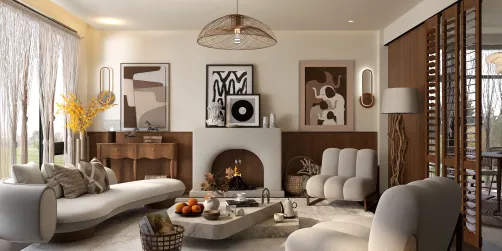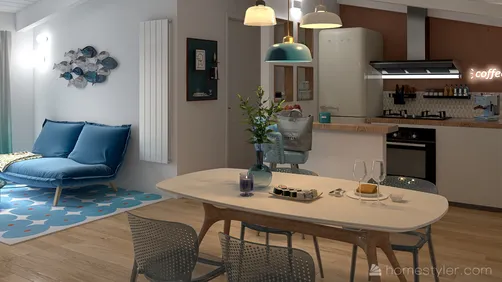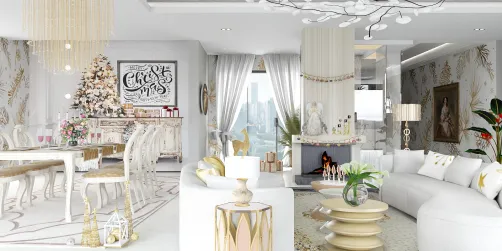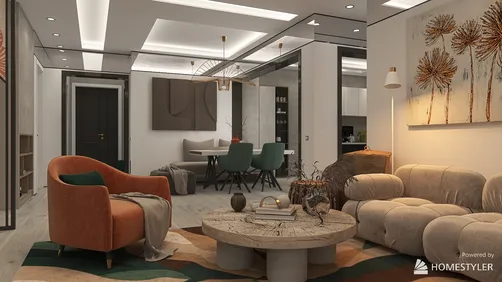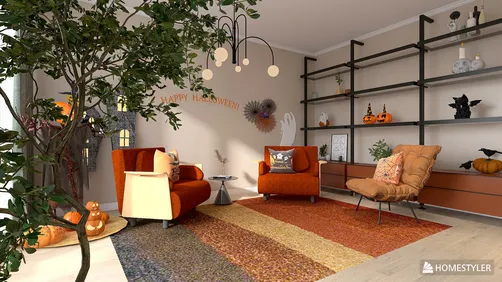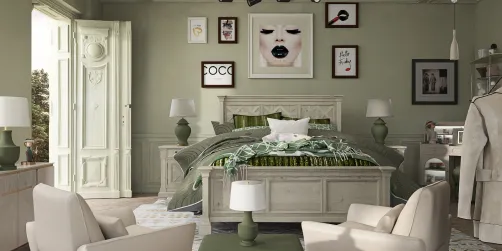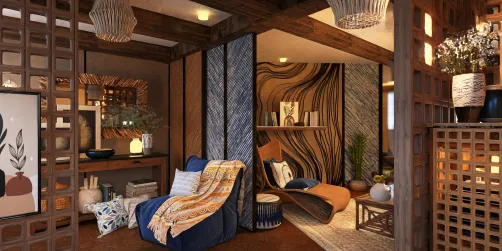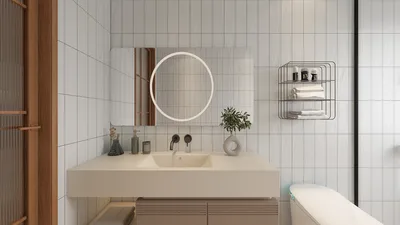
As we look towards future lifestyles, it’s essential to address existing challenges such as caregiving rhythms, multigenerational living, and the complications of working from home. This evolution suggests that our ground floor design will serve as the foundation of our daily lives. Current industry trends support this view; Zillow's insights depict families pursuing flexible bedroom options and adaptable open spaces that enhance utility without needing additional square footage. I am currently exploring ground floor plans for three-bedroom homes, which represent a preliminary blueprint for living harmoniously where proximity, privacy, and upkeep come together. The future is approaching, and I'm already utilizing tools like Homestyler to design for it.
Courtyard Spine with Split Sleep Zones
Design Logic: A central courtyard functions as the thermal and social backbone of the home, effectively creating separation between primary and secondary bedrooms to promote acoustic tranquility and an equitable distribution of daylight.
Flow: The sequence moves seamlessly from entry to gallery hall, continuing through a living/kitchen area, looping around the courtyard, and leading to the bedrooms—much like a circular journey that captures moments and returns residents to a serene space.
Sightlines: Views along the long axis direct attention to greenery, while the short axis connects to doorways; these privacy layers resemble user interface elements—public areas in the foreground and intimate settings in the background.
Storage: Continuous perimeter millwork provides extensive storage, with linen niches adjacent to bathrooms and a gear wall by the entry that helps manage daily clutter.
Furniture Fit: Beds should allow for a clearance of 30–36 inches, dining areas should utilize dimensions of 72×36, and sofa modules need to span 90–108 inches; every piece should honor circulation pathways and the thresholds leading to the courtyard.
Verdict: This design not only anticipates the demands of caregiving and remote work but also minimizes noise while maximizing calm. Even five years into the future, it maintains its relevance.
save pin
Hybrid Core: Kitchen Lab + Flex Suite
Design Logic: Here, the kitchen transitions from traditional rows of appliances to a lab-centered core, complemented by a flexible bedroom that can switch between guest and office use, as two children's rooms occupy a quieter wing.
Flow: From the mud entry, one moves through the kitchen lab to a communal table, leading to the flex suite and finally to the kids’ wing; this sequence functions like a command order that channels daytime activity and encourages restful transitions.
Sightlines: The layout allows for clear task visibility towards the cooktop and garden, with angled views towards the flex bedroom door; this setup allows parents to monitor without intruding, resembling gentle supervision in a user-friendly interface.
Storage: The design incorporates a deep pantry and utility wall, providing high storage capacity, while the children's wing benefits from vertical lockers and under-bed drawers, effectively managing space usage.
Furniture Fit: The kitchen island should measure 96×42 with a 44-inch clearance; a desk nook of 60 inches and twin beds sized at 39×75 with 30-inch aisles ensure that the setup accommodates human interaction comfortably.
Verdict: This hybrid core keeps domestic functions streamlined—work can be easily initiated, guests welcomed, and bedtime routines established with resilience integrated into daily life cycles.
save pin
Linear Bar with Pocketed Privacy
Design Logic: A linear bar floor plan consolidates services along one wall, thereby freeing up a corridor that maximizes daylight; three bedrooms branch off this pathway, providing protected spaces for privacy when needed.
Flow: Starting from the front porch and transitioning through an open living bar to sliding pocket doors leading into bedrooms, the layout ensures smooth movement with seamless transitions at each entry point.
Sightlines: A view from the entryway extends to the garden, creating a clear visual pathway; bedrooms minimize distractions by featuring offset doors and layered glazing to reduce sound penetration.
Storage: A long wall serves as a versatile storage solution that integrates coats, media, pantry items, and linens—maintaining order that keeps distractions to a minimum while preserving quiet surfaces.
Furniture Fit: The sectional sofa should span between 108–120 inches, while the dining table measures 84×38 inches, and queen beds are centered with a clearance of 30–36 inches, ensuring that corridors remain spacious at 40–44 inches for optimal flow.
Verdict: This bar plan exemplifies beauty within constraints—simple, maintainable, and easy to interpret; future households can adjust room functions without needing a complete redesign of the system.
save pin
Final Takeaway
The three-bedroom plans on the ground floor do more than just depict layouts; they serve as frameworks for care, work, and tranquility. In these designs, movement resembles coding, storage functions like data caching, and furniture acts as interfaces that streamline home operations, reducing errors. Whether referred to as ground-level three-bedroom designs or multigenerational setups, the most intelligent futures will require intentionality rather than mere expansion. Through my experiences, I have found that small spatial decisions we make today can have profound implications on how families will live tomorrow, particularly when aided by design tools like Homestyler.


Homestyler is a fantastic online home design platform that empowers you to create stunning spaces easily. With user-friendly design tools, breathtaking 3D renderings, inspiring design projects, and helpful video tutorials, you can effortlessly transform your home into a masterpiece. Discover your creativity today!