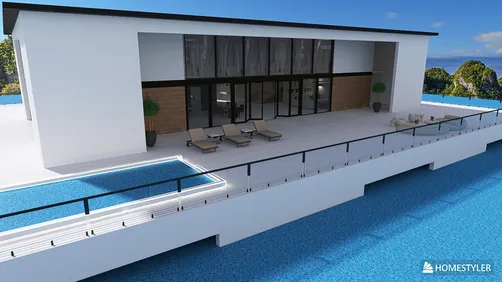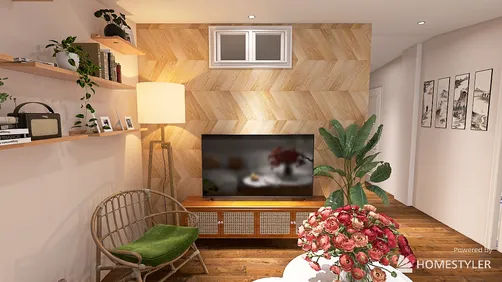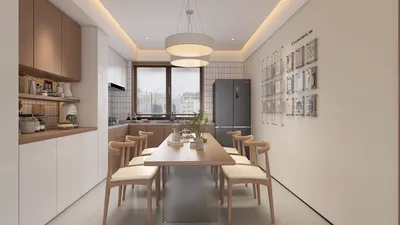
As we look toward the future, it's clear that many contemporary homes are facing challenges, particularly with their layout: various rooms seem isolated, lacking a cohesive flow throughout the space. Reports by the AIA indicate that homeowners are increasingly valuing flexible, multi-purpose spaces over just maximizing square footage. This shift represents a significant change in home design philosophy. Accordingly, five-bedroom cabin floor plans should evolve into a functional system, akin to an operating system that harmonizes work, rest, and family interactions. Utilizing tools like Homestyler can help visualize these transformations effectively.
design framework for spatial thinking
Centrally Clustered Design with Surrounding Suites
Design Principle: Position the kitchen and hearth as a central processing hub encircled by five bedrooms, akin to nodes on a network; today's families require adaptable privacy while maintaining connectivity.
Flow: Entry → mudroom → central kitchen → radial pathways to suites; this design creates a circular movement, allowing multiple simultaneous tasks without disruption.
Visual Connections: The core space features long sightlines leading to the dining area and deck; bedroom entrances offset to maintain privacy while keeping public areas within view.
Storage Solutions: The perimeter includes built-in storage options like wardrobe walls, linen cabinets, and a pantry close to the hub for easy access.
Furniture Arrangement: Four rooms accommodate queen beds, while another serves as a flexible office or bunk space, adhering to guidelines for circulation (36"), nightstand spacing (24"), and closet clearance (60").
Conclusion: This ring layout is ideal for multigenerational families; over five years, functions can shift without altering the original plan.
save this layout
Split-Level Structure with Dual Living Areas
Design Concept: The elevation strategy is thoughtful: the upper level provides a tranquil atmosphere, while the lower level supports communal activities; both elements consider climate and acoustic design.
Flow: Porch → great room → staircase acting like a router → upper hallway leading to three bedrooms, and a lower hallway providing access to two additional rooms plus a media area; core services are stacked for operational efficiency.
Visual Lines: Terraced views create staggered layers, where the great room frames scenic vistas while bedrooms receive light through clerestory windows, enhancing their privacy.
Storage Features: Include hidden storage under the stairs, benches at entries, and drawers within attic knee-walls; substantial storage zones are located near the garage for easy access.
Furnishing Considerations: The sectional couch emphasizes the lower level, while upper spaces are dedicated to king beds in the primary suite and twin beds in children’s rooms, with desks tucked under windows positioned at a 30" height.
Conclusion: The separation of levels effectively mitigates noise and supports outdoor work cycles, preserving harmony as life evolves.
save this layout
Single Spine Design with Micro-Extensions
Design Logic: A singular corridor spine acts like a data bus; five micro-extensions serve as specific modules for rest, study, guest use, and creative spaces.
Flow: Entry → spine → alternating extensions → lounge at the far end; mechanical systems operate parallel to ensure easy maintenance.
Visual Connections: The spine provides momentary views, with light wells serving as indicators of ambiance; extensions allow perspectives toward nature while shielding sleeping areas from sunlight.
Storage Solutions: Continuous ceiling-height cupboards line the spine; each extension includes dedicated storage for gear, projects, and seasonal items.
Furniture Arrangement: Bed frames align with an 8-foot module; a dining table of 96" complements the beam spacing; lounge furnishings are minimal to maintain open sight lines.
Conclusion: The longhouse design is akin to well-organized code—extensible and clear; it welcomes future opportunities for hobbies and guests without compromising structural integrity.
save this layout
## Summarizing Insights
Five-bedroom cabin floor plans go beyond mere shelter; they function as interfaces where relationships, work, and rejuvenation engage in a balanced flow. Variants of these designs—ranging from multi-generational models to split-level cabins and longhouse configurations—convert aspects of privacy and community into adjustable elements. Over time, these layouts transcend traditional drawings, evolving into dynamic protocols; in my observation, the most successful cabins maintain clarity and purpose, avoiding excess size while enhancing functionality. Homestyler can be an invaluable tool in this design evolution.
Homestyler is your go-to online home design platform! It offers a user-friendly design tool, stunning 3D renderings, and a treasure trove of design projects and DIY video tutorials. Unleash your creativity and transform your space effortlessly with Homestyler!














![[For dear Adelina madee 🤎]](https://hs-designs.homestyler.com/production/design/images/8a07e535-9cbc-4132-a42a-5932dac3a112/1706972286037.jpg?x-oss-process=image/resize,w_502,m_mfit/format,webp)