Thai Style Interior Design: A Deep Dive into Tradition and Tranquility
Thai interior design is a harmonious fusion of spiritual reverence, natural abundance, and artisanal elegance. Rooted in Theravada Buddhist philosophy and centuries-old craftsmanship, it transcends mere aesthetics to evoke serenity, balance, and sacred hospitality. At its core lies the principle of 'sanuk'—joyful ease—and 'greng jai'—thoughtful respect—manifested through spatial flow, material authenticity, and symbolic ornamentation. Unlike minimalist or maximalist extremes, Thai style embraces layered simplicity: rich textures coexist with open airiness; gilded spirituality meets earthy wood; vibrant temple hues are softened by diffused tropical light. As showcased in Homestyler’s 'Thai Style Space for App' challenge—launched to honor Thailand’s National Day—the winning designs demonstrate how this tradition resonates globally, adapting seamlessly to modern apartments, villas, and studios without losing its soul.

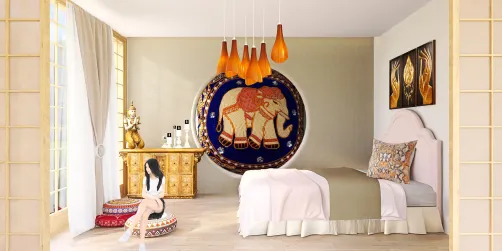
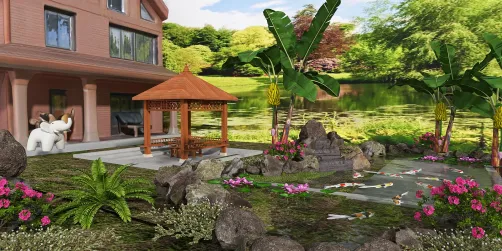
Nita style’s tranquil书房 exemplifies authentic Thai minimalism—clean lines, natural materials, and intentional emptiness that invites mindfulness. In Homestyler, users can achieve this instantly using the ‘Asian Wood’ texture library, pre-rigged teak furniture models, and one-click lighting presets like 'Tropical Morning Glow'. The app’s real-time 3D rendering engine allows instant iteration on textile patterns (e.g., swapping silk motifs via Homestyler’s pattern overlay tool) and accurate shadow simulation for those delicate carved wood screens.
Start Designing Now🎨 Sacred Symbolism & Spiritual Motifs
Thai interiors are imbued with spiritual meaning—not as decoration, but as devotion. Golden Buddha statues, lotus motifs, Naga serpent carvings, and temple-inspired archways are not ornamental add-ons; they anchor space in dharma, protection, and enlightenment. These elements are carefully scaled and positioned—often elevated on plinths or recessed niches—to command quiet reverence without overwhelming domesticity. Color symbolism is equally intentional: saffron gold represents wisdom and merit; deep crimson signifies vitality and protection; indigo evokes monastic discipline and cosmic depth.

Leni Franca Designer’s 'Espaço de Tradição e Modernidade' masterfully integrates sacred geometry into contemporary Brazilian living. The golden Buddha altar isn’t isolated—it’s the visual and spiritual axis of the entire layout, aligned with architectural symmetry and balanced by living greenery. In Homestyler, designers replicate this intentionality using the 'Spiritual Anchor' layout template, drag-and-drop sacred icon libraries (including region-specific Thai Buddha poses), and AI-powered spatial alignment tools that auto-adjust scale and sightlines for ritualistic harmony.
Design Your Thai Space🌿 Biophilic Integration & Tropical Materiality
Nature is never an afterthought in Thai design—it is infrastructure. Indoor-outdoor continuity is achieved through large operable windows, courtyards with water features, and indoor gardens featuring native species like frangipani, bamboo, and orchids. Materials are tactile and honest: reclaimed teak, woven rattan, hand-thrown ceramic tiles, and raw silk textiles. Even flooring tells a story—polished laterite stone, terracotta tiles, or rice-husk composite floors all echo agrarian roots and thermal responsiveness to tropical humidity.

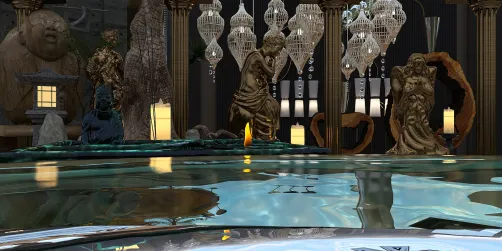
Karen Priebe’s 'Reflections of Opulence' reimagines Thai biophilia at grand scale—integrating a sculptural indoor koi pond beneath a crystal chandelier, surrounded by blackened teak and bronze botanical wall reliefs. This isn’t just luxury; it’s hydro-spiritual architecture. Homestyler enables such ambitious integration via its parametric water feature generator (with ripple physics and real-time reflection mapping) and AI-assisted material pairing—suggesting complementary Thai hardwoods and metals based on regional authenticity and structural compatibility.
✨ Light, Shadow & Textural Layering
Light is treated as a sculptural medium in Thai interiors. Diffused, directional, and layered illumination creates depth, reverence, and warmth. Sheer silk curtains filter harsh sun into golden haze; paper lanterns cast organic shadows; recessed cove lighting highlights carved wood grain. Texture is orchestrated—not contrasted: smooth lacquer against nubby hemp, cool stone beside warm timber, glossy ceramic next to matte plaster. This deliberate layering produces visual richness without clutter, embodying the Thai ideal of 'samrap'—harmonious coexistence.

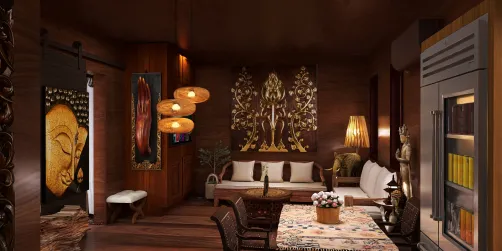
Nathalie du Mortier’s 'A Harmonious Space' demonstrates mastery of luminous layering: soft uplighting on textured clay walls, focused downlight on the teak table, and ambient glow from woven paper lanterns—all simulated in real time within Homestyler. Its signature clay plaster wall was created using Homestyler’s 'Artisan Texture Sync' tool, which imports scanned regional finishes and auto-applies realistic light interaction. Users can toggle between 'Dawn', 'Noon', and 'Temple Hour' lighting modes to preview how each texture responds across the day.
FAQ
Q: What makes Thai style distinct from other Asian design traditions (e.g., Japanese or Chinese)?
Thai style prioritizes spiritual warmth over Zen austerity (Japanese) or imperial hierarchy (Chinese). It favors organic curves, saturated yet earthy color palettes, and layered biophilic integration—not restrained minimalism or symmetrical formality. Homestyler’s Thai-specific asset library includes curved temple arches, hand-painted mural fragments, and regional wood species unavailable in generic Asian packs.
Q: Can I apply Thai design principles to a small apartment or rental unit?
Absolutely. Thai design thrives in intimacy: use portable altar shelves, foldable rattan screens, silk throw pillows with lotus motifs, and vertical gardens. Homestyler’s 'Small Space Thai' template suite offers optimized layouts for studios and 1-BR units—with smart storage disguised as ceremonial cabinets and AR-powered lighting previews for renters.
Q: How does Homestyler support authentic Thai material rendering?
Homestyler uses physically based rendering (PBR) calibrated to Southeast Asian material science: teak’s natural oil sheen, silk’s light-scattering fiber structure, and terracotta’s porous absorption. Its AI Material Assistant suggests historically accurate pairings (e.g., 'Blackened Teak + Bronze + Handwoven Hemp') and auto-generates wear patterns for aged authenticity.

Modern Solid Wood Metal Frame Dining Table Set with Upholstered Chairs 3D Model

Minimalist Solid Wood Desk Simple Modern Home Office 3D Model
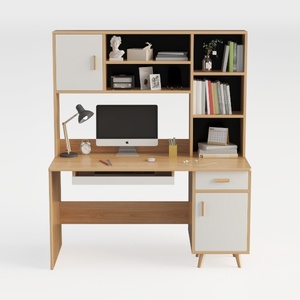

Modern Minimalist Solid Wood Home Office Desk With Storage Shelves Cabinet 3D Model
Homestyler offers an easy-to-use online design tool combined with stunning 3D renderings and a vast collection of interior projects. With helpful DIY video tutorials, it’s perfect for anyone looking to create and visualize beautiful home designs effortlessly.
Diseño ahora GRATIS