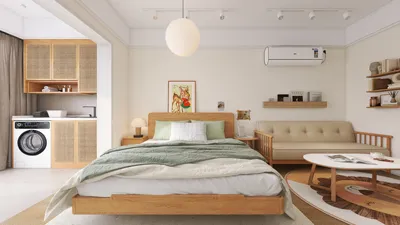


I often chuckle when remembering a client who requested a full-size dishwasher, an island, and a breakfast nook all within a mere 6-foot-wide galley kitchen — that's a moment that truly demonstrated how limitations can spur innovation. During that project, I utilized several effective galley kitchen design strategies to maintain an efficient work triangle while ensuring the space didn’t feel cramped. Small areas can inspire significant concepts, and I'm eager to share five of my go-to solutions that have proven successful in real-world applications, especially with tools like Homestyler.
1. Establish a streamlined linear workflow
In slim kitchens, a single unbroken work zone is far superior to cluttered islands: a continuous countertop, aligned sink and cooktop, along with a cohesive backsplash create an intentional flow. The benefits include quicker food preparation and reduced traffic congestion. However, this approach requires careful planning regarding the placement of appliances and waste disposal, yet I’ve discovered that compact integrated units can effectively resolve most issues.
save pin
2. Opt for light surfaces and reflective elements
Utilizing white or very light cabinetry, satin-finish tiles, and a glass or mirrored backsplash can visually expand the space. This approach is also budget-friendly — a fresh coat of paint and reflective materials cost less than a major remodel — though be aware that lighter finishes may show wear more rapidly. Therefore, it’s wise to select durable and washable materials, particularly if you cook frequently.
save pin
3. Maximize vertical storage options
Installing tall cabinets, vertical pull-outs, and rail systems can keep countertops tidy while making use of often neglected overhead space. For those who enjoy hands-on planning, sketching a quick floor layout can help verify cabinet heights and appliance clearances prior to making purchases, saving you from potential costly mistakes. While improved accessibility may necessitate a slim step stool, reclaiming countertop area is usually worth it.
save pin
4. Choose slimline appliances and integrated designs
Selecting narrower models like a compact fridge, a small dishwasher drawer, or a combination oven allows you to maintain full functionality within limited widths. I once salvaged a renovation project by recommending a counter-depth fridge alongside a slimmer induction cooktop, resulting in a custom and modern feel, even if these choices can slightly increase appliance costs. Nevertheless, the space you gain often compensates for the expense in the long run.
save pin
5. Enhance visual width with patterns and 3D elements
Using horizontal tile joints, low-contrast flooring that extends along the length of the room, and open upper shelving can draw the eye sideways, creating an illusion of space. Before committing to a design, it’s beneficial to utilize a photorealistic 3D rendering tool like Homestyler to preview different schemes, which can significantly simplify decision-making regarding lighting and materials. The challenge lies in ensuring patterns don’t create a visually cluttered atmosphere, as too many textures in a narrow area can feel chaotic.
save pin
FAQ
Q1: What’s the minimum width needed for an efficient galley kitchen?
A practical minimum width would be around 8 feet for dual parallel runs to accommodate a 36-inch pathway; single-run galleys can function within 6 to 7 feet if slim appliances are utilized and traffic flow is managed.
Q2: Is open shelving a good option for narrow kitchens?
Open shelves can make a kitchen feel more spacious but require careful styling for tidiness; I suggest a combination approach — open shelves for displaying everyday items and closed cabinets for concealed storage.
Q3: How can I make a galley kitchen appear wider without structural alterations?
Incorporate light colors, horizontal alignment (such as long subway tile joints or floorboards) and consistent countertop materials to generate visual continuity and an impression of increased width.
Q4: Are islands possible in a narrow galley kitchen?
Islands require adequate clearance; if you can’t guarantee at least 36 inches on each side, consider a narrow movable cart or a drop-leaf peninsula to create functional flexibility.
Q5: What is the best way to organize appliance placement for optimal workflow?
Position the cooktop, sink, and fridge in a compact triangle or linear sequence that reflects your cooking process; planning tasks while designing can help avoid unnecessary cross-traffic.
Q6: What kind of lighting works best in tight kitchens?
Incorporate layered lighting — including under-cabinet task lighting, bright overhead fixtures, and a reflective backsplash — to minimize shadows and create a sense of spaciousness. LED strips are a great choice as they are energy-efficient and fit well within slim cabinetry.
Q7: Where can I find guidelines for kitchen clearances?
Standards from organizations like the National Kitchen & Bath Association (NKBA) offer recommended clearances and design guidelines (visit https://nkba.org for comprehensive references).
Q8: How can I test layouts before purchasing materials?
You can create scaled drawings or utilize an online planning tool to test dimensions and clearance; mockups are a great way to save money and visualize the final arrangement.
save pin
Looking to transform your space? Homestyler is your go-to online home design platform! With its user-friendly design tool, stunning 3D renderings, diverse design projects, and helpful video tutorials, you can effortlessly create your dream home—no experience needed!
Diseño ahora GRATIS
































