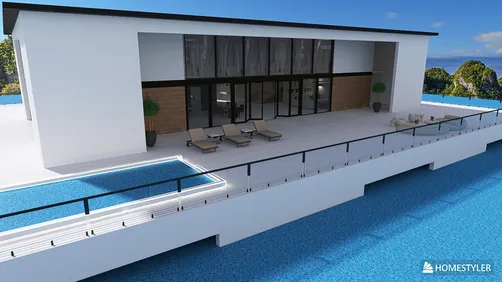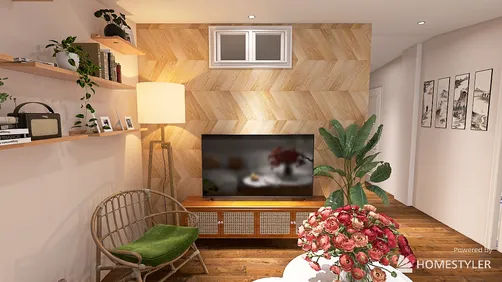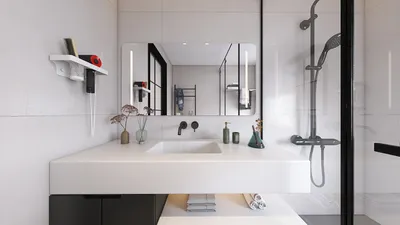
As we look towards the future, today's residences face challenges such as moisture control, privacy concerns, and the need for technological bandwidth suitable for multi-generational families. Reports by the NAHB indicate that single-story home designs are increasingly preferred by families who value accessibility and efficient movement within their spaces. I'm exploring plans for four-bedroom houses on a single floor in Kerala, which exemplify climate-conscious living that harmonizes traditional elements with modern technology, making great use of tools like Homestyler for design visualization.
Courtyard Spine Design Featuring Dual-Daylight Bedrooms
Design Rationale: A central open-air courtyard captures monsoon sunlight, mitigates humidity, and strategically organizes four rooms within a climate-friendly framework.
Flow Dynamics: The journey begins at the entryway, moves through a vestibule, continues along the courtyard spine, and culminates in bedrooms encircling the perimeter, with the kitchen-dining area directed towards the garden. This flow operates like a living system, allowing breathing space.
Visual Connections: The main sightline frames the lush courtyard, while secondary connections are staggered to prevent direct sight lines into the bedrooms, creating layers of privacy much like a user interface.
Storage Solutions: Lengthy wardrobes along the perimeter serve as storage caches, while raised cabinets resist moisture; additionally, an attic crawl space is available for seasonal overflow.
Furniture Configuration: The beds are sized 78x60 with 24-inch circulation clearances; low-profile teak furniture complements the natural airflow from cross-vented windows, enhancing the residential experience.
Summary: This design model is equipped to handle five consecutive monsoon seasons, ensuring that living spaces remain dry, sociable, and resilient without being intrusive.
Save for Future Reference
Multi-Generational Zoning for Enhanced Living Rhythms
Design Rationale: The layout features two bedrooms at the front and two at the back; a public core prevents noise interference, catering to Kerala's diverse age group households.
Flow Structure: The sequence unfolds from the porch, through the living area, to the dining hub, then into a split corridor: elder suites positioned near the entrance, while children’s quarters occupy the garden area—each routine flows along parallel pathways.
Visual Connections: The staggered alignment of doors avoids a linear sightline tunnel effect; a transparent threshold between living and dining areas serves as the 'screen' of the home interface.
Storage Innovations: Dividers with ventilation shutters are built in; under-bench storage in the dining area and a dry-larder off the kitchen facilitate large-scale provisioning for festivities.
Furniture Layout: Modular sofas measuring 90 inches and an extendable table accommodating 6 to 8 individuals, along with folding desks positioned by window bays for optimal natural light during work hours.
Summary: The thoughtfully zoned layout effectively buffers sound disturbances and schedules, adapting gracefully to the demands of school timelines, elder care, and remote work dynamics.
Save for Future Reference
Veranda Perimeter Featuring a Rain-Screen Edge
Design Rationale: An uninterrupted veranda encircles the primary layout, functioning as a microclimate barrier; bedrooms access this structure for shaded entry.
Flow Design: The route traverses from the gate, along the veranda, leading to the living area and providing radial access to four rooms; the circulation pattern mirrors a secure perimeter protocol.
Visual Connections: Views are delicately filtered through jali and foliage; the living area frames the courtyard while bedrooms leverage diffused light for a calm ambiance like a serene user interface.
Storage Solutions: Designated niches for shoes and tools positioned at the veranda's edge; linen towers inside and elevated units help avoid moisture issues.
Furniture Arrangement: Outdoor charpoys and narrow benches designed at 18–20-inch depths; internal beds and wardrobes align with wall studs for precise fitting.
Summary: This perimeter design buffers against rain and heat, facilitating lighter daily movements while preserving cherished rituals like morning tea and evening breezes.
Save for Future Reference
Final Insights
The four-bedroom single-story layouts in Kerala prioritize environmentally-responsive features over sheer size, creating interfaces that effectively manage family dynamics. These home plans evolve similarly to software development: courtyards, offset zoning, and veranda edges act as guides for airflow, privacy, and day-to-day rituals. In my observation, the most promising living spaces are intentionally designed at ground level, showcasing quiet resilience—tools like Homestyler are invaluable in visualizing how small spatial choices drastically alter the lifestyle of my clients.

Looking to elevate your home design? Homestyler is your go-to online platform! With an easy-to-use design tool, stunning 3D renderings, inspiring design projects, and helpful video tutorials, you can effortlessly create and visualize your dream space—perfect for any skill level!















![[For dear Adelina madee 🤎]](https://hs-designs.homestyler.com/production/design/images/8a07e535-9cbc-4132-a42a-5932dac3a112/1706972286037.jpg?x-oss-process=image/resize,w_502,m_mfit/format,webp)