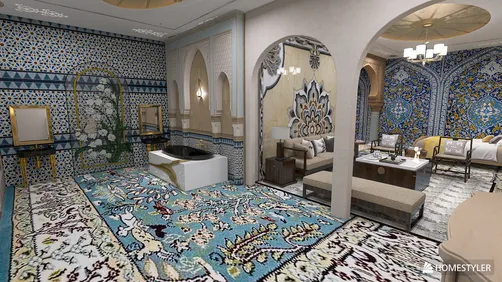
Arabic Style Decoded: Tradition Meets Modernity in Interior Design
Arabian interior design is not merely a visual aesthetic—it's a cultural narrative expressed through space. Rooted in the rich heritage of the Arabian Peninsula, this style harmonizes centuries-old craftsmanship with contemporary sensibilities. As highlighted in the Homestyler 'Arabic-style Space for Web' challenge—part of the AIDA design competition—it celebrates the UAE National Day spirit by fusing desert-inspired authenticity with sleek, modern execution. At its core, Arabic design balances opulence and restraint: geometric precision meets organic warmth; handcrafted detail coexists with minimalist layouts; and vibrant, symbolic color palettes are grounded in serene neutrals. It’s a style that honors history without nostalgia—where arches whisper of ancient souks, zellige tiles echo Andalusian legacies, and light plays like sun-dappled sand across textured walls.

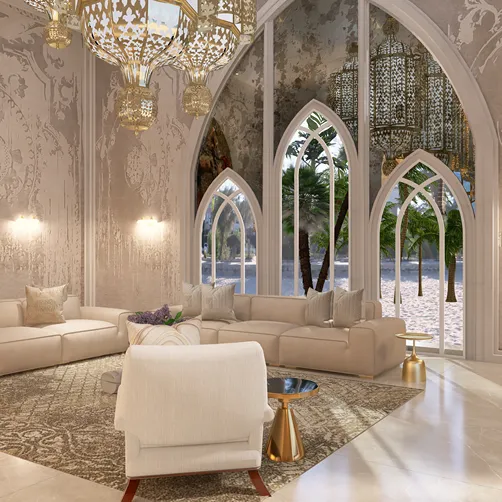
ROBERTA GIULIETTI’s 'Sile Arabo' — an elegant two-level Arabic living room — exemplifies how Homestyler’s 3D rendering tools empower designers to achieve authentic regional aesthetics with speed and precision. Using Homestyler’s intuitive drag-and-drop library of Arabic arches, ornamental columns, and custom-tiled flooring, she layered traditional motifs into a compact 73.5 sqm space without visual clutter. The double-height ceiling was rendered with dynamic HDR lighting (g_bay_tour), enhancing depth and texture—a capability unique to Homestyler’s real-time photorealistic engine. With just a few clicks, users can apply authentic Arabic material presets (e.g., carved gypsum, brass inlay, or hand-painted ceramic) and instantly preview sunlight shifts—making Homestyler the ideal platform for bringing culturally rooted, web-ready Arabic interiors to life.
Design Arabic Living NowGeometric Precision & Symbolic Pattern Language 📐
Arabic design is defined by its reverence for mathematics and symmetry. From infinite tessellations in zellige tilework to star-and-polygon motifs derived from Islamic geometry, patterns are never decorative—they’re philosophical expressions of unity, infinity, and divine order. These motifs avoid figuration per tradition, instead using repetition, rotation, and interlacing to generate rhythm and spiritual resonance. In contemporary applications, designers reinterpret these motifs at scale: as laser-cut room dividers, parametric wall claddings, or subtle textile weaves—always maintaining mathematical integrity while adapting to modern proportions and materials.
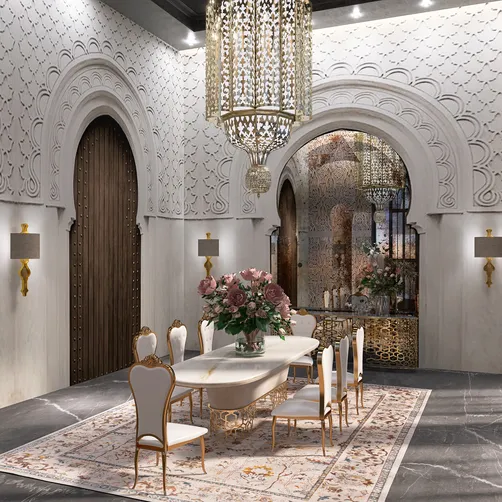
ROBERTA GIULIETTI’s 'Sile Arabo' masterfully integrates geometric language into architecture—not just ornament. Note the precise muqarnas-inspired ceiling transition and the symmetrical archway framing the staircase: both modeled directly in Homestyler using customizable modular arch components and parametric tile mapping. She applied a custom 8-point star pattern to the floor via Homestyler’s texture-repeat tool, adjusting scale and offset to align perfectly with architectural axes—a feat simplified by Homestyler’s snap-to-grid and symmetry-mode features. This demonstrates how Homestyler transforms complex geometry from theoretical concept to build-ready visualization in minutes.
Start Elegant DesignArchitectural Poetry: Arches, Niches & Layered Thresholds 🌙
The arch is the soul of Arabic spatial grammar—not merely structural but ceremonial. Horseshoe, pointed, multifoil, and lambrequin arches define transitions between zones, softening boundaries while adding vertical drama. Deep-set niches (mihrabs or decorative qanats) serve as focal points for art, light, or quiet reflection, creating intimate micro-environments within larger rooms. Contemporary Arabic interiors reinterpret these elements with minimalist profiles—thin steel-framed arches, recessed LED-lit alcoves, or floating shelf-niches—preserving their spiritual and sensory function while embracing clean lines and open-plan living.

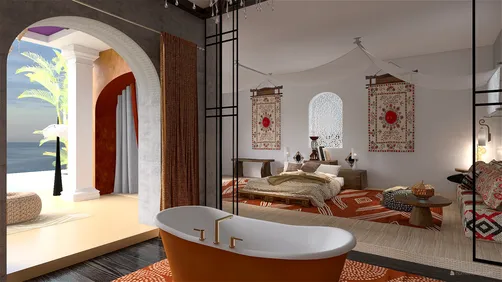
Beth M’s 'Arabic-style half Bath' proves how even small-scale spaces embody architectural poetry. Within just 12.5 sqm, she used Homestyler’s pre-built Arabic arch doorways and recessed niche shelving to create layered thresholds—each step into the bathroom feels like crossing into a contemplative chamber. The curved niche above the sink, rendered with soft ambient lighting (g_ljz_day), mimics a traditional sabil alcove. All elements were sourced from Homestyler’s curated 'Arabic Interiors' asset pack—no modeling required—showcasing how the platform accelerates authentic detailing for compact, high-impact residential projects.
Create Your Arabic StyleWarmth & Craft: Textured Materials & Earth-Inspired Palette 🏜️
Color and materiality in Arabic interiors speak of place: terracotta, ochre, saffron, indigo, emerald, and deep sapphire evoke desert dunes, Persian Gulf waters, and historic spice routes. Surfaces are intentionally tactile—rough-hewn plaster (tadelakt), hammered brass, hand-carved wood, and woven palm fiber add warmth and human scale. Crucially, contrast is orchestrated: rich jewel tones anchor neutral backdrops; glossy tiles reflect matte walls; and metal accents gleam against organic textures. This deliberate layering avoids flatness—creating depth, comfort, and timeless sophistication.

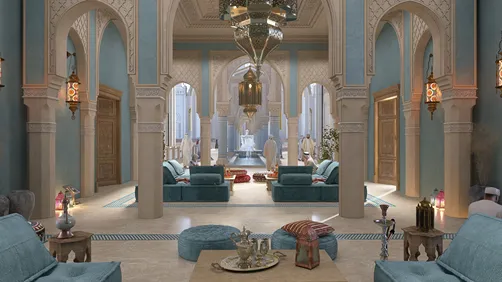
Kristy Gouvea’s 'Morocco blue 1970 house USA' reimagines earth-inspired warmth through bold chromatic storytelling. The vivid cobalt-blue tilework—rendered with Homestyler’s realistic grout and reflection settings—contrasts dramatically with raw plaster walls and natural jute rugs, evoking both Moroccan riads and California mid-century ease. She leveraged Homestyler’s material library to assign custom PBR textures to every surface: hand-textured lime plaster for walls, brushed brass for cabinet hardware, and glazed ceramic for backsplashes—all previewed in real time under dynamic daylight (eilenriede_park HDR). This seamless integration of global craft cues with local context is where Homestyler shines: enabling culturally resonant, photorealistic storytelling without physical prototyping.
Desafíos de Diseño de VistFAQ
Q: What makes Arabic interior design distinct from Middle Eastern or Moorish styles?
A: While overlapping historically, Arabic interior design specifically emphasizes the architectural and decorative traditions of the Arabian Peninsula—including Najdi mud-brick aesthetics, Gulf coastal motifs, and Bedouin textile symbolism. Unlike broader 'Middle Eastern' labels, it prioritizes regional authenticity over pan-regional generalization—and unlike Moorish design (rooted in Al-Andalus), it foregrounds desert tonalities, minimal ornamentation, and structural clarity over highly complex tilework.
Q: Can I create Arabic-style interiors in Homestyler without 3D modeling experience?
A: Absolutely. Homestyler offers a dedicated 'Arabic Interiors' asset collection—including archways, mashrabiya screens, geometric tile patterns, and handcrafted furniture—with one-click application. Its AI-assisted layout suggestions and real-time material previews eliminate technical barriers, letting designers focus on cultural storytelling.
Q: Are there recommended lighting strategies for Arabic-style spaces in Homestyler?
A: Yes. Use Homestyler’s HDR environment presets like 'g_tropical_beach' or 'g_bay_tour' to simulate warm, diffused desert light. Combine with layered lighting: ambient (recessed cove), task (brass pendant over dining), and accent (LED-lit niches). Enable 'sunlight rotation' to preview how light interacts with arches and textured walls throughout the day.
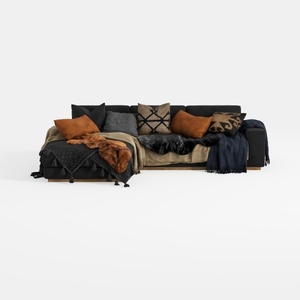
Modern Black Fabric Sectional Sofa with Decorative Throw Pillows and Blankets 3D Model
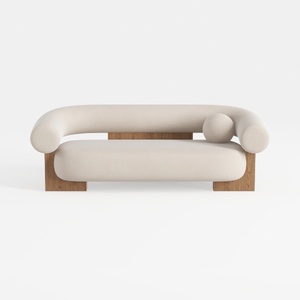

Minimalist Fabric Solid Wood Modern Loveseat Sofa 3D Model

Minimalist Concrete Potted Dried Foliage Plant 3D Model
Homestyler is an easy-to-use online home design platform featuring powerful 3D rendering, a vast collection of design projects, and helpful DIY video tutorials. It lets you create and visualize your dream interiors effortlessly, whether you’re a beginner or a design enthusiast.
Diseño ahora GRATIS