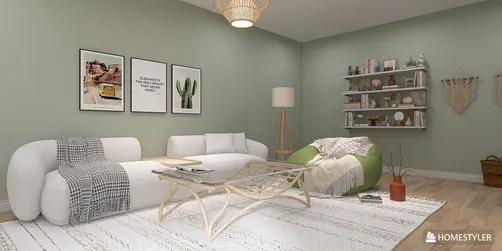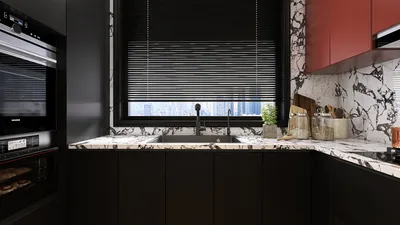


What is the most common core problem in Scandinavian Home Interior design?
The main issue is losing the minimalist balance by over-accessorizing or mixing incompatible styles.
Quick Takeaways
1. Excessive accessories clutter the clean aesthetic and obscure simplicity. 2. Ignoring natural light creates dull spaces devoid of Scandinavian vibrancy. 3. Overusing dark tones contradicts the bright and airy theme. 4. Mixing too many styles dilutes the cohesive narrative. 5. Poor furniture proportion disrupts spatial harmony.
Introduction
When I first explored Scandinavian Home Interiors, I was surprised at how easy it was to veer off course despite the style’s apparent simplicity. Many fall into the trap of assuming minimalism means minimal effort, leading to rooms that feel sparse or cold rather than inviting. The challenge isn’t just to be minimal but to be thoughtful – blending function, texture, and light to achieve that effortless balance. Missing any of these factors results in a disjointed or lifeless space that misrepresents Scandinavian design principles.
Why It Goes Wrong
Fundamentally, Scandinavian design fails when the minimalist ideal is misunderstood as mere sparseness instead of purposeful curation. Over-accessorizing and mismatching textures or colors hamper the visual flow, while poor attention to natural light diminishes the style’s airy essence. Additionally, mixing in too many divergent design elements causes confusion, and furniture scaled improperly breaks the delicate spatial rhythm.
Mistake 1: Over-accessorizing the Space
The Mistake: Filling rooms with too many decorative objects, cushions, or artworks that compete for attention. Why It Happens: There is a misconception that Scandinavian minimalism is a blank slate needing ‘something’ to prevent it from feeling empty. The Fix: Limit accessories to 2-3 statement pieces per room and prioritize clean lines and natural materials. Choose objects that also serve a function, such as woven baskets or simple ceramic vases, and maintain breathing room around them.
Mistake 2: Ignoring Natural Light
The Mistake: Using heavy curtains or poorly positioning furniture to block windows, resulting in dim interiors. Why It Happens: Overemphasis on privacy or pattern can unintentionally reduce daylight flow. The Fix: Opt for light, translucent window treatments or none at all. Arrange seating to face or near windows to maximize daylight usage and enhance the crisp Scandinavian atmosphere.
Mistake 3: Using Too Many Dark or Warm Colors
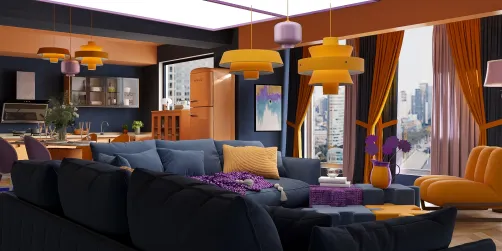
The Mistake: Over-applying dark woods, deep fabrics, or warm tones that overpower the typically bright palette. Why It Happens: A desire to add warmth or coziness, yet neglecting the fundamental brightness that defines the style. The Fix: Stick to light-colored woods like pine or birch, whites, soft greys, and pastel accents. Use dark tones sparingly as accents for contrast rather than dominant hues.
Mistake 4: Mixing Too Many Styles
The Mistake: Combining elements from industrial, rustic, or bohemian styles without regard for cohesion. Why It Happens: A misunderstanding that eclectic mixes equal personality, overlooking Scandinavian design’s clarity and restraint. The Fix: Keep the core palette and materials consistent. If integrating other styles, do so subtly, limiting their influence to single pieces with complementary textures and simple forms.
Mistake 5: Improper Furniture Scale and Layout
The Mistake: Choosing bulky or oversized furniture that overwhelms the space or fails to create flow. Why It Happens: Prioritizing comfort or trendiness over proportion and spatial harmony. The Fix: Select streamlined, low-profile furniture sized appropriately for the room dimensions. Maintain ample circulation space and avoid cluttered arrangements to preserve openness and balance.
Designing the Look
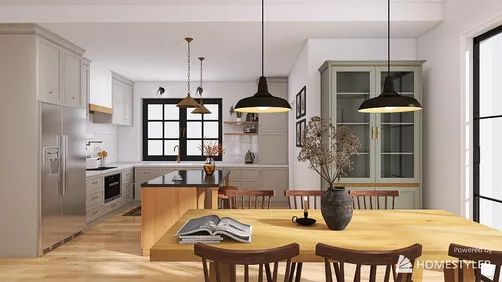
Homestyler’s ‘Scandinavian Home Interior’ offers a comprehensive set of ready-to-use 3D models specifically curated to embody this aesthetic, allowing designers to achieve authentic results with professional-grade textures and forms.

kitchen cabinet set-Kitchen Cabinet III
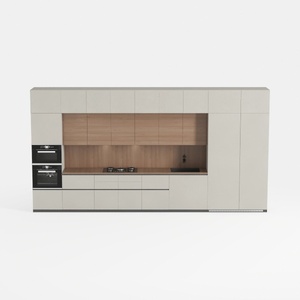
kitchen cabinet set-Kitchen Cabinet III

kitchen cabinet set-Kitchen Cabinet III

kitchen cabinet set-Kitchen Cabinet III

desk-American Retro

Floor Pattern-2
FAQ
Q1: What materials are quintessential in Scandinavian interior design?
Wood, especially light-colored varieties like pine and birch, natural textiles like wool and linen, leather, and metals like aluminum or steel are fundamental. The focus is on natural, sustainable, and tactile materials that reinforce simplicity and warmth.
Q2: How important is natural light in achieving an authentic Scandinavian look?
Natural light is critical. It defines the bright, airy atmosphere intrinsic to this style. Maximizing daylight through strategic layout and minimal window coverings enhances mood and space perception.
Q3: Can Scandinavian design work in small urban apartments?
Absolutely. Its minimalist ethos is particularly suited for smaller spaces as it values functionality and avoids clutter. Smart storage, multipurpose furniture, and light palettes help amplify compact interiors without sacrificing comfort or style.
Homestyler's roots trace back to Autodesk, the global leader in design and engineering software. That heritage lives on in every feature we build. Today, with a community of more than 20+ million registered users (platform data, 2026) worldwide, Homestyler continues to make professional-quality interior design accessible to everyone — from first-time decorators to seasoned architects.
Homestyler offers a vast library of furniture and decoration materials to meet all your design needs.
Diseño ahora GRATIS















![[For dear Adelina madee 🤎]](https://hs-designs.homestyler.com/production/design/images/8a07e535-9cbc-4132-a42a-5932dac3a112/1706972286037.jpg?x-oss-process=image/resize,w_502,m_mfit/format,webp)