Baroque Living Room Design
The Baroque living room is a grand, theatrical space rooted in 17th-century European opulence—characterized by dramatic contrasts, rich textures, ornate detailing, and a sense of dynamic movement. Unlike minimalist or contemporary living rooms, the Baroque living room embraces abundance: gilded moldings, sculptural furniture, bold color palettes (deep reds, royal blues, gold accents), curved architectural elements, and layered decorative objects—from chandeliers and mirrors to tapestries and classical statuary. It’s not merely about luxury; it’s about storytelling through spatial drama and sensory richness. This design scenario applies equally to spacious townhomes, historic mansions, or even compact apartments reimagined with Baroque-inspired scale, proportion, and visual hierarchy—making 'Baroque Living Room' a timeless, adaptable interior space planning archetype.
Design Challenges & Common Pitfalls
Designing a Baroque living room presents unique challenges: balancing historical authenticity with modern functionality; avoiding visual clutter while honoring Baroque’s love for abundance; integrating ornate elements without overwhelming spatial perception; and maintaining harmony between bold colors, intricate patterns, and diverse materials (e.g., velvet, marble, gilt wood, brocade). Many designers unintentionally create disjointed spaces by overloading surfaces, misaligning symmetry, or neglecting lighting hierarchy—critical in Baroque design, where chiaroscuro and spotlighting define mood and emphasis. Additionally, scaling Baroque motifs appropriately for smaller rooms remains a persistent hurdle in contemporary indoor space planning.
🎯 Embrace Symmetry & Axial Grandeur
Baroque design relies on strong central axes and mirrored balance—not rigid rigidity, but dynamic symmetry anchored by a focal point (e.g., fireplace, portrait, or console). Furniture layout should radiate from this axis, with paired armchairs, matching sconces, and aligned rug borders reinforcing visual order. This principle ensures spatial clarity amid ornamentation and supports effective indoor space planning—even in irregularly shaped rooms—by establishing an intuitive navigational rhythm.

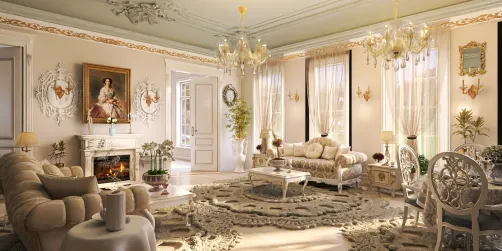
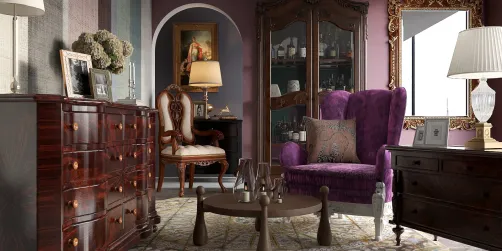
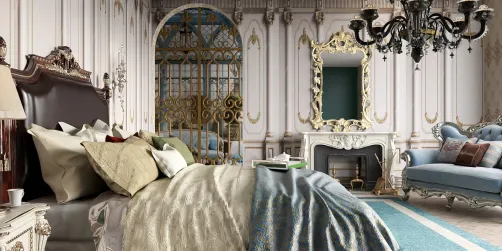
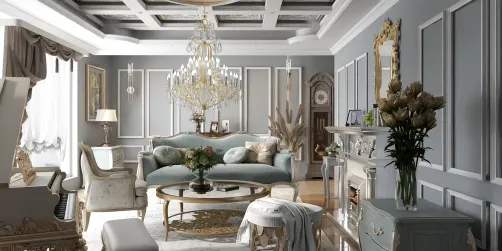
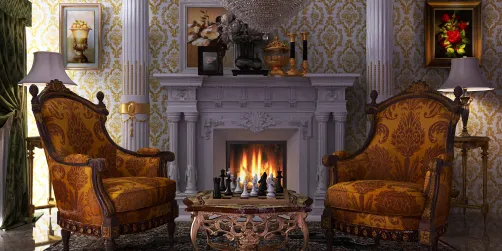
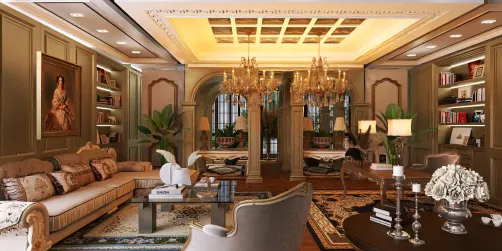
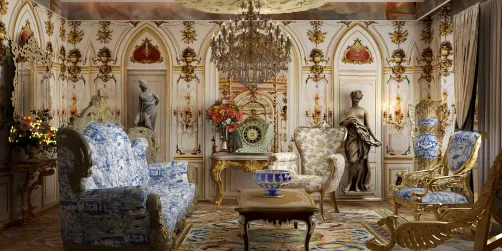
LaDana Bates 🌺’s 'Baroque design' masterfully demonstrates axial grandeur in a compact apartment setting. She anchors the composition with a centered fireplace flanked by symmetrical gilded mirrors and matching velvet armchairs—reinforcing hierarchy without crowding. Using Homestyler AI design tools, she precisely calibrated proportions and reflection angles to enhance perceived depth, proving how symmetry serves both aesthetic authority and practical indoor space planning in constrained footprints.
Start Free Design✨ Layer Texture & Material Contrast
Baroque thrives on tactile richness: juxtaposing smooth marble with tufted velvet, polished brass with aged wood, or glossy lacquer with matte plaster. Strategic layering—not random mixing—creates visual rhythm and depth. Introduce texture through upholstery, wall paneling, drapery folds, and floor treatments (e.g., Persian rugs over hardwood), always ensuring material transitions feel intentional and grounded in tonal harmony.

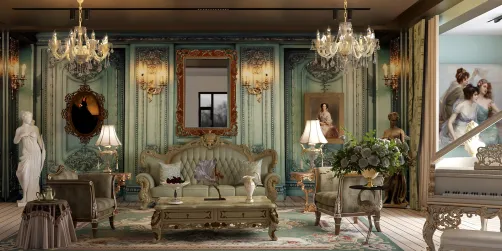
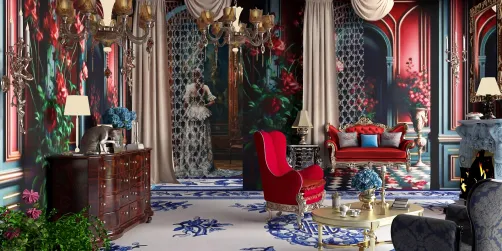
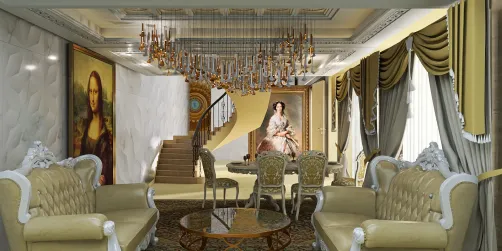
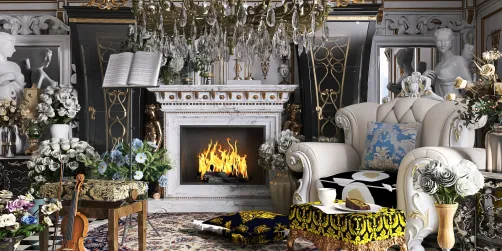
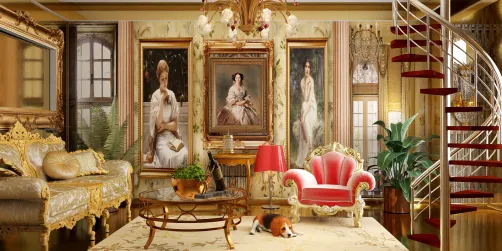
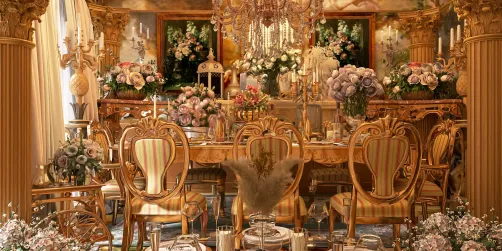
Arwen Arianus🎨🎸🏰’s 'Grand Drawing Room' exemplifies sophisticated material layering within a multi-windowed apartment. She pairs high-gloss black lacquer cabinetry with ivory damask-upholstered seating and a distressed gold-leaf ceiling medallion—all unified by warm ambient lighting. Leveraging Homestyler AI design tools, she simulated fabric light-reflection properties and material interaction under varied lighting conditions, enabling precise texture calibration essential for authentic Baroque living room execution.
Begin Free Design🕯️ Command Light & Shadow Dramatically
Lighting is narrative architecture in Baroque design. Prioritize layered illumination: ambient (ornate chandeliers), accent (wall sconces highlighting art or moldings), and task (elegant table lamps). Use directional lighting to sculpt volume—casting shadows that emphasize curves, cornices, and relief carvings. Dimmable systems and warm-color-temperature LEDs (2700K–3000K) are indispensable for recreating the candlelit drama intrinsic to Baroque interiors.

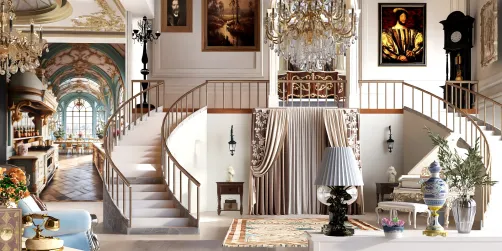
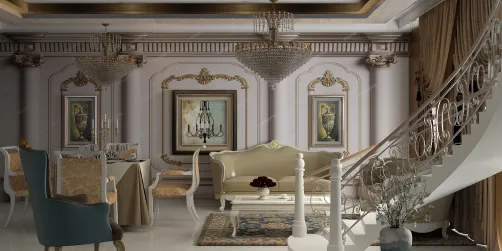
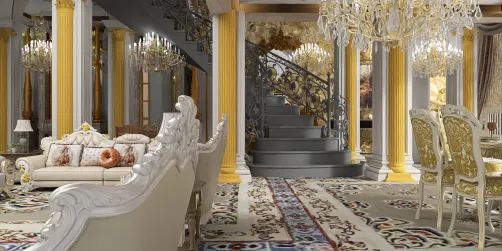
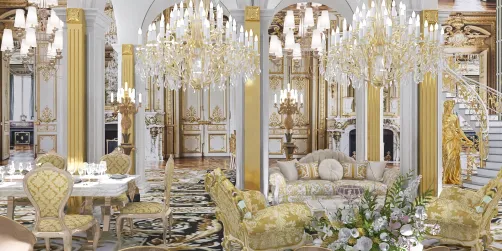
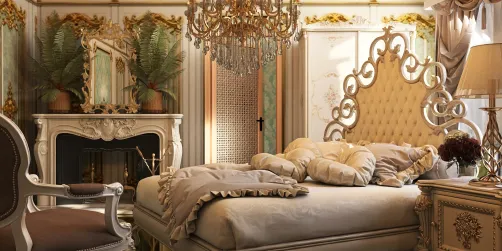
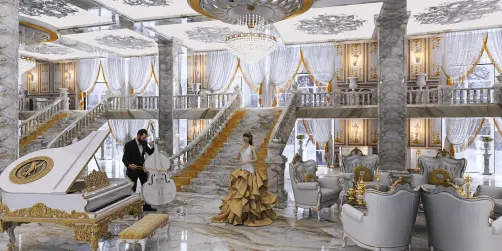
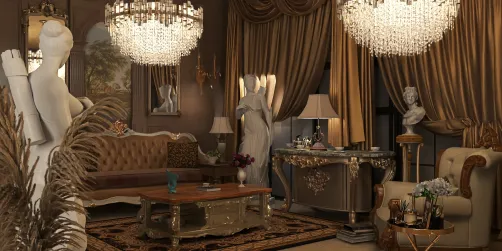
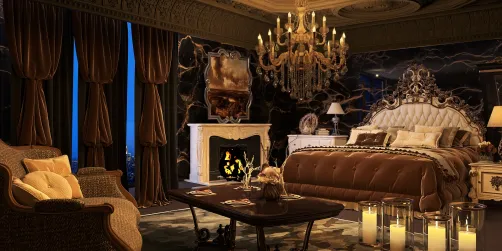
kawakawa styling #kawakawastyle’s 'baroque beauty🌷🌷🌷' transforms a double-height living-dining zone with cinematic lighting choreography. A cascading crystal chandelier acts as celestial anchor, while recessed cove lighting grazes ornamental plasterwork—and wall-mounted sconces cast soft halos around gilded frames. Using Homestyler AI design tools, the designer tested over 12 lighting configurations to achieve chiaroscuro balance, turning light management into a core component of indoor space planning and emotional resonance.
Launch Free DesignFAQ
Q: Can Baroque living room design work in small apartments—or is it only for large historic homes?
A: Absolutely—it’s highly adaptable. Winners like LaDana Bates and Arwen Arianus prove Baroque principles (symmetry, focal hierarchy, rich texture) scale beautifully using smart indoor space planning: strategic mirror placement, vertically oriented moldings, and curated ornamentation prevent overwhelm. Homestyler AI design tools help simulate spatial perception before committing to layouts.
Q: What’s the biggest mistake when applying Baroque style today?
A: Treating it as ‘more is more’ without intentionality. Baroque is disciplined abundance—not clutter. Top entries (e.g., kawakawa styling’s award-winning design) succeed by editing rigorously: every gilded frame, carved leg, or tassel serves compositional purpose. Homestyler design技巧 shine here—allowing rapid iteration of model density and visual weight.
Q: How do I source authentic Baroque-style furniture affordably?
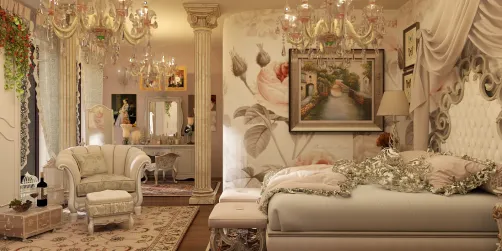
A: Focus on silhouette and detail—not pedigree. Curved cabriole legs, shell motifs, and scrolled arms signal Baroque lineage. Many Homestyler-curated model libraries include scalable, budget-friendly interpretations. Sylvia Faulkner’s top-ranked entry uses accessible pieces elevated through deliberate pairing and lighting—proof that authenticity lies in composition, not cost.
What began as an Autodesk innovation has evolved into a design platform used by more than 18 million people around the globe. Homestyler combines powerful rendering, an intuitive editor, and a vast furniture library to help you turn inspiration into photorealistic designs — whether you're redesigning a single room or planning an entire home.

Modern Minimalist Red Velvet Tufted 3 Seater Sofa 3D Model
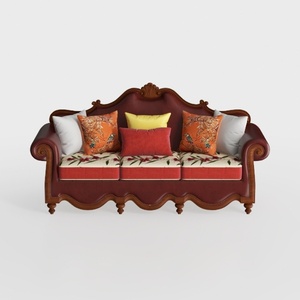
Vintage Solid Wood Leather Fabric Three Seat Sofa 3D Model

Red Leather Modern 3 Seater Sofa 3D Model
Homestyler is an easy-to-use online home design platform offering powerful 3D rendering, diverse design projects, and helpful DIY video tutorials. It lets you visualize and create stylish interiors effortlessly, making home decorating fun and inspiring for everyone.
Diseño ahora GRATIS