Indoor Urban Jungle Style Decoded
Indoor Urban Jungle is a design philosophy that transforms urban interiors into immersive, biophilic sanctuaries—blending lush botanical abundance with raw, tactile materials and intentional spatial layering. Born from the growing urban desire for wellness, grounding, and sensory reconnection, this style moves beyond mere 'plant decor' to cultivate an authentic jungle atmosphere: humid-air energy, dappled light, layered textures, and organic rhythm. It embraces imperfection—think weathered wood, exposed concrete, cascading vines, and asymmetrical greenery—not as aesthetic choices, but as narrative devices telling a story of nature reclaiming the built environment. The result isn’t just visual; it’s physiological and emotional: lowered cortisol, heightened calm, and a profound sense of sanctuary within the city.

Suburban Greens by Karen Berry — A masterclass in textural contrast and curated density. Homestyler users can rapidly achieve this look using the 'Reclaimed Wood Flooring' preset, pairing it with 'Raw Concrete Wall Panels' from the Material Library, then populating the space with over 30+ pre-rigged tropical plants (Monstera, Fiddle Leaf Fig, Pothos) via the Plant Catalog. Use Homestyler’s Real-time Sunlight Simulator to dial in the exact golden-hour glow seen here—crucial for casting naturalistic leaf shadows and enhancing depth.
Start Free Design🌿 Lush Layered Greenery
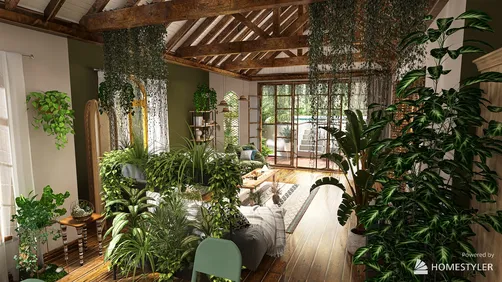
This isn’t about placing one potted plant on a shelf—it’s about creating vertical, horizontal, and volumetric green layers. Think floor-to-ceiling climbers on trellises, hanging planters suspended at varying heights, ground-cover ferns spilling from shelves, and tabletop succulents nestled in moss. Layering creates microclimates, visual density, and a true ‘forest floor’ effect. Species diversity (broadleaf, feathery, trailing, sculptural) ensures year-round texture and movement—even without blooms.
Suburban Greens by Karen Berry demonstrates layered greenery with surgical precision: large Monstera deliciosa anchoring corners, cascading String of Pearls from ceiling-mounted macramé hangers, and dense clusters of Calathea and ZZ plants grouped on low concrete plinths. In Homestyler, use the ‘Plant Grouping’ tool to auto-distribute 5–7 species per zone with realistic spacing—then adjust height and tilt individually for organic variation. Enable ‘Foliage Density’ slider in Rendering Settings to intensify leaf overlap and shadow interplay.
Start Free Design🧱 Raw & Reclaimed Material Palette
The jungle doesn’t grow on polished marble—it thrives on rough, porous, weathered surfaces. Indoor Urban Jungle leans heavily into tactile authenticity: unfinished concrete walls, charred timber (shou sugi ban), reclaimed oak beams, terracotta tiles, woven rattan, and unglazed ceramic pots. These materials aren’t just backdrops—they’re functional ecosystems, retaining moisture, supporting epiphytes, and aging gracefully. Their warmth and irregularity counterbalance the cool greenery, grounding the space in earthy realism.

Cocobana: Tropical Restaurant and Bar by Wendy Callaway showcases material storytelling: rough-hewn bamboo columns framing archways, hand-troweled terracotta flooring radiating warmth, and oxidized copper pendant lights echoing mineral veins. In Homestyler, apply ‘Textured Concrete Wall’ and ‘Hand-Split Terracotta Tile’ presets with 100% Roughness enabled. Then use the ‘Material Mixer’ to blend subtle patina overlays onto metal fixtures—achieving that lived-in, elemental richness in under 2 minutes.
Start Free Design💧 Atmospheric Light & Spatial Flow
Light is the invisible architect of the jungle. Indoor Urban Jungle prioritizes soft, diffused, directional light—mimicking forest canopy filtration. Large windows with sheer linen drapes, recessed LED strips behind floating shelves, and pendant lights with paper or rattan shades create layered illumination. Crucially, spaces avoid rigid symmetry: pathways curve, sightlines open unexpectedly, and zones bleed into one another—emulating the organic, non-linear navigation of a real forest.

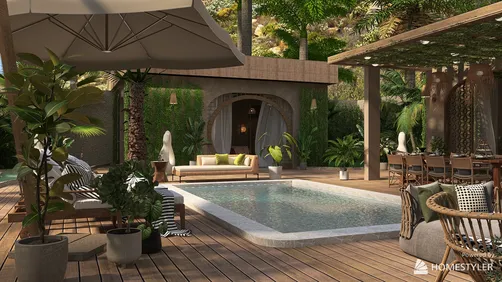
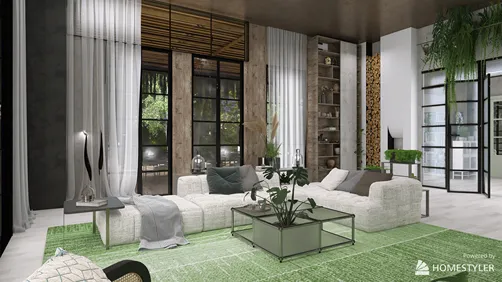
12 Contemporary Two Bedroom Design by Mirjana Nikić exemplifies atmospheric flow: a central courtyard opens seamlessly into living areas via full-height glass sliders, while interior partitions dissolve into plant-filled niches and arched openings. Homestyler’s ‘Sun Path Simulator’ lets designers preview how light shifts across seasons—critical for positioning tall plants to cast dynamic shadows. Use ‘Zone Blur’ in Rendering Mode to soften edges between rooms, enhancing the immersive, boundary-dissolving feel of a true jungle interior.
Start Free DesignFAQ
Q: What makes Indoor Urban Jungle different from generic 'biophilic design'?
A: While biophilic design broadly connects humans to nature through patterns, light, and materials, Indoor Urban Jungle is a specific, high-intensity sub-style focused on recreating a *tropical rainforest or jungle atmosphere*—dense greenery, layered vertical planting, raw material textures, and immersive spatial flow—not just isolated natural elements.
Q: Can I achieve this style in a small apartment or rental space?
A: Absolutely. Focus on vertical layers (wall-mounted planters, hanging vines), compact species (ZZ plant, Snake Plant, Peperomia), and material accents (rattan baskets, terracotta pots, concrete-effect wall panels). Homestyler’s ‘Small Space Jungle’ template library offers renter-friendly, no-renovation layouts optimized for impact.
Q: Do I need advanced 3D skills to render this style in Homestyler?
A: No. Homestyler’s AI-powered ‘Jungle Mode’ (under Render Settings > Style Presets) auto-applies optimal lighting, foliage density, material pairings, and HDR environments. Simply drag-and-drop plants, select ‘Raw Texture Pack’, and hit ‘Render’—professional-grade results in under 90 seconds.
Originally incubated at Autodesk, Homestyler has grown into one of the most widely adopted home design platforms in the world, now trusted by over 18 million users. Whether you're a homeowner exploring ideas or a professional designer delivering client-ready renders, Homestyler brings industry-leading 3D technology to your fingertips — no experience required.
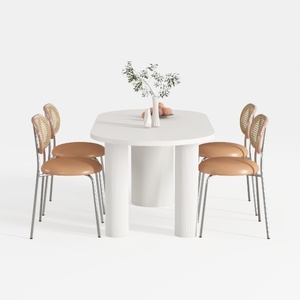
DUOMAY Modern Boucle Dining Chairs Set of 2,
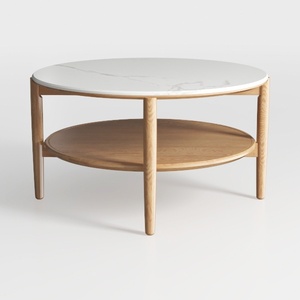
Minimalist Marble Top Solid Oak Round Two Tier Coffee Table 3D Model
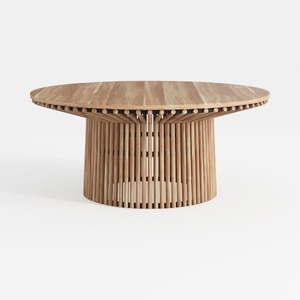

Merax Outdoor Dining Table 47.25" Round Extra
Homestyler is an easy-to-use online home design platform that lets you create stunning 3D renderings, explore inspiring design projects, and learn through helpful video tutorials. It’s perfect for turning your interior decoration ideas into reality effortlessly.
Diseño ahora GRATIS