Cinematic Style Decoded: From Silver Screen to Living Space
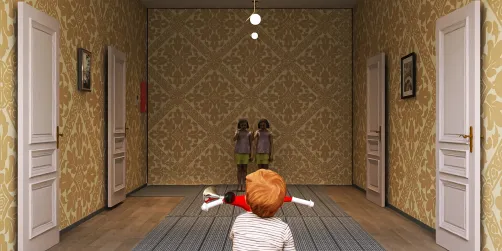
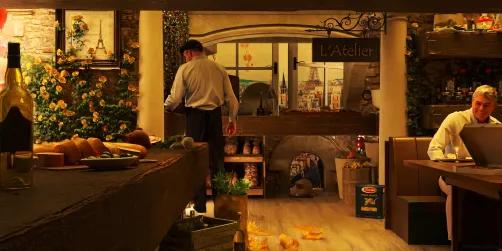
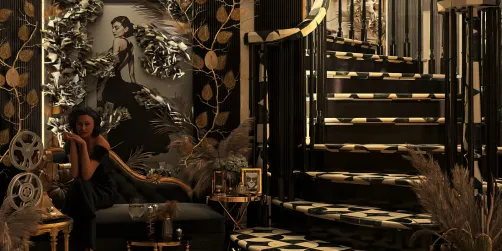
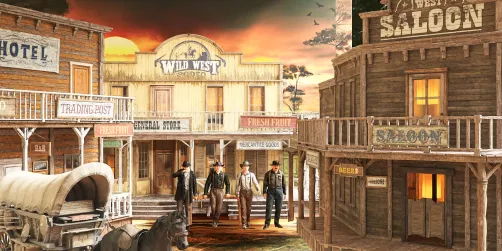
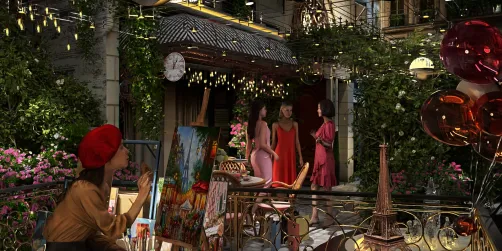
The 'Cinematic Space' design trend is not about literal movie sets—it’s a sophisticated interior language that borrows narrative depth, emotional tone, and visual grammar from film. Inspired by iconic scenes—from the sun-drenched cafés of *Emily in Paris* to the high-stakes tension of *Spider-Man*’s urban landscapes—this style transforms rooms into immersive story environments. It prioritizes atmosphere over ornamentation: lighting becomes dramatic chiaroscuro, color palettes echo film grading (e.g., warm Kodachrome nostalgia or cool IMAX sci-fi tones), and spatial composition follows cinematic framing—wide-angle openness for grandeur, tight vignettes for intimacy. Crucially, it embraces *intentional storytelling*: every prop, texture, and focal point serves a narrative role, turning domestic spaces into emotionally resonant stages where daily life unfolds like a beloved scene.

Mehjabin Maria’s 'The Adam Project' exemplifies this ethos: a compact kitchen space animated by dynamic character placement and purposeful utensil staging—no background clutter, only curated narrative props. In Homestyler, achieve this instantly using the AI Scene Generator with prompt tags like 'cinematic kitchen lighting', 'hero object focus', and 'film-grade color grade'; then refine with real-time 3D lighting sliders to emulate lens flare and depth-of-field blur—core Homestyler features that bridge cinematic vision and interior execution.
Start Free Design🎭 Narrative-Driven Spatial Composition
Cinematic interiors reject static symmetry in favor of dynamic, story-guided layouts. Think of how a film director frames a shot: foreground action (a coffee cup placed deliberately), midground character (a sculptural chair), and background context (a blurred cityscape through glass). This tripartite layering creates visual hierarchy and implied motion—even in still renders. Rooms are designed as 'scenes', where circulation paths mimic camera movement, and key furniture acts as 'actors' anchoring emotional beats.
Mehjabin Maria’s 'The Adam Project' uses tight, shallow-depth framing—a hallmark of intimate sci-fi storytelling. The central countertop anchors the scene, while utensils act as 'props' with directional placement guiding the eye like a tracking shot. In Homestyler, replicate this using the 'Scene Layout Assistant': select 'Cinematic Framing' mode, drag furniture to define foreground/midground layers, and apply 'Depth Blur' to background walls—achieving professional-grade staging without manual modeling.
Start Free Design🎨 Film-Inspired Chromatic Storytelling
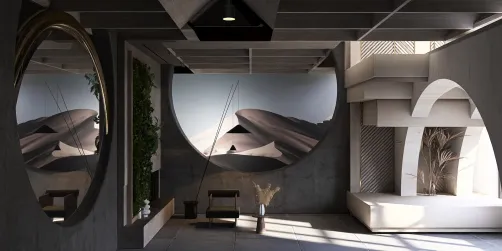
Color here isn’t decorative—it’s narrative exposition. Warm amber tones evoke nostalgic romance (*Emily in Paris*), saturated primaries channel animated energy (*Despicable Me*), while desaturated teals and greys build dystopian tension (*Dune*). Palettes are rarely monochromatic; instead, they use dominant hues punctuated by one high-contrast 'hero color' (e.g., a crimson chair against cool concrete) mirroring how films use color accents to signal emotional shifts.

Christina Lang’s 'Spider-Man' city plaza leverages vibrant greenery against stark urban grey—a direct translation of NYC’s kinetic energy into chromatic contrast. The lush plants aren’t just decor; they’re the 'hero color' symbolizing hope amid chaos. In Homestyler, apply this instantly via the 'Color Palette Sync' tool: upload a film still, extract its dominant hex codes, then auto-apply matching wall paints, fabrics, and foliage—all within one click. This Homestyler feature turns cinematic color theory into actionable design.
Start Free Design💡 Atmospheric Lighting as Emotional Script
Lighting is the silent protagonist. Cinematic spaces use directional light sources (a single pendant mimicking key light, recessed LEDs simulating ambient fill) to sculpt form and cast intentional shadows. Time-of-day simulation matters: golden-hour warmth for romance, cool blue twilight for mystery, or stark overhead white for clinical tension. Unlike generic 'bright' lighting, every fixture serves a narrative purpose—highlighting a memory object, creating suspenseful silhouettes, or bathing a reading nook in 'safe haven' glow.

Susan Lillian’s 'Forrest Gump' park bench scene masterfully uses soft, even daylight—no harsh shadows—to evoke innocence and timelessness. The gentle gradient from sky-blue ceiling to warm wood grain mirrors the film’s nostalgic filter. In Homestyler, achieve this 'emotional lighting' with one-click presets: choose 'Golden Memory Light' or 'Urban Calm Glow' from the Lighting Library, then adjust intensity sliders to fine-tune mood—proving Homestyler transforms abstract cinematic feeling into precise, editable 3D light parameters.
Start Free DesignFAQ
Q: What makes a design 'cinematic' beyond using movie-themed decor?
A: True cinematic design prioritizes narrative intentionality—not thematic props, but spatial storytelling: how light guides emotion, how layout implies movement, and how color palettes mirror filmic mood. It’s about translating directorial choices (framing, pacing, tonality) into interior grammar.
Q: Can beginners achieve cinematic results in Homestyler without 3D expertise?
A: Absolutely. Homestyler’s AI Scene Generator interprets natural-language prompts like 'warm nostalgic café with shallow depth of field' into fully rendered spaces. Combined with one-click lighting presets and auto-synced film-grade color palettes, cinematic quality is accessible to all skill levels.
Q: How does Homestyler support the 'real-time 3D rendering' mentioned in contest descriptions?
A: Homestyler’s cloud-based engine renders photorealistic previews instantly as you adjust materials, lights, or camera angles—no waiting for exports. This live feedback loop lets designers iterate cinematic moods (e.g., shifting from 'daylight optimism' to 'twilight mystery') in seconds, directly mirroring film editing workflows.
Originally incubated at Autodesk, Homestyler has grown into one of the most widely adopted home design platforms in the world, now trusted by over 18 million users. Whether you're a homeowner exploring ideas or a professional designer delivering client-ready renders, Homestyler brings industry-leading 3D technology to your fingertips — no experience required.


Modern Minimalist L shaped Solid Wood Kitchen Cabinet 3D Model

Glass Cork Lid Kitchen Storage Jars 3D Model

Modern Minimalist Solid Wood Marble Top Kitchen Cabinet 3D Model
Homestyler offers an easy-to-use online home design tool, stunning 3D renderings, and a vast collection of design projects. With helpful DIY video tutorials, it’s perfect for anyone looking to create and visualize beautiful interior spaces effortlessly.
Diseño ahora GRATIS