Calm Layered Minimalism: Salon Break Room Style Explained
The "Salon Break Room" contest style is all about turning a waiting area into a true retreat. Instead of complex layouts or heavy decoration, it relies on simple spatial planning, soft lighting and refined materials to build subtle layers. Guests feel a gentle pause between appointments, while the salon gains a strong atmospheric focal point that looks elegant without feeling crowded.
In practice, this means: a clean, easy-to-understand layout; seating that encourages relaxed postures and conversation; a palette of muted tones with occasional accents; and lighting that wraps people in comfort rather than spotlighting them. Details stay light and restrained, so that textures, curves and light become the main visual language.
Within Homestyler, this style is especially efficient to build: you can quickly block out a simple plan, drop in curated lounge furniture, test different HDR daylight settings, and fine-tune materials for sofas, walls and floors using the 3D rendering tools until the room feels like a breath of fresh air.


Design by graca doutel: "Salão Break Room — An Inspiring Pause". In Homestyler 3D rendering, this type of layered minimalism is fast to achieve by combining curved lounge seating, organic forms and soft ambient light presets, then iterating materials until the space feels both light and enveloping.
Start Free Design Now🎨 Color & Light Atmosphere
One core element of the Salon Break Room style is its calm, luminous atmosphere. Colors tend to stay in a desaturated range: warm beiges, greige, soft taupe, stone greys, with occasional darker accents or gentle pastels. This keeps visual noise low and lets the eye rest. Lighting, both natural and artificial, is treated as a material in itself—daylight is filtered and softened, while artificial sources are layered (pendants, floor lamps, hidden strips) to avoid harsh contrast and create a gentle gradient of brightness.
In Homestyler, you can test HDR environments like city daylight or streetscape scenes, then balance them with interior lights to find that relaxed glow. Because rendering is real-time, it’s easy to adjust color temperature, wall paint, fabric tones and floor finishes until everything reads as a coherent, soothing envelope.
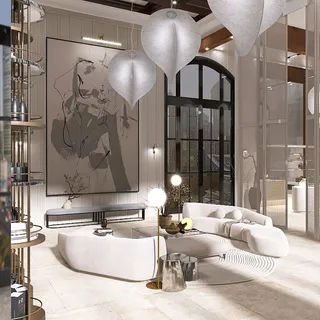

Cecilia Botha’s "Salon Guest Room" shows this atmosphere beautifully: muted cushions on a minimalist sofa, sunlight filtered through large windows, and oversized pendants that glow gently instead of glaring. In Homestyler, reproducing this effect is straightforward—select a neutral palette for walls and furniture, choose a daylight HDR, then add pendant lights and tweak their intensity in the 3D rendering settings until the space feels hushed rather than exposed.
Begin Cozy Design Easily🛋️ Spatial Layout & Curved Forms
The second key element is structure: the layout is simple, but the geometry is soft. Seating is often arranged in generous, curved compositions that naturally guide social interaction and slow people down. Circulation paths are clear and unobstructed, so guests never feel cramped or confused. Instead of rigid grids, the style leans on arcs, rounded corners and flowing lines—on sofas, armchairs, coffee tables and architectural volumes.
Homestyler’s smart furniture layout tools make this very easy to test. You can drag-and-drop curved sofas and lounge chairs, rotate them to open or close conversation, and instantly see in 3D how the circulation flows. Because the rendering engine updates as you move pieces, it’s simple to fine-tune proportions and spacing until the room feels both generous and efficient.


Laurence Mignon’s "Défi salle d'attente" is a compact yet clear demonstration of this structural logic: curved sofa and armchairs define a cozy island, while circulation around them remains free. In Homestyler, recreating such a layout is as simple as placing a curved seating set, adjusting radius and distance, and using 3D views to ensure sight lines feel open and welcoming.
Free Design Curved Comfort✨ Refined Materials & Light Decoration
The third core element is the way materials and decor are handled. Rather than many small decorative objects, the style relies on a few refined, tactile surfaces: velvet or boucle upholstery, brushed metal accents, stone or terrazzo floors, smooth plaster or subtle-textured wall panels. Decoration becomes light but intentional—an abstract artwork, a sculptural lamp, a single organic vase or plant—to add character without clutter. The result is a layered sophistication that feels quiet, not showy.
With Homestyler’s material library and real-time rendering, you can swap fabrics, stones and metals in seconds, comparing how each combination affects the mood. Large-format art, minimalist shelving and plants can be placed with drag-and-drop, and the renderer helps you judge immediately whether you’ve crossed the line into visual noise or stayed within that refined, breathable aesthetic.


In "Réinterprétations" by auere val, we see how strong materials and a single abstract shape can carry the entire space: concrete surfaces, sculptural forms and minimal decor create a powerful yet calm environment. In Homestyler, you can quickly test such combinations by applying concrete finishes, adding a few key sculptural pieces, and using the 3D renderer to fine-tune light so each texture reads clearly without overwhelming the room.
Try Refined Space DesignFrequently Asked Questions
Q1: How do I start designing a Salon Break Room style space in Homestyler?
The easiest way is to begin with a simple floorplan: define a clear rectangular or softly zoned area, then place your main seating cluster first. In Homestyler, use curved sofas or lounge chairs, add a central coffee table, and check circulation in 3D. After that, refine colors and lighting with the rendering tools until the atmosphere feels calm and welcoming.
Q2: What color palette works best for this break room style?
Stick to muted neutrals—warm beige, soft grey, taupe, off-white—paired with limited accent tones like blush, deep charcoal or gentle pastels. In Homestyler you can quickly swap wall paints and sofa fabrics from the material library, render different combinations, and keep the one that looks most relaxing under your chosen HDR daylight.
Q3: How much decoration should I use so the space doesn’t feel cluttered?
Use a “few but strong” rule: one main artwork, one or two sculptural lamps, a couple of plants, and maybe a single statement object on the coffee table. In Homestyler, place decor items and then orbit around the scene in 3D—if your eye keeps jumping between many small pieces, remove a few until the room feels visually quiet again.
Q4: Can this style work in a very small waiting area?
Yes. The style is based on simplicity and clarity, which suits small rooms very well. Focus on one compact seating cluster, curved lines to soften corners, and soft indirect lighting. Homestyler’s smart layout and real-time rendering help you test different arrangements in tight footprints so you can see exactly how much furniture the room can handle without feeling crowded.
Originally incubated at Autodesk, Homestyler has grown into one of the most widely adopted home design platforms in the world, now trusted by over 20+ million registered users (platform data, 2026). Whether you're a homeowner exploring ideas or a professional designer delivering client-ready renders, Homestyler brings industry-leading 3D technology to your fingertips — no experience required.

Minimalist Concrete Fluted Round Side Table 3D Model

Modern Minimalist Black Glass Top Fluted Base Round Dining Table 3D Model
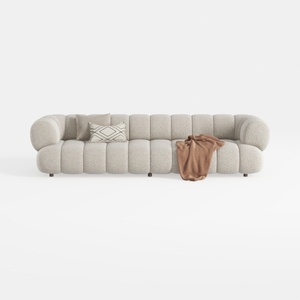
Boucle Fabric Modern Oversized Sofa 3D Model
Homestyler is an easy-to-use online home design platform that helps you create stunning interiors with its powerful 3D rendering tool, abundant design projects, and helpful DIY video tutorials. Perfect for bringing your home design ideas to life effortlessly.
Diseño ahora GRATIS