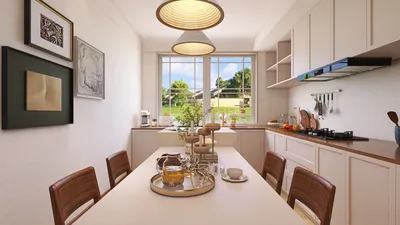


In my experience, I have repainted a small studio three times due to underestimating how lighting impacts the perception of white paint at different times of the day—8 am compared to 8 pm. My landlord often teases me about my ‘white obsession’. Working with small spaces can ignite significant creative ideas, and from that experience, I learned the importance of testing paint samples directly on the walls and capturing them in photographs throughout the day. When preparing to select colors, I typically utilize a room planner to visualize dimensions and lighting scenarios before I even pick up a brush.
1. Alabaster (SW 7008) — a gentle, warm, and accommodating shade
I opt for Alabaster when I need a warm ambiance without an overt yellow tint. This shade appears creamy in north-facing rooms and creates a snug feeling in living areas. The beauty of Alabaster is its forgiving nature with various lighting conditions; however, in brightly lit southern spaces, it can seem somewhat flat, so it's best complemented with warmer wood accents or brass details.
2. Pure White (SW 7005) — a crisp backdrop with a touch of depth
Pure White has become my preferred choice when I want a fresh, subtly soft white that still maintains a sharp appearance. It pairs excellently with cool grays and matte surfaces. One small hurdle is that trim painted in Pure White may require a glossier finish to stand out distinctly from flat surfaces.
save pin
3. Extra White (SW 7006) — an ultra-clean option, ideal for kitchens
Extra White is bright and perfectly neutral—ideal for achieving stark contrast with colorful cabinets or dark fixtures. I've endorsed it for compact kitchens due to its excellent light-reflecting qualities; when planning a renovation, I always test it alongside countertops and consider the kitchen design to ensure the white doesn't appear too stark in open areas.
save pin
4. Snowbound (SW 7004) — a soft cool white, perfect for modern aesthetics
Snowbound has a slightly cooler tone that keeps Scandinavian or minimalist designs looking sharp. It's a fantastic match for cool-toned woods or concrete finishes; however, in very warm-lit environments, it can feel colder than anticipated—using warmer textiles and layered lighting can help soften this effect.
save pin
5. Dover White (SW 6385) — the subtle warm white
Dover White carries a hint of warmth that adds a lived-in feel to bedrooms and cozy corners. It strikes a balance between the starkness of Extra White and the creaminess of Alabaster, making it adaptable; however, it may lack the modern contrast if you’re seeking a sharp, gallery-white aesthetic. For presentations, I frequently create quick mockups and 3D renders using tools like Homestyler to help my clients visualize how the white interacts within the space.
save pin
Tips 1:
Always apply large swatches of paint directly to the wall, observe the color under different lighting conditions, and take photos for reference. I suggest using sample pots and living with them for about a week whenever possible. It's essential to consider how lighting, finish, and adjacent colors influence how a white paint appears.
save pin
FAQ
Q: Which Sherwin-Williams white is the most adaptable?
A: Alabaster is commonly seen as a versatile choice due to its warmth, which fits well with various palettes and lighting scenarios, but Pure White and Dover White also present strong options depending on whether cooler or warmer undertones are desired.
Q: How do I test a white paint before making a commitment?
A: Paint 2 to 3 large swatches on different walls, observe them in the morning and evening light, and capture photos. I also recommend testing trim colors in your selected white with a slightly different sheen to assess contrast effectively.
Q: Are brighter whites always preferable for small spaces?
A: Brighter whites reflect more light and can give the illusion of a larger room, but overly bright shades might come off as clinical. A warm white often feels more inviting while still expanding the space visually.
Q: What sheens are best suited for interior whites?
A: Flat or matte finishes conceal imperfections on walls, while satin or eggshell options are both durable and easy to clean for areas like living rooms and bedrooms. For trim, semi-gloss finishes work well for added definition and durability.
Q: Can lighting affect how a white paint looks?
A: Definitely — natural daylight, light bulb temperature, and direction all significantly influence how a white appears. Cool LED lighting can bring a bluish hue, whereas warm bulbs tend toward creamier tones.
Q: Is there an official source for Sherwin-Williams color information?
A: Yes, Sherwin-Williams provides technical color information and data sheets through their official website (see https://www.sherwin-williams.com/ for detailed specs and color details).
Q: Which white is best for trim when the walls are white?
A: Often, a slightly brighter white (like Extra White) with a glossier finish works effectively for trim, creating a subtle distinction from wall whites such as Alabaster or Dover White.
Q: Any budget tips for selecting Sherwin-Williams whites?
A: Start by purchasing sample pots instead of full gallons, and paint large test sections. For whole-home projects, don’t forget to consider primer needs and sheen options to avoid expensive repaints in the future.
save pin
Homestyler is your go-to online platform for home design! With its user-friendly design tool, stunning 3D renderings, and a wealth of DIY video tutorials, you can effortlessly transform your space and unleash your creativity. Ideal for both novices and seasoned designers!
Diseño ahora GRATIS
































