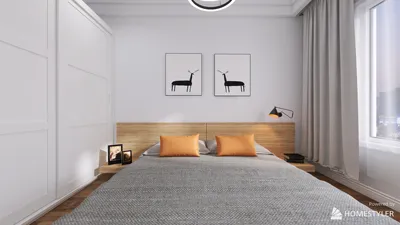


I once had a client who insisted that their bedroom door be tailored to the exact width of a bookshelf — this decision revealed that their cat enjoyed slipping through the narrow opening even more than the humans did. This little bit of chaos taught me that door dimensions extend beyond mere measurements; they significantly influence how we interact with spaces, how furnishings are arranged, and even how our pets behave. Small adjustments to bedroom door sizes can lead to surprisingly impactful design advantages, and utilizing tools like Homestyler can help visualize these changes effectively.
1. Understand typical bedroom door sizes
In the United States, the standard interior door widths include 24", 28", 30", 32", and 36", all with a typical height of 80" (6'8"). I tend to recommend starting with a 30" width for an average bedroom as it strikes a good balance between accessibility and available wall space. However, opting for wider doors could encroach on adjacent wall areas, potentially restricting placement options for light switches or bedside tables.
save pin
2. Choosing a 24" or 28" door
For compact bedrooms or closets, selecting a 24" or 28" door can maximize wall space for storage solutions. In a previous micro-bedroom renovation, I installed a 24" door which allowed for a full-height wardrobe on the adjacent wall. The downside is that this can limit furniture accessibility and may impede wheelchair access, so it's essential to consider future needs.
save pin
3. Opting for wider doors — 32" to 36" for better accessibility
If you're looking for wheelchair accessibility or future proofing, it's wise to select 32" or 36" doors. I upgraded to 36" doors in a renovation for an older client, making daily life simpler while also increasing resale value. While wider doors provide a sense of luxury, they require more framing effort and can reduce available wall space for hooks or artwork.
save pin
4. Implementing pocket and sliding doors to conserve swing area
In instances where swing clearance is restricted, pocket or sliding doors can be invaluable. I frequently suggest a sliding door option for narrow spaces, as they free up floor area and enhance movement flow. The main challenges lie in properly installing pocket frames or ensuring the wall has enough space for a sliding track, and there’s a possibility of sacrificing some sound insulation.
save pin
5. Assessing headroom and custom heights
While the standard height is 80", rooms with tall ceilings deserve doors that are 84" or 96" for an aesthetically pleasing proportion. During one project, I installed 96" doors in a loft, drastically transforming the room's perception. Custom heights tend to incur additional costs and may necessitate taller trim and jambs, so budget considerations are essential.
save pin
Tips 1:
A practical tip is to measure your largest furniture pieces (like mattress box springs and wardrobes) before finalizing your door size. When working on a floor layout, employing a reliable room planning tool like Homestyler can assist in visualizing door placements and necessary clearances from the outset.
save pin
FAQ
Q1: What is the standard bedroom door size in the U.S.?
A: The most common size is 30" in width and 80" in height, though widths can range from 24" to 36" based on individual needs.
Q2: What door width is needed for wheelchair access?
A: For single-leaf doors, a minimum clear width of 32" is recommended; a width of 36" offers even greater comfort for access.
Q3: Can a swinging door in my bedroom be replaced with a pocket door?
A: Absolutely, pocket doors can effectively utilize space, but they do require wall cavities and additional hardware; it's advisable to consult with a contractor regarding structural implications.
Q4: Are custom-height doors a worthwhile investment?
A: They enhance proportion in higher rooms and impart a high-end appearance, yet they cost more and may necessitate custom trim and hardware solutions.
Q5: How thick is a standard interior door?
A: The thickness of a typical slab is either 1 3/8" or 1 3/4" for solid doors; the final measurements incorporate both the slab and jamb and trim elements.
Q6: Will I need wider doors for moving furniture?
A: If you frequently relocate large furniture, opting for 32"–36" doors will greatly ease the process. Additionally, be sure to assess the diagonal clearances of your furniture.
Q7: Where can I try different door widths on a layout?
A: You can utilize a floor planner to experiment with door widths and clearances to ensure optimal arrangements before making a decision.
Q8: Are there established guidelines regarding door accessibility?
A: Yes—check the ADA Standards for Accessible Design for detailed requirements; these guidelines specify clear widths and maneuvering spaces (refer to Section 404 for doors).
save pin
Homestyler is your go-to online home design platform, perfect for anyone looking to enhance their space. With its easy-to-use design tool, stunning 3D renderings, a plethora of design projects, and helpful video tutorials, transforming your home has never been easier or more enjoyable!
Diseño ahora GRATIS
































